Milan Data Centre Market Overview
Milan, the capital of Lombardy, is the largest data centre market in Italy. Colocation first grew inside the city, around the MIX internet exchange and the carriers. Since AWS opened its Milan cloud region in 2020, hyperscale and wholesale campuses have spread to a ring of towns west, south and east of the city. Lombardy's grid requests now dwarf what Terna can connect. Local opposition has grown alongside them.
History
Milan's market grew out of its internet exchanges. CILEA opened a neutral exchange point in the city in April 1995. In January 2000, 28 operators founded MIX to run a dedicated exchange, which now sits at Via Caldera 21 in western Milan. Colt opened its Milan internet centre that June. TelecityGroup ran a facility on Via Savona and opened a second at Basiglio in 2009.
Global operators bought in from 2016. Equinix entered Milan that January when it closed its purchase of TelecityGroup. Keppel DC REIT bought a Milan data centre the same year. SUPERNAP Italia opened the first building of its Siziano campus, south of the city, in 2016. The campus later passed to STACK, which opened its third building there in 2022. Data4 completed its first building at Cornaredo, to the west, in 2016. Aruba opened its Global Cloud Data Center at Ponte San Pietro, near Bergamo, in October 2017.
The cloud providers followed. AWS opened its Milan region in April 2020 with three Availability Zones. Google opened its Milan region with TIM in June 2022. Microsoft launched Italy North in June 2023. Ownership then turned over. AtlasEdge bought Colt's Milan centre in 2021 and sold it to Templus in 2026. Apollo funds bought STACK's European colocation business in 2025, and it now runs as Vaultica.
Data Centres in Milan Today
Equinix, Data4, STACK and Vantage lead the colocation and wholesale market. Equinix's flagship campus sits in Settimo Milanese, west of the city. It plans seven more data centres there and in Cusago. Data4's Milan 1 campus spans Cornaredo and Settimo Milanese. STACK and Vaultica share the Siziano campus to the south. STACK lists eleven Milan campuses, reaching east to Vignate and Melzo. Vantage runs a campus at Melegnano and is building another at Settimo Milanese. Aruba's campus at Ponte San Pietro covers about 200,000 m² and hosts Fastweb's NeXXt AI factory.
The MIX data centre at Via Caldera 21 anchors interconnection in western Milan. The same business park houses Retelit's Avalon campus, CDLAN, Seeweb and EXA. MIX connects 471 networks. Its access points also reach Equinix, Data4, Vaultica and Aruba sites.
AWS, Google and Microsoft all run cloud regions in the metro. The government declared AWS's expansion at Rho, Pero and Zibido San Giacomo of strategic national interest. Microsoft runs data centres at Settala and is building at San Bovio, in Peschiera Borromeo. Compass opened its first building at Noviglio in September 2026. EdgeConneX, K2, hscale, CyrusOne and Digital Realty all have campuses in planning or construction. Eni plans an AI campus with Khazna beside its own supercomputing centre at Ferrera Erbognone.
Why Build Data Centres in Milan?
-
Demand. Milan holds most of Italy's operating capacity.
-
Interconnection. MIX peaks at 3.89 Tbps, almost three times the peak at Rome's Namex.
-
High-voltage grid. About three-quarters of Milan's capacity connects at high voltage, through Terna substations such as Rho, Ospiate, Baggio and Lacchiarella.
-
Clear regional rules. Lombardy passed Italy's first regional data-centre law in June 2026. It set up a single regional window and cuts building levies by 10% to 30% on brownfield sites.
What Limits Data Centre Growth in Milan?
-
Grid queue. In November 2026 Terna reported 316 data-centre applications in Lombardy, totalling 48.6 GW. Only 1.6 GW, from 12 projects, had reached the final connection phase. The region's 14 large operating data centres have about 800 MW connected.
-
Local opposition. Dozens of Lombard committees formed the Stop Data Center network in July 2026. Over 1,000 people marched in central Milan that October. The network then asked the government for a moratorium. A project at Travagliato, near Brescia, was withdrawn after protests. Rho raised its development charges for data centres.
-
Environmental review. In October 2026 the environment ministry issued a negative environmental assessment for Data4's planned Vittuone campus.
-
Farmland levies. Lombardy's law doubles building levies on farmland and triples them in parks.
-
Power prices. Italian wholesale electricity averaged €116 per MWh in 2025, against an EU average of €85.
Milan Data Centre Trends
-
International entrants lead the build. Most companies with announced Italian projects are new to the market, and they account for most planned investment.
-
The state fast-tracks the largest programmes. Five of Italy's seven programmes of strategic national interest sit in Lombardy, from AWS, Equinix, Vantage, EdgeConneX and K2.
-
Ownership keeps changing. Vaultica and Templus took over established Milan sites in 2025 and 2026. Retelit is exploring a sale of its data centres.
-
Cooling rules are tightening. The regional law encourages heat recovery and low-water cooling. Proposed regional amendments make closed-loop cooling mandatory.
-
The pipeline far exceeds demand. Lombard grid requests total 48.6 GW, many times what the industry expects to need.
Power and Policy in Milan
Terna runs the high-voltage grid and the connection queue. Since January 2025 A2A's Duereti network has served the belt east, south and west of Milan, which e-distribuzione served before. A2A's Unareti distributes power in the cities of Milan and Brescia. Lombardy Regional Law 11 of 3 June 2026 sets siting rules and levies for data centres. Two regional resolutions of August 2026 assign authority by the thermal power of a site's backup generators. The Region decides projects from 50 to under 300 MWt, and the Ministry of the Environment and Energy Security (MASE) decides larger ones. Smaller projects need no single data-centre procedure. Nationally, Law 49/2026 sets a 10-month deadline for the single authorisation.
























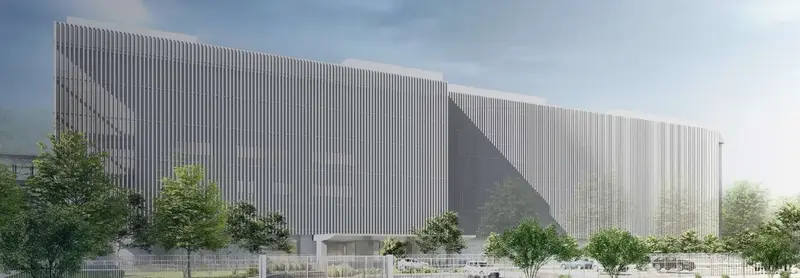
 data center planned west of Hobbs, [New Mexico](htt...](https://cdn.baxtel.com/data-center/lea-county-approves-130b-bond-deal-for-google-s-project-rancho/logo/medium_lea-county-approves-130b-bond-deal-for-google-s-project-rancho-featured.jpg)
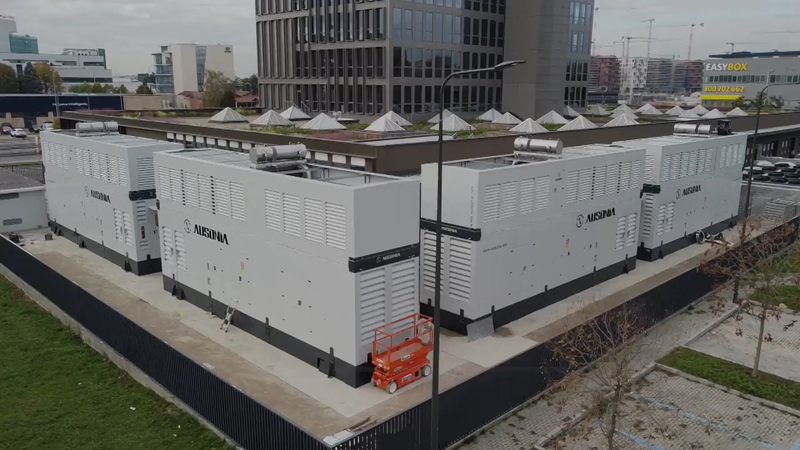
.jpg)