Overview
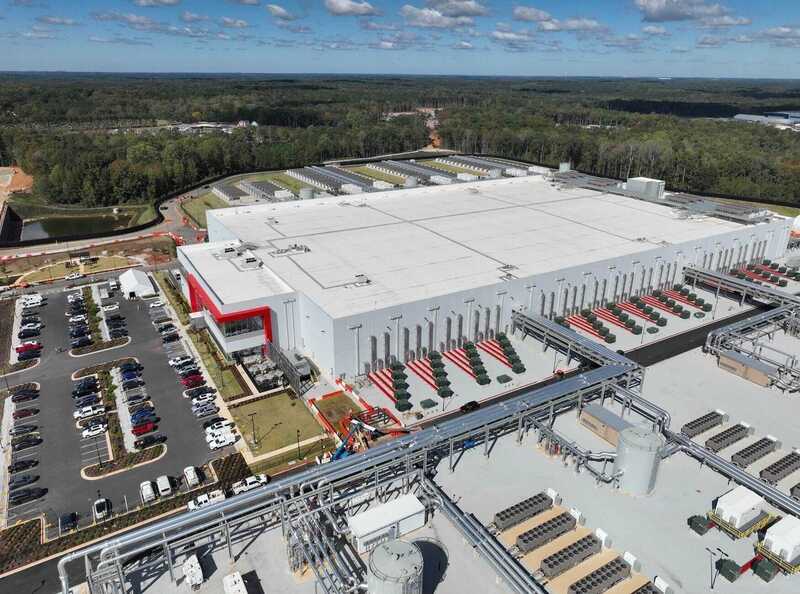
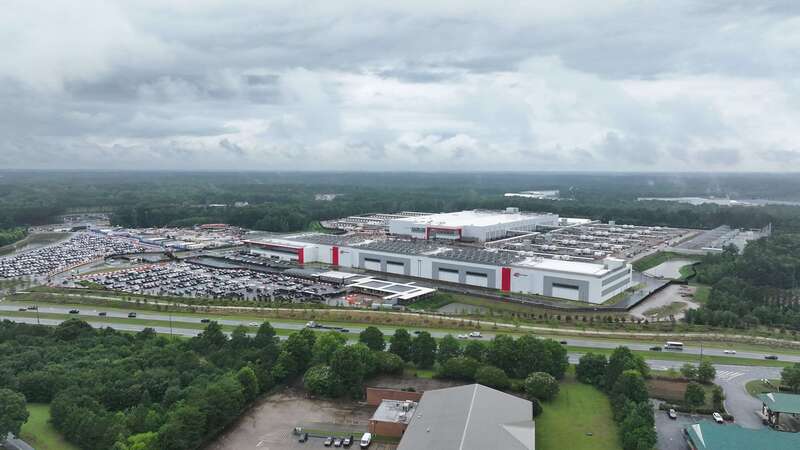
San Antonio is a hyperscale market that grew out of a cluster of corporate data centers on the city's west side. The core sits in Westover Hills, where cloud campuses, wholesale colocation and enterprise facilities share a few square miles. Growth has spread west into Medina County and south toward Lytle and Devine. City-owned CPS Energy serves most of Bexar County, and electric cooperatives serve the counties around it. The development pipeline now runs far ahead of the grid that must serve it.
History
Enterprise data centers came first. Lowe's opened a corporate data center on Rogers Road in 2007, and Frost Bank and CHRISTUS Health followed in 2008. Microsoft broke ground in Westover Hills in July 2007 and opened its $550 million facility in September 2008. The city granted tax abatements, and CPS Energy expected Microsoft to become its biggest customer.
Wholesale developers arrived next. Stream Data Centers bought land in Westover Hills in 2008, built a powered shell and sold it to Chevron in 2011. CyrusOne opened its first San Antonio building in October 2012, inside a converted warehouse. It has since added several buildings on the west side. Microsoft later bought the former Stream building and kept expanding its own campuses.
Cloud demand reshaped the market after 2020. Amazon Web Services (AWS) fitted out its first local data center in 2021. QTS opened a three-story building on Potranco Road in 2022. Microsoft pushed west into Medina County and brought its first Castroville building online in 2024. Vantage Data Centers opened its first local floor in 2025.
The Market Today
Westover Hills remains the heart of the market. Microsoft runs its largest local footprint there and at the nearby Texas Research Park. CyrusOne, Stream, QTS and Vantage Data Centers build wholesale capacity along the same corridor. AWS operates buildings on the west and southeast sides of the city.
Downtown, 100 Taylor Street is the main carrier hotel. H5 Data Centers has run it since 2018, and it houses the local internet exchange, SAT-IX. CityNAP, Lumen and AT&T's main downtown exchange add network density nearby. Enterprise data centers still hold a large share of local capacity. Valero, Lowe's, Frost Bank, CHRISTUS Health, University Health and UT Health San Antonio all run their own facilities.
The pipeline has moved outward. Tract is developing a technology park in Medina County, and Rowan Digital Infrastructure is building near Lytle. CyrusOne plans a large campus west of Castroville. Developers have proposed gas-powered campuses near Stockdale in Wilson County and south of Devine.
Advantages
-
Municipal power. The City of San Antonio owns CPS Energy, which sells both the power and its delivery. Large customers deal with one provider for supply, substations and lines.
-
Land. Flat, low-cost land runs west and south of the city into Medina, Atascosa and Wilson counties.
-
Enterprise and government demand. Banks, insurers, health systems and government agencies buy local capacity and keep the market diverse.
-
Tax incentives. Texas exempts qualifying data centers from state sales tax on equipment and electricity. The city and county have granted abatements for major builds.
-
Fiber routes. Long-haul fiber along Interstate 10 and Interstate 35 links the market to Houston, Dallas and the Mexican border.
Challenges
-
Grid access. CPS Energy logged 9,500 MW of large-customer requests at intake in June 2025. Its system peak was about 6,000 MW, and new transformers take more than two years to arrive.
-
State queue rules. The Electric Reliability Council of Texas (ERCOT) moved large loads into a batch study in 2026. In August 2026 it paused energization approvals for new data centers of 75 MW or more.
-
Permit pauses. In September 2026 the governor asked the Texas Commission on Environmental Quality (TCEQ) to hold data-center permits until the ERCOT review ends.
-
Water. Much of the region draws on the Edwards Aquifer, which faces pumping cuts during drought.
-
Local opposition. Rural projects face annexation and zoning fights. Environmental groups have sued over on-site gas plants.
Trends
-
Westward shift. New hyperscale campuses now land in Medina County, where cooperative utilities are building new substations for them.
-
Bring-your-own power. Several rural projects plan on-site gas generation, alone or alongside grid power.
-
Grid build-out. CPS Energy has proposed transmission for about 2 GW of new load in Bexar and Medina counties by 2035. The South Texas Electric Cooperative (STEC) has proposed lines for about 1 GW more in Medina County.
-
Contracts before construction. Developers now sign utility agreements and end-user contracts before they break ground.
Power and Policy
San Antonio sits on the ERCOT grid, the main power system of Texas. The Public Utility Commission of Texas (PUCT) regulates the grid, while the city council oversees CPS Energy's rates. CPS Energy serves most of Bexar County. Medina Electric Cooperative, Guadalupe Valley Electric Cooperative (GVEC) and AEP Texas serve the surrounding counties. Senate Bill 6, signed in 2025, sets interconnection standards for loads of 75 MW or more and lets ERCOT curtail them in emergencies. In September 2026, ERCOT classified 6,747 MW of base large load in its South Central weather zone.