Overview
Warsaw holds most of Poland's data center capacity. Carrier and colocation sites in the city centre, Mokotów, Włochy and Ursus serve banks, government and cloud customers. OVHcloud has run a cloud region here since 2016, Google since 2021 and Microsoft since 2023. Wholesale operators have built campuses beyond the city limits to the west and southwest, around Ożarów Mazowiecki and Raszyn. Stoen Operator, the city's distribution company, reported 157 MW of data center load connected at the end of 2025 and more than 500 MW under signed connection agreements.
History
Warsaw's first carrier hub formed in the LIM tower on Al. Jerozolimskie, where the PLIX internet exchange started in 2006 and LIM Center still runs its own data center. Atman grew a campus on Grochowska Street in Praga through the 2000s and opened a second site on Konstruktorska Street in Mokotów in 2010. Linxdatacenter opened a facility in central Warsaw in 2012.
International operators arrived through acquisitions. TelecityGroup bought PLIX in 2013 and Varion's data center on Poleczki Street in 2014, and Equinix took over both when it bought Telecity in 2016. EdgeConneX bought the Linxdatacenter site in 2018. OVHcloud opened its Warsaw region in a converted warehouse in Ożarów Mazowiecki in 2016, and Equinix opened WA3 in 2020.
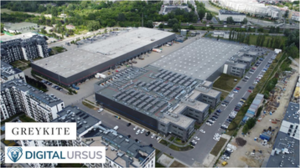
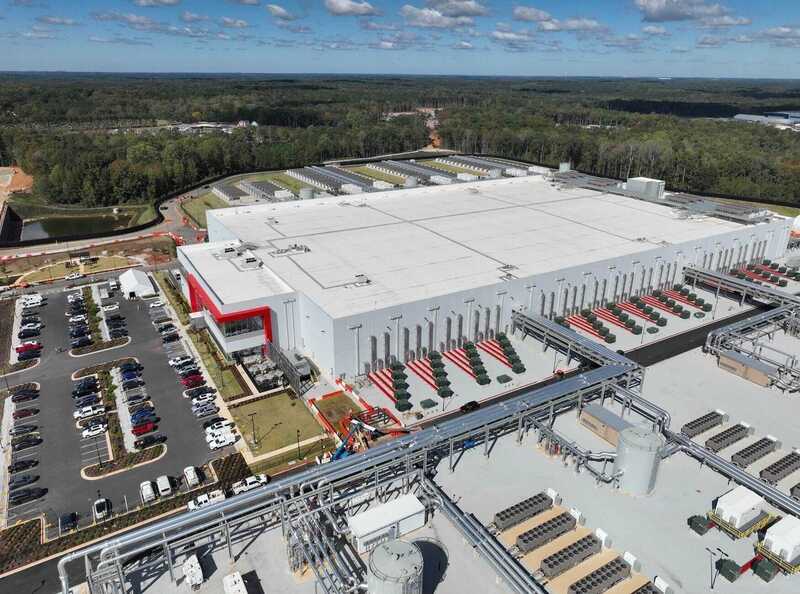
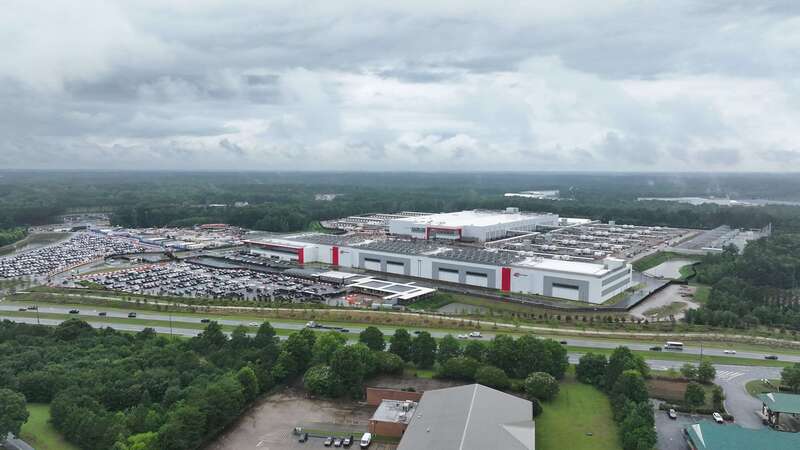
Hyperscale demand followed. Google Cloud launched its Warsaw region in April 2021, and Microsoft launched Poland Central in April 2023 with three availability zones. EdgeConneX opened a data hall in a logistics building at Ursus in 2022. Data4 opened its first Jawczyce building in 2023, and Equinix's xScale joint venture opened WA4x in 2024. Atman opened its WAW-3 campus at Duchnice in October 2025.
The Market Today
Atman runs three campuses: Grochowska, Konstruktorska and Duchnice, where two more buildings are planned. Equinix runs four sites, including the WA1 interconnection hub in the LIM tower and the WA4x wholesale building. EdgeConneX runs three and is adding a fourth at Ursus, where Greykite and White Star are raising the converted building's power supply. Data4 is building out its Jawczyce campus and plans to invest about €600 million in Poland by 2030. Vantage Data Centers is developing a campus in Bemowo, in northwest Warsaw.
The carriers run their own estates. Orange opened its Warsaw Data Hub at Łazy, south of the city, in 2021. T-Mobile, Netia, Play and Polkomtel run data centers across the city. OVHcloud, Comarch, Hector and Mevspace serve hosting and cloud customers. Interconnection centres on the LIM tower and on the EPIX, TPIX, Equinix IX and THINX exchanges.
The pipeline is large. Switch Datacenters plans a campus at Mory, west of the city. Hillwood plans four buildings at Reguły, and construction of the first is due to start in 2027. Sien Real plans a campus at Józefosław near Piaseczno. NASK, the state research institute, plans three government data centers west and south of the city, and the Ministry of Finance is expanding its data center in Radom. Other projects wait on zoning or power.
Advantages
-
Interconnection. Four internet exchanges, EPIX, TPIX, Equinix IX and THINX, each connect 150 or more networks. All four reach the LIM tower.
-
Cloud on-ramps. Microsoft, Google and OVHcloud run Poland's cloud regions here. They draw enterprise and public-sector buyers to the city.
-
Demand base. Warsaw is the seat of government, the central bank and most large Polish companies.
-
Convertible buildings. Logistics parks along the A2 and S8 roads offer large powered buildings. Developers have converted several into data halls, at Ursus, Błonie and Ożarów Mazowiecki.
-
Tax relief. Data processing and hosting qualify for income tax relief in the Polish Investment Zone.
Challenges
-
Substation limits. Polskie Sieci Elektroenergetyczne (PSE), the transmission operator, refuses new connection requests at several Warsaw-area substations, including Mory, Mościska and Piaseczno.
-
Waiting for the grid. Signed agreements already exceed three times the connected data center load. PSE's draft network plan adds new 400 kV stations east and west of the city over the next decade.
-
Local zoning. Gminas are adopting new general plans in 2026. Nadarzyn began rezoning a planned data center plot at Kajetany for housing, and the zoning decision for a project at Bobrowiec was quashed.
-
Connection deadlines. Under the 2026 network act, an agreement lapses unless a building permit covers half its load within 24 months.
-
Carbon intensity. Coal still generates about half of Poland's electricity, so buyers with clean-power targets need separate renewable contracts.
Trends
-
Wholesale moves to the suburbs. New capacity now goes to purpose-built campuses in Ożarów Mazowiecki, Raszyn and Michałowice rather than to carrier sites in the city.
-
Warehouses become data halls. Developers convert logistics buildings that already hold large grid connections, as Greykite did at Ursus.
-
Government builds its own. NASK and the Ministry of Finance are adding state data centers. The 2026 digitalisation strategy plans a three-site national data processing centre.
-
Power drives site choice. Stoen holds more than 500 MW of signed data center agreements, and developers file for large new 110 kV connections across the ring.
Power and Policy
Stoen Operator, owned by E.ON, distributes electricity inside the City of Warsaw. PGE Dystrybucja serves the rest of Masovian Voivodeship, and PGE Energetyka Kolejowa's railway grid also supplies several data centers. PSE runs the 220 and 400 kV network and decides the largest connections. The 2026 network act raised advance payments and cut connection conditions to one year. It also requires every operator to publish its connection queue at least quarterly.