Overview
Poland is the largest economy in Central and Eastern Europe and its largest data center market. Warsaw holds most of the capacity. Since 2024 developers have proposed very large AI campuses beside power stations and high-voltage substations, and grid operators now hold far more data center requests than the market has ever built.
History
The market grew out of Poland's telecom carriers and the LIM tower in central Warsaw, where the PLIX internet exchange started in 2006. Atman built out its Grochowska campus in eastern Warsaw through the 2000s. In the south, Onet opened a data center in Kraków in 2009, Polcom opened its Skawina campus near Kraków, and the telecom group 3S built data centers in Katowice.
International operators entered in the 2010s, mostly by acquisition. TelecityGroup bought PLIX in 2013 and a second Warsaw data center in 2014, and both passed to Equinix when it bought Telecity in 2016. EdgeConneX bought Linxdatacenter's Warsaw facility in 2018. OVHcloud opened its Warsaw region in 2016, the same year Beyond.pl opened its second data center in Poznań. Netia bought Onet's Kraków site in 2020.
Hyperscale cloud followed. Google Cloud opened its Warsaw region in 2021, and Microsoft launched its Poland Central region in April 2023 with three availability zones around Warsaw. Data4 and Equinix's xScale joint venture opened wholesale buildings west and southwest of the city centre in 2023 and 2024, and Vantage Data Centers built the first building of its campus in Bemowo. Global Compute Infrastructure, which has owned Atman since 2021, opened Atman's third Warsaw campus, at Duchnice, in October 2025.
The Market Today
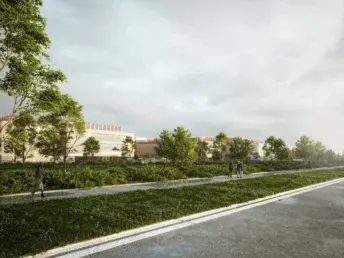
Warsaw holds most of the country's capacity. Equinix, Atman, EdgeConneX and Data4 lead supply, alongside the carriers Orange, T-Mobile, Netia and Play. New campuses are planned along the city's western and southwestern edge.
Krakow is the second market. Polcom runs the metro's largest facilities, Netia runs the former Onet site, and Cisco opened a large customer lab data center in October 2026. The Academic Computer Centre Cyfronet hosts Gaia, one of Poland's two EU AI Factories.
Katowice anchors Silesia. The 4 Data Center building in the city centre is one of Poland's two main carrier hotels, with Warsaw's LIM tower, and EPIX runs one of the country's two largest internet exchanges in the city. Play, Atman and local providers run colocation there. DL Invest plans a large campus at Bielsko-Biała, and LVL Energy plans one at Dąbrowa Górnicza.
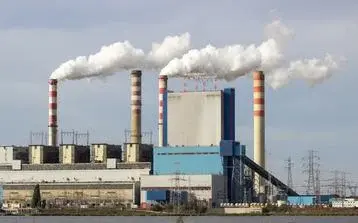
Poznań leads western Poland. Beyond.pl runs a growing campus in the city, and the Poznań Supercomputing and Networking Center (PCSS) is building the PIAST-AI factory. CGE holds a building permit for a large campus in Konin, east of Poznań. In Łódź Voivodeship, Exus Digital plans an AI campus near the Bełchatów power station, Europe's largest coal-fired plant.
Wrocław has a cluster of mid-sized facilities run by T-Mobile, Talex and Korbank. Citylink is building a data center and plans to send its waste heat to the city's district heating network. 1911 Data Centres holds permits for a greenfield campus in the Wałbrzych special economic zone.
In the north, Pomeranian Voivodeship has a small colocation base in Gdańsk and Gdynia. WBS Power and Twenty20 Energy plan very large campuses in coastal Pomerania, near Choczewo and Słupsk.
Advantages
-
Demand. Banks, retailers, government and a large IT services sector buy capacity in the country.
-
Cloud regions. Microsoft, Google and OVHcloud run cloud regions around Warsaw, which draw networks and enterprise buyers.
-
Tax relief. Data processing and hosting qualify for income tax relief in the Polish Investment Zone, with a much lower minimum investment than most industries.
-
AI programs. Poland hosts two EU AI Factories, Gaia in Kraków and PIAST-AI in Poznań. The government committed €135.3 million so Polish groups can bid in the EU's AI gigafactory tender.
-
Connectivity. EPIX runs exchanges in Warsaw and Katowice with more than 380 member networks each.
Challenges
-
Grid access. Polskie Sieci Elektroenergetyczne (PSE), the transmission operator, had issued connection conditions for about 9.7 GW of data center load by September 2026, far more than the market has built. It refuses new requests at listed substations around Warsaw, Katowice, Poznań, Wrocław and Gdańsk.
-
Carbon intensity. Coal generated about half of Poland's electricity in 2025. Buyers with clean-power targets need separate renewable contracts.
-
Connection rules. A 2026 law doubled the advance payment on large connection requests to PLN 60 per kW, capped at PLN 6 million. Connection conditions now last one year. An agreement lapses unless a building permit covers half its load within 24 months.
-
Energy costs. Data centers qualify for neither the excise refund nor the renewable and cogeneration levy relief that energy-intensive industry receives.
Trends
-
Carriers consolidate. Play absorbed the 3S data centers, and Netia took over Onet's Kraków facility.
-
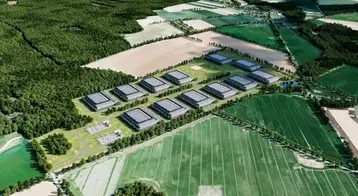
AI campuses follow power. Developers now plan very large campuses beside power stations and 400 kV substations at Bełchatów, Konin and on the Baltic coast, far from city business parks.
-
The queue far exceeds the build. PSE reported data center requests of 150 to 200 GW before the 2026 fee rules. A dozen or so applicants now hold more than 6 GW of conditions. PSE's draft network plan expects data center demand of about 3.1 GW by 2036.
Power and Policy
PSE runs the transmission grid and connects the largest loads at 220 and 400 kV, and the Energy Regulatory Office (URE) regulates the sector. Five distribution operators split the country: Stoen Operator in the City of Warsaw, PGE Dystrybucja in the centre and east, Tauron Dystrybucja in the south, Enea Operator in the northwest and Energa Operator in the north. The network act of March 2026 rewrote connection rules from April 30, 2026, and every operator must publish its connection queue at least quarterly. Poland has no stand-alone data center strategy, but the 2026 state digitalisation strategy plans a three-site national data processing centre.