Overview
Baxtel's Philadelphia region covers the city, its Pennsylvania suburbs, Berks and Lancaster counties, and the Lehigh Valley. Center City holds the interconnection hubs, and the suburbs hold enterprise and wholesale data centers. Growth now runs to large campuses on former steel, rail and industrial land. The region forms the eastern half of the Pennsylvania market.
History
Philadelphia's interconnection story starts at 401 North Broad Street. The Reading Railroad built it between 1929 and 1931 as the Terminal Commerce Building, with a freight station underneath. SunGard leased disaster-recovery space there in 1984, and carriers followed. Amerimar Enterprises and Abrams Capital bought the building in 2014, and it now runs as a Netrality carrier hotel. Equinix entered the market when it bought Switch and Data in 2010.
Colocation spread west of Broad Street in the 2000s. 365 Data Centers built in 1500 Spring Garden Street in 2009. vXchnge opened a second hall there in 2015, and H5 Data Centers runs it today. In 2017 Peak 10 and ViaWest bought GlaxoSmithKline's Collegeville data center, which now operates as Flexential. Keystone NAP stacked modular halls on the former U.S. Steel Fairless Works in Bucks County and closed at the end of 2021.
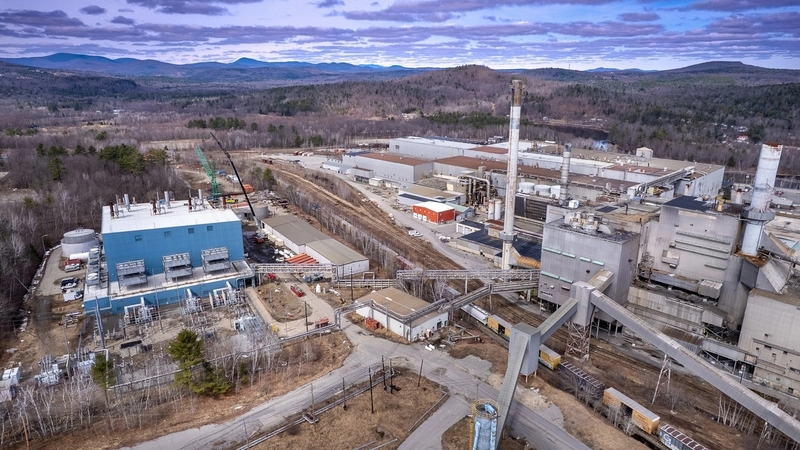
The Lehigh Valley grew around TierPoint's TekPark, a 1987 Bell Labs campus in Breinigsville. TierPoint bought the campus land in 2025. Enterprise sites have also closed. Vanguard's lease at its Kubach Road data center ended in 2024, and Flexential left Allentown in 2026.
The Market Today
Center City remains the network core. 401 North Broad houses Equinix, DataBank, Lumen, Crown Castle and Verizon. 1500 Spring Garden adds H5 and 365 Data Centers. The suburbs carry enterprise colocation at TierPoint Valley Forge, Flexential Collegeville and DāSTOR in King of Prussia. Comcast runs a national data center in Chester County.
Large campuses now dominate the pipeline. Northpoint Development is building the Keystone Trade Campus in Falls Township, where Amazon is building its first halls. Sentinel Data Centers bought land near Malvern in 2026. Developers have also proposed campuses near Pottstown and Limerick.
The Lehigh Valley and Lancaster County carry the AI wave. Edged, Quantm and others plan campuses around Allentown, and Talen Energy plans data centers in Northampton County, including one at its Martins Creek plant. CoreWeave leases space at TekPark and is building its first Lancaster phase for 2027. Chirisa plans two AI hubs next door.
Advantages
-
Network density. Center City carrier hotels connect dozens of networks on the New York to Washington fiber route.
-
Enterprise demand. Pharmaceutical, health, finance, university and government users keep steady demand for colocation and disaster recovery.
-
Industrial land. Former steel, rail and warehouse sites offer large parcels with transmission nearby.
-
Nuclear supply. The Limerick and Peach Bottom nuclear plants sit inside or beside the region.
-
Tax treatment. Qualifying data-center equipment is exempt from state sales and use tax.
Challenges
-
Grid capacity. PECO and PPL Electric Utilities face large-load requests far beyond what their networks can deliver soon. PPL alone reported 31.8 GW of advanced-stage requests in August 2026.
-
Large-load tariff. The Pennsylvania Public Utility Commission (PUC) set a model tariff in May 2026 for loads above 50 MW. It guides utilities to require collateral, minimum bills and upfront payment for grid upgrades.
-
Township zoning. Local boards decide most large projects, and several have stalled or died. Constellation withdrew its East Coventry plan in March 2026, and Pennhurst sits in an appeal.
-
Air limits. The Philadelphia area is an ozone non-attainment zone. That status tightens permits for generators and on-site power.
-
Older buildings. The core colocation halls sit in multi-tenant buildings from the last century, which limits upgrades for dense AI racks.
Trends
-
Suburban hyperscale. Wholesale and hyperscale demand has moved to Bucks, Montgomery, Chester and Lancaster counties.
-
AI tenants in existing campuses. AI clouds take space in powered campuses such as TekPark while new builds wait for power.
-
Enterprise exits. Corporate owners such as Vanguard and Wells Fargo have left their own data centers for colocation and cloud.
-
Brownfield reuse. Steel mills, rail yards and warehouses keep turning into data-center sites.
Power and Policy
PECO, an Exelon utility, serves Philadelphia and its four Pennsylvania suburban counties. PPL Electric Utilities serves the Lehigh Valley and Lancaster County, and Met-Ed serves parts of Berks and Northampton counties. All three sit inside PJM Interconnection, and the PUC sets their rates. The PUC's 2026 large-load order guides how each utility prices big new loads. The city's Department of Licenses and Inspections issues building permits in Philadelphia, and the Department of Environmental Protection (DEP) issues air permits.























 has agreed to buy a majority stake in two Amazon Web Services data ce...](https://cdn.baxtel.com/data-center/blackstone-digital-infrastructure-trust-buys-75-of-aws-joint-ventures-for-5b/logo/medium_blackstone-digital-infrastructure-trust-buys-75-of-aws-joint-ventures-for-5b-featured.jpg)
.jpg)
 has filed with the Texas Department of Licensing and Regulation to build DA13, a $500 million data center in Dallas. The applicati...](https://cdn.baxtel.com/data-center/equinix-affiliate-files-for-500m-da13-data-center-in-dallas/logo/medium_equinix-affiliate-files-for-500m-da13-data-center-in-dallas-featured(2).jpg)
**
**Fluidstack has ...](https://cdn.baxtel.com/data-center/top-data-center-news-for-9th-15th-of-november-2026/logo/medium_top-data-center-news-for-9th-15th-of-november-2026-featured.jpg)
 added more than 200 MW of active power in the third quarter, lifting its live footprint past 1.7 GW. The neocloud [reported third-quarter resu...](https://cdn.baxtel.com/data-center/coreweave-tops-1-7gw-active-power-as-backlog-reaches-132-5b/logo/medium_coreweave-tops-1-7gw-active-power-as-backlog-reaches-132-5b-featured(2).jpg)