Overview
The Helsinki market covers the capital and the wider Uusimaa region, from Hanko in the west to Loviisa in the east. It holds the largest cluster of colocation and carrier facilities in Finland. Most retail and interconnection capacity sits in Helsinki, Espoo and Vantaa. Newer hyperscale and AI campuses are rising in the outer ring, where land and grid connections are easier to secure.
History
The modern market took shape around 2010, when Academica opened facilities in Suvilahti and under Uspenski Cathedral. TelecityGroup bought Academica in 2012, and Equinix acquired Telecity in 2016. Equinix closed the two smallest rooms by 2021 and kept five Helsinki IBXs. Yandex built a greenfield campus in Mäntsälä, with data halls completed in 2015. That operation became Nebius in 2024.
Sonera, now Telia, announced a large shared data center in Pitäjänmäki in 2015 and opened it in 2018. Hetzner opened its first Tuusula building the same year. In 2019 Ficolo bought Fujitsu's Vantaa data center near the airport. Ficolo later became part of Verne Global, which Ardian bought in 2024.
Consolidation followed. DataCenter Finland passed to Valtti and then Advania, and atNorth bought its two Helsinki-area facilities in 2023. Microsoft announced a Finnish cloud region with Fortum heat recovery in 2022. In 2025 atNorth opened a new Espoo campus, and DAMAC's Edgnex acquired developer Hyperco. In 2026 CPP Investments, Equinix and Partners Group bought atNorth, and GI Partners bought Digita.
The Market Today
Equinix runs five IBXs across Helsinki, Espoo and Vantaa. Telia Helsinki Data Center is the largest shared facility in the city and hosts GPU clouds from Gcore and Verda. Verne operates a campus near Helsinki Airport, and atNorth runs sites in Vallila and Espoo. Hetzner keeps adding modules at its Tuusula park. Digita, Elisa, Mediam, Creanova and LocalNet serve smaller retail and carrier customers.
Interconnection is dense for a market of this size. FICIX, Equinix IX, Netnod and DE-CIX all have nodes in the region. The C-Lion1 subsea cable links Finland directly to Germany.
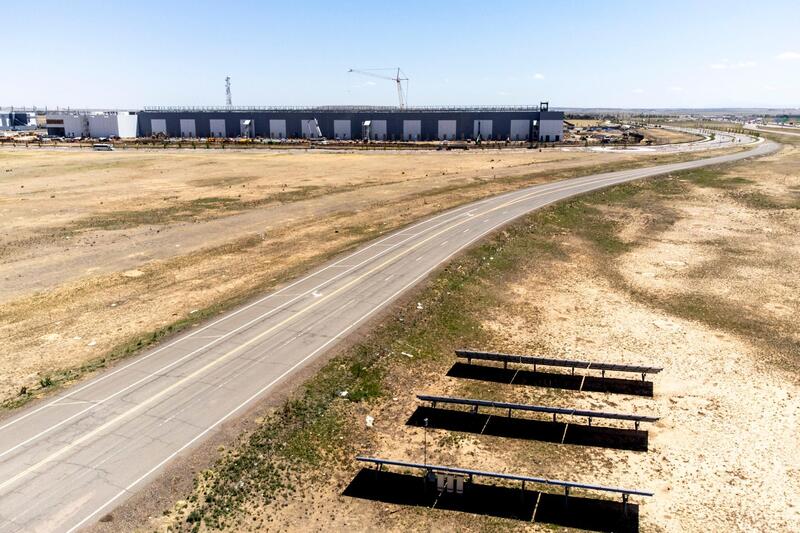
The hyperscale wave is now under construction. Microsoft is building three campuses west of the capital, including Kirkkonummi and Vihti, with first buildings due around the turn of 2026 and 2027. In Mäntsälä, Nebius expanded its AI site in 2026 and is adding a second building nearby. Verne broke ground on a Mäntsälä campus the same year. Hyperco is building in Loviisa, and larger plans sit in Nurmijärvi, Järvenpää, Tuusula, Kerava, Lohja and Raseborg.
Advantages
-
Free cooling. A cool climate allows outside-air and free cooling for most of the year.
-
Heat buyers. Helen, Fortum, Vantaan Energia, Nivos and Keravan Energia take server heat into district heating networks.
-
Low-carbon power. Nuclear, hydro and fast-growing wind supply most of Finland's electricity.
-
Connectivity. Several internet exchanges and a direct subsea route to Central Europe serve the metro.
-
Ready plots. Mäntsälä, Hanko, Raseborg and Vihti market zoned data-center land with grid access.
Challenges
-
Grid access. Fingrid paused new connections above 10 MW in the Helsinki region until early 2027. Vantaa faces the tightest local grid.
-
Connection rules. Since November 2025, Fingrid only answers connection requests backed by a final zoning plan and a building permit.
-
Electricity tax. On 1 July 2026, data centers lost the reduced industrial tax class and moved to the standard rate.
-
Local conditions. Helsinki and Espoo adopted data-center siting principles in 2026. Helsinki's principles make heat reuse a condition of new projects.
-
Land friction. Landowner opposition has stalled at least one large site east of the capital.
Trends
-
AI clouds. GPU clouds from Nebius, Verda and Gcore account for the newest large deployments.
-
Developer-led campuses. Developers such as FCDC, Hyperco, DayOne, Prime and QTS secure land and power before naming tenants.
-
Outward growth. Large builds are moving to ring towns with spare grid capacity and municipal land.
-
Heat as a product. New projects design for district heating from day one.
-
Ownership turnover. Infrastructure investors bought atNorth, Verne and Digita between 2022 and 2026.
Power and Policy
Fingrid operates the national transmission grid, and the Energy Authority (Energiavirasto) regulates it. Local distribution comes from Helen in Helsinki, Caruna in Espoo and Kirkkonummi, Vantaan Energia in Vantaa, Elenia in Lohja and Vihti, and Nivos in Mäntsälä. Fingrid plans new transformer capacity for the capital region through 2030. A new line from Tolvila, due in autumn 2028, adds supply for Helsinki. A draft law ties grid priority for data centers above 10 MW to a flexibility commitment, with a 2027 target start. A separate bill sent to Parliament in October 2026 creates a national data-center register.