Overview
Ohio is one of the largest data center states in the Midwest. Columbus holds most of its operating capacity, led by the hyperscale cluster at New Albany and Amazon's cloud region. Cincinnati, Cleveland and Dayton add carrier hotels, enterprise data centers and regional colocation. Since 2024, hyperscale and AI developers have pushed into Northwest Ohio, the Ohio River valley and the old industrial towns of the northeast. Voters and local councils now push back across the state.
History
Ohio's first data centers grew out of its phone companies and large employers. Ohio Bell built downtown telephone exchanges in Toledo, Cleveland and Dayton in the 1920s and 1930s, and AT&T still runs them. Cincinnati Bell opened its main exchange in 1931, and the building next door became the city's carrier hotel. Mead Data Central launched the Lexis legal research service from Dayton in 1973. Later, National City Bank, Procter & Gamble, Nationwide and Cleveland Clinic built their own data centers.
Colocation grew around the phone network. Cincinnati Bell bought CyrusOne in 2010 and took it public in 2013. Involta, now Ark Data Centers, opened in Akron in 2012 and bought a Youngstown operator in 2015. In 2017 H5 Data Centers bought carrier buildings in Cleveland and Cincinnati, and DataBank entered Cleveland.
Hyperscale demand began with a state tax deal. In 2014 the Ohio Tax Credit Authority exempted an Amazon affiliate from sales tax on data center equipment. Amazon opened its AWS US East (Ohio) cloud region around Columbus in October 2016. Facebook announced its first Ohio campus in New Albany in 2017, and Google bought land there in 2018. Intel's January 2022 decision to build a chip plant in Licking County pulled more developers east of Columbus.
Growth then outran the central Ohio grid. AEP Ohio paused new data center service commitments in central Ohio in 2023. Developers moved to Northwest Ohio, the Ohio River valley, Dayton's outer counties and the Canton area. Between 2024 and 2026, Meta, Google, Amazon, QTS and SoftBank's SB Energy announced campuses far from Columbus.
The Market Today
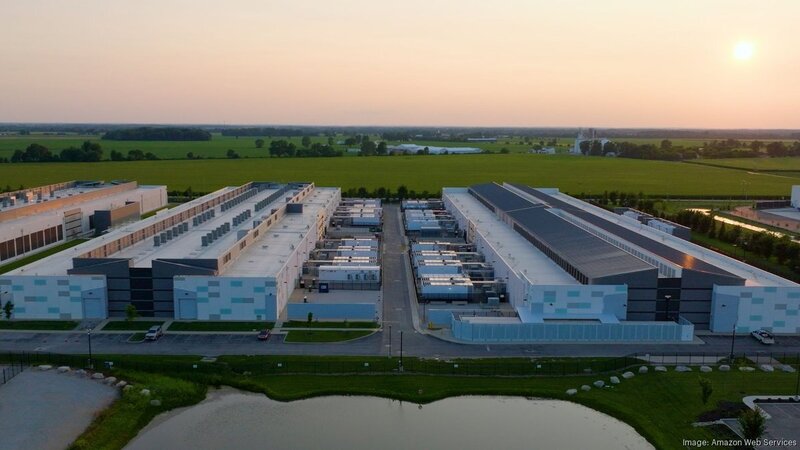
Columbus is Ohio's largest market. Cologix, Lumen, CENTRA and Cogent run carrier and colocation buildings downtown. Meta, Google, QTS, Vantage, EdgeConneX, Cologix and CyrusOne build hyperscale campuses at New Albany, east of the city. Amazon runs campuses in Dublin, Hilliard, New Albany and Jerome Township. Google also operates campuses south of the city at Lockbourne and in Lancaster.
Cincinnati centers on CyrusOne's 7th Street carrier hotel downtown. Flexential, H5, DartPoints and Encore Technologies also serve the market. Prologis is building a four-building campus for Amazon Web Services in Trenton, in Butler County.
Cleveland is the network hub of Northeast Ohio, centered on the Cleveland Technology Center carrier hotel. DataBank, Expedient, Ark and BlueBridge Networks add colocation. Aligned brought the first phase of its campus near Sandusky online in January 2026. Developers plan several hyperscale campuses around Canton.
Dayton holds enterprise, defense and small colocation sites. Iron Mountain and Encore run data centers in Miamisburg, and DataYard operates downtown. Meta bought about 600 acres in Piqua, north of the city, but Piqua voters capped data center size in November 2026.
Northwest Ohio has become a hyperscale frontier. Meta is building near Bowling Green, Google north of Lima and QTS at Van Wert. Toledo holds the region's colocation, led by CISP and Telesystem.
Southern Ohio hosts the state's largest planned campuses. SB Energy is building a 17-building campus for OpenAI at the former Portsmouth enrichment plant near Piketon. Google is developing a campus at Franklin Furnace, and Amazon owns about 1,000 acres near Manchester.
Miners and AI developers also target Appalachian Ohio, east of Columbus. MARA runs a bitcoin mine at Hannibal and agreed in April 2026 to buy the neighboring 505 MW Long Ridge gas plant. Bitdeer plans a campus at Clarington, and DarkByte is building near Cadiz.
Advantages
-
Central location. Ohio sits within a day's drive of much of the US population. Interstates 70, 71, 75 and 80/90 carry long-haul fiber across the state.
-
Transmission. AEP's 765 kV and 345 kV backbone crosses the state. PJM Interconnection (PJM) links Ohio to the largest power market in the United States.
-
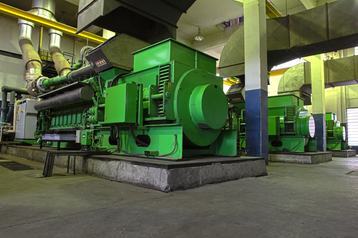
Natural gas. Utica and Marcellus shale gas feeds new combined-cycle plants and on-site generation. The NEXUS and Rover pipelines cross the north of the state.
-
Land and brownfields. Flat farmland, retired coal plants and former steel and auto plants offer large sites, some with substations in place.
-
Local incentives. Cities, townships and counties grant property-tax abatements of 75% to 100% for 15 to 30 years.
Challenges
-
Grid timing. In late 2025 AEP Ohio said it cannot serve 9.8 GW of new data center requests before late 2031.
-
Tariff terms. Since July 2025, new AEP Ohio data center loads over 25 MW pay for at least 85% of contracted demand for up to 12 years. FirstEnergy, AES Ohio and Duke Energy Ohio have proposed similar terms.
-
Capacity costs. PJM's capacity auction cleared at its price cap for the third straight time in July 2026. That lifts power bills for large users.
-
Local bans. On November 3, 2026, voters in Pataskala, Sunbury, Trenton, Piqua, Urbana, Oregon and Defiance banned or capped large data centers. Dozens of cities and townships adopted moratoria in 2025 and 2026.
-
Paused incentives. Ohio stopped approving new data center sales-tax exemptions in 2026 while the legislature studies the sector. Existing agreements continue.
Trends
-
Hyperscale moves to the edges. New campuses target rural counties with high-voltage lines and gas, away from the constrained Columbus grid.
-
Bring-your-own power. Developers pair campuses with dedicated gas plants and fuel cells. Oklo plans a nuclear campus in Pike County, with Meta buying its power.
-
Developer-built campuses. Prologis, Panattoni, Corscale and DAMAC entitle land and build campuses, and the end user often stays unnamed through approvals.
-
Mining turns to AI. Bitcoin miners in Akron, Massillon and along the Ohio River now market their power to AI tenants.
-
Ballot-box limits. A proposed constitutional amendment to bar data centers above 25 MW missed the 2026 ballot. Its backers now target 2027.
Power and Policy
Ohio sits in the PJM Interconnection, which runs the grid and the wholesale power market. AEP Ohio serves central and southern Ohio and Canton. FirstEnergy serves the north through Ohio Edison, The Illuminating Company and Toledo Edison. AES Ohio serves Dayton and the west, and Duke Energy Ohio serves Cincinnati. The Public Utilities Commission of Ohio (PUCO) sets retail rates, and the Ohio Power Siting Board (OPSB) approves large plants and transmission lines. House Bill 15, in force since August 2025, eased behind-the-meter generation and ended ratepayer support for the Ohio Valley Electric Corporation (OVEC) coal plants.