Overview
Cleveland is the data center market of Northeast Ohio, from Lake Erie south to Akron and Canton. It covers Cuyahoga, Lake, Lorain, Erie and Huron counties, plus the Akron-Canton submarket. Most capacity sits in downtown carrier hotels, suburban colocation halls and corporate data centers. The downtown buildings are old and compact, so they suit carrier and enterprise colocation. Large AI and hyperscale campuses have moved to the edges of the region, where land and power come easier. Many communities now push back on those projects.
History
The market grew from the phone network. Ohio Bell opened its Huron Road telephone exchange downtown in 1927, and it still anchors local networks. Long-distance carriers followed with their own buildings, including MCI facilities on West 3rd Street and in North Royalton.
Banks and hospitals built the first large private data centers. National City Bank opened a data center near Cleveland Hopkins airport in 1988. PNC expanded it after buying National City, and StratCap Data Centers bought the property in 2022. Cleveland Clinic opened its own data center in Brecksville in 2012.
Colocation consolidated in the 2010s. ByteGrid bought the Cleveland Technology Center on Rockwell Avenue in 2013 and expanded it in 2015. H5 Data Centers bought the building in 2017. DataBank entered the same year by buying a downtown facility in the Sterling Building from 365 Data Centers. Involta, now Ark Data Centers, opened its Independence facility in 2017 and expanded it in 2022.
The Market Today
Downtown Cleveland holds the region's network core. The Cleveland Technology Center is its main carrier hotel, and several internet exchanges meet there. DataBank, BlueBridge Networks, Cogent, Lumen and Fusion Connect run smaller sites nearby on Euclid Avenue. AT&T and Verizon keep major network buildings downtown and in the suburbs.
The suburbs add enterprise and regional colocation. Expedient runs two data centers in Garfield Heights, and Ark Data Centers operates in Independence. Cleveland Clinic and Progressive run large private data centers east and south of the city.
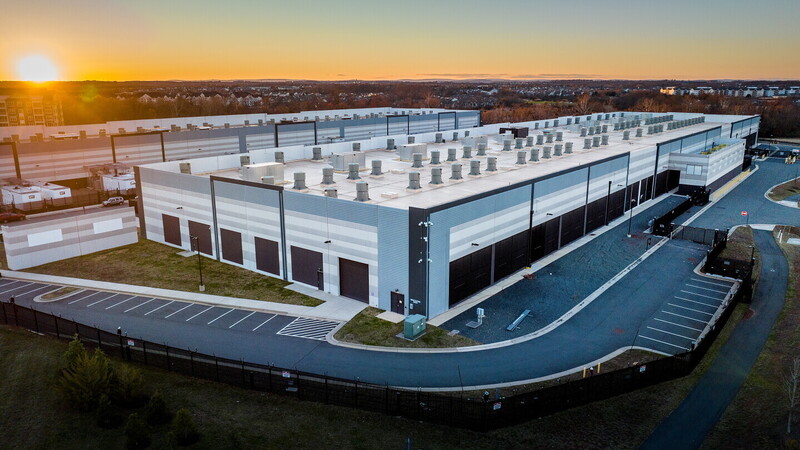
Hyperscale growth sits outside the city. Aligned brought the first phase of its four-building Northeast Ohio campus near Sandusky online in January 2026. To the south, Akron-Canton mixes legacy colocation, bitcoin mining and several planned hyperscale campuses around Canton. Proposals in Lake, Lorain, Erie and Huron counties met local resistance in 2026, and none of them has broken ground.
Advantages
-
Network hub. Long-haul fiber routes and regional networks meet downtown, giving tenants many carriers to choose from.
-
Water. Lake Erie supplies abundant water for cooling, and cool winters support free cooling.
-
Industrial land. Former steel, auto and power plant sites offer large tracts with existing roads and power lines.
-
Enterprise demand. Cleveland Clinic, Progressive, KeyCorp and Sherwin-Williams anchor a large base of corporate IT buyers.
-
Location. Interstates link Cleveland to Columbus, Pittsburgh, Detroit and Chicago within a day's drive.
Challenges
-
Local opposition. Cleveland rejected a $1.6 billion campus in May 2026, and its council paused new and expanded standalone data centers through January 2027. Amherst denied a project in July 2026, and Oxford Township tabled one in August 2026.
-
Votes at the ballot box. In November 2026, Perry Village voters put conditions on data center tax breaks. Monroeville voters opposed a proposed AI campus in an advisory vote.
-
Grid timing. Large new loads wait on utility studies and new substations, and the queue in FirstEnergy territory is growing fast.
-
Power costs. PJM's last three capacity auctions cleared at the price cap, which lifts power bills for large users.
-
State incentives. In May 2026, Ohio paused new requests for its data center sales-tax exemption.
Trends
-
Hyperscale moves to the fringe. Developers now target Erie, Lake, Huron and Stark counties rather than Cuyahoga County, where large parcels are scarce.
-
Telco real estate changes hands. AT&T sold its Huron Road and West Park exchanges to Reign Capital in 2025 and leased them back.
-
Fiber consolidation. Bluebird Fiber bought Cleveland-based Everstream in 2026, uniting two Midwest fiber networks.
-
Mining meets AI. Bitcoin miners in the region, including those in the Youngstown (Mahoning Valley) market to the east, now pitch their power to AI tenants.
Power and Policy
The region sits in the grid run by PJM Interconnection. FirstEnergy serves most of it, through The Illuminating Company in Cleveland and Ohio Edison in Akron, Lorain and Sandusky. Cleveland Public Power serves parts of the city, and AEP Ohio serves Canton. FirstEnergy expects data center demand in its transmission zone to grow from about 340 MW in 2026 to about 4,200 MW in 2030. In June 2026 it proposed a tariff that makes large new loads pay for at least 85% of their contracted demand. The Public Utilities Commission of Ohio (PUCO) sets tariffs, and the Ohio Power Siting Board (OPSB) approves large plants and transmission lines. Ohio eased behind-the-meter generation for large users with House Bill 15 in 2025.