Sweden Data Centre Market Overview
Sweden is one of the main data centre markets in the Nordics. Stockholm holds most of its colocation and interconnection. Microsoft, AWS and Meta run hyperscale campuses outside the capital and in the north. Since 2024, AI developers have chased spare grid capacity in Norrland. The grid sets the pace: the north has room, and the south has little.
History
Sweden's commercial market grew up in Stockholm. Interxion opened its first Stockholm data centre in Kista. Bahnhof opened Pionen, a former nuclear shelter under Södermalm, in 2008. In October 2011 Facebook chose Luleå for its first data centre outside the US. Meta's first Luleå building went live in June 2013.
Equinix gained its three Stockholm sites in January 2016 by buying TelecityGroup. In January 2017 Sweden cut the electricity tax for data centres of 0.5 MW or more to near zero. In 2018 it extended the cut to sites of 0.1 MW or more. AWS opened its Europe (Stockholm) region in December 2018. Digital Realty took over Interxion in March 2020, and Microsoft opened its Sweden Central region in November 2021.
Parliament abolished the tax cut from 1 July 2023. In June 2024 Microsoft pledged SEK 33.7 billion for Swedish cloud and AI. Ownership turned over from 2025. EcoDataCenter sold its Stockholm and Piteå sites to Kolo DC, and Telenor bought a majority of Bahnhof in 2026.
Data Centres in Sweden Today
Stockholm's main cluster is Kista. Digital Realty's six-building campus there hosts more networks than any other Swedish site. The cluster also holds an atNorth site, with a second under construction. Equinix, Conapto, Bahnhof, GlobalConnect and GleSYS serve retail customers. Evroc plans an AI data centre at Arlandastad.
Gothenburg is a small enterprise market. Göteborg Energi's Marieholm site is its main interconnection point. Bahnhof is building a data centre in a rock cavern in the city's northeast, due in late 2027.
Malmö faces Copenhagen across the Öresund. Microsoft runs a data centre in Staffanstorp, east of the city. Stena's Västergatan building is the main carrier hotel. Hässleholm has reserved land for a Panattoni campus, with a first phase targeted for 2033.
Gävleborg holds Microsoft's largest Swedish footprint, with two campuses in Gävle and one in Sandviken. New halls wait on regional lines from Vattenfall Eldistribution. Hyperco has a building permit for a campus at Lingbo in Ockelbo.
Mälardalen, west of Stockholm, hosts AWS's Stockholm region on campuses in Eskilstuna, Västerås and Katrineholm. Scandinavian Data Centers is fitting out a wartime rock cave in Eskilstuna for colocation. Brookfield plans a large AI campus at Strängnäs, part of an investment plan of up to SEK 95 billion.
Dalarna is EcoDataCenter's home market. Its Falun campus opened in 2018 and hosts CoreWeave, DeepL and BMW. In Borlänge it is building for Mistral AI on a former paper mill site. Microsoft has agreed to rent Mistral capacity there. EcoDataCenter has also signed for land in Smedjebacken, near Ludvika. Google broke ground at Horndal in June 2026 and targets completion in 2028.
Norrland has the most spare grid capacity. Meta's Luleå campus anchors Norrbotten. Ardent, part of Rumble since June 2026, runs GPU cloud capacity in Boden. Kolo DC runs a site in Piteå. EdgeConneX's Skellefteå campus is rising on part of Northvolt's former battery plant site. At Sollefteå, atNorth plans a large campus for 2028. Google has a conditional deal to buy the Torsboda industrial park near Sundsvall. Fossefall plans an AI campus near Jokkmokk.
Why Build Data Centres in Sweden?
-
Fossil-free power. Low-carbon sources generated about 99% of Sweden's electricity in 2025.
-
Northern grid room. Svenska kraftnät (Svk) maps more than 500 MW of free withdrawal capacity in each of Norrbotten, Västerbotten, Västernorrland, Jämtland and Dalarna.
-
Lower northern tax. Electricity used in Norrbotten, Västerbotten, Jämtland and nine nearby municipalities carries a tax deduction of 9.6 öre per kWh, open to data centres since July 2023.
-
Climate and heat buyers. A cold climate allows long free-cooling seasons. Stockholm Exergi and other district heating networks buy server heat.
-
Interconnection. Netnod runs internet exchanges in Stockholm, Gothenburg and Sundsvall.
What Limits Data Centre Growth in Sweden?
-
Grid in the south. Svk says Stockholm's power use is already so high that it cannot grant further increases on the current transmission grid. Its reinforcements there run to about 2030. Stockholm, Uppsala, Södermanland, Gävleborg and Västra Götaland each have less than 50 MW of free withdrawal capacity.
-
Connection queue. Data centres had 8,200 MW of applications in Svk's queue on 1 November 2026. Two days later Svk said it is considering temporary limits on very large applications.
-
Stalled projects. In June 2025 Svk said Brookfield's Strängnäs load was too large for the local grid. In September 2026 Vantage paused its Tierp campus because its power was not secured.
-
Tax and prices. Data centres pay the general electricity tax, 36.0 öre per kWh in 2026. In 2025, average spot prices in the southern zones were roughly three times those in the north.
Sweden Data Centre Trends
-
Sovereign AI. Mistral AI, Brookfield with Telia, and Evroc plan AI capacity for European customers. Swedish companies launched the Sferical One supercomputer in Linköping in October 2026.
-
Moving north. New campuses follow spare grid capacity to Norrland, often onto former industrial land.
-
Crypto gives way to AI. HIVE is phasing down bitcoin mining in Sweden and plans AI hosting at Boden.
-
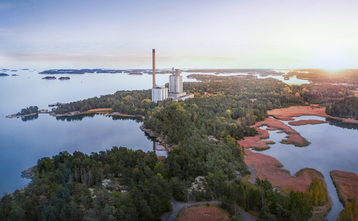
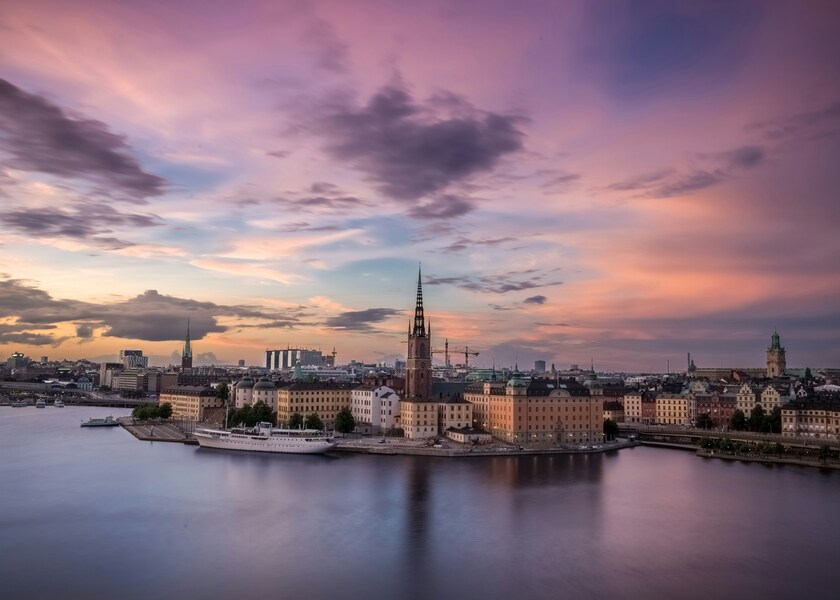
Heat reuse. In November 2026 atNorth signed a heat deal with Calentix for its Sollefteå campus.
Power and Policy in Sweden
Svk runs the 400 kV and 220 kV transmission grid and the connection queue. The Swedish Energy Markets Inspectorate (Energimarknadsinspektionen, Ei) regulates the grids. Ellevio, Vattenfall Eldistribution and E.ON Energidistribution run the largest distribution grids. Sweden has had four bidding zones, SE1 in the north to SE4 in the south, since November 2011. A project that misses Svk's deadlines loses its queue place. Since July 2025, data centres of 500 kW or more report energy data each year to an EU database. A national data-centre strategy is in preparation.



 with the Swedish energy infrastructure company Calentix covering the [SWE04...](https://cdn.baxtel.com/data-center/atnorth-signs-calentix-heat-reuse-deal-at-300mw-solleftea-site/logo/medium_atnorth-signs-calentix-heat-reuse-deal-at-300mw-solleftea-site-featured(2).png)