Overview
Östergötland County lies south-west of Stockholm in Sweden, with Linköping and Norrköping as its two cities. Research computing and corporate data halls, not colocation campuses, define its market.
The Market Today
The National Supercomputer Centre (NSC) at Linköping University became Sweden's first supercomputer centre in 1989. It is now a branch of the National Academic Infrastructure for Supercomputing in Sweden (NAISS) and runs the Kärnhuset hall on Campus Valla. Berzelius, an AI system funded by the Knut and Alice Wallenberg Foundation, went live there in March 2021. Arrhenius, a European supercomputer, was inaugurated in September 2026.
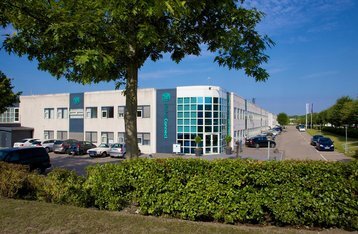
Ericsson opened a data centre for its research and development in Linköping in 2014. GlobalConnect runs a colocation hall in the city that opened in 2009.
Near Norrköping, EdgeMode planned an AI data centre at Marviken, a coastal plant Vattenfall built as a nuclear station. Its reactor never produced power, and Vattenfall sold the plant in 2018.
Advantages
-
Research computing. Sweden's national academic supercomputers run in Linköping. The Sferical One AI supercomputer launched in the city in October 2026.
-
Grid room. Svenska kraftnät (Svk) maps 50 to 150 MW of free withdrawal capacity in Östergötland for 2026, more than in Stockholm or Södermanland.
Challenges
-
Stalled project. EdgeMode has reported no revenue. In January 2026 it sued to undo its 2025 purchase of the company that holds Marviken. In February 2026 Sweden's Enforcement Authority (Kronofogden) moved again to sell the plant at a forced auction.
-
Southern prices. In 2025 the average spot price in bidding zone SE3 was nearly three times that of northern SE2.
Power and Policy
Svk runs the transmission grid and the connection queue. The municipal grid company serves Linköping, and E.ON Energidistribution serves Marviken.