Overview
Canada's data centre market spans ten provinces, and each runs its own power system. Toronto and Montreal hold most of the country's colocation and cloud capacity. Calgary, Vancouver, Edmonton and Ottawa form a second tier. Since 2024, AI demand and federal support for sovereign compute have drawn large campus proposals to Alberta, Quebec, British Columbia, Saskatchewan and Atlantic Canada.
History
Canada's data centre industry grew out of its telecom carriers and downtown carrier hotels. In the late 1990s, 151 Front Street West in Toronto became the country's main interconnection point and the home of TorIX, the Toronto Internet Exchange. Toronto-based Q9 Networks built much of the early commercial colocation in Ontario, Alberta and British Columbia. A BCE-led group bought Q9 in 2012 for C$1.1 billion, and Bell took full ownership in 2016.
Specialist operators and cloud providers arrived in the 2010s. Cologix entered in 2011 by buying colocation businesses in Montreal, Toronto and Vancouver. OVH opened its first North American data centre in a former aluminium plant at Beauharnois, Quebec, in 2012. Microsoft launched cloud regions in Toronto and Quebec City in 2016, and AWS opened its Montreal region the same year.
Ownership then consolidated. eStruxture launched in Montreal in 2017 and grew by buying Shaw's Calgary facility and Aptum's Canadian data centres. Vantage entered in early 2019 by buying 4Degrees from Videotron. Equinix bought 13 data centres from Bell in 2020 for US$780 million, adding seven Canadian metros. KDDI's Telehouse bought 151 Front Street West in 2023. AWS opened a second region, in Calgary, in December 2023. Rogers sold nine data centres to InfraRed Capital Partners in 2025, and they now run as Qu Data Centres.
The Market Today
Toronto is Canada's largest market. Equinix, Cologix, eStruxture, Digital Realty, STACK, Telehouse and Qu Data Centres lead colocation across the city and its suburbs. Microsoft, Google and Oracle run cloud regions there.
Montreal is the second-largest market and the centre of Quebec's hydro-powered industry. Cologix runs the largest footprint, with about a dozen facilities. Vantage, eStruxture, Equinix, Leaseweb and OVHcloud also operate in the metro, and AWS, Google and Oracle run cloud regions there. Vantage and QScale run campuses in the Quebec City area.
Vancouver's downtown carrier hotels anchor interconnection in British Columbia, where Cologix, eStruxture and Equinix lead colocation. Kamloops has become an AI hub, with AI data centres run by TELUS and Bell. In northern British Columbia, former bitcoin mines now host AI cloud.
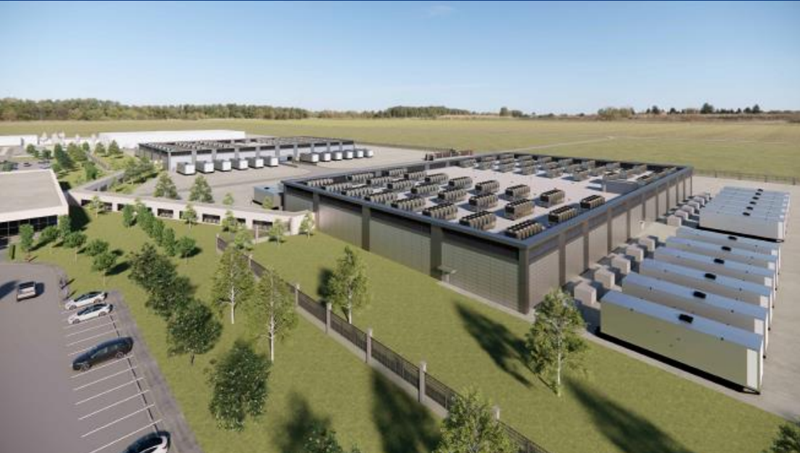
Calgary is the largest market on the Prairies. It hosts AWS Canada West and colocation from Equinix, eStruxture, Qu Data Centres and Cologix. In July 2026 Meta broke ground on its first Canadian data centre, northeast of Edmonton. Developers propose many more gas-powered AI campuses across rural Alberta.
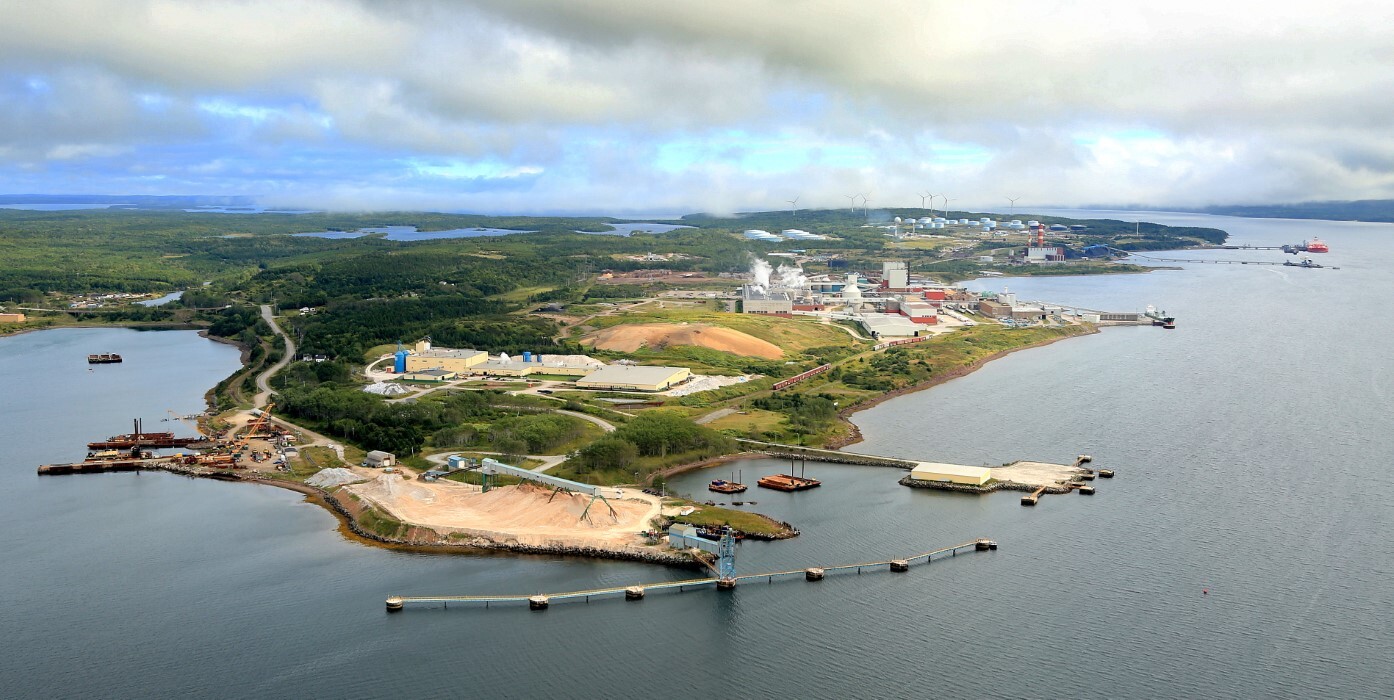
Ottawa, Winnipeg, Regina, Halifax and Saint John are smaller markets served by Equinix, Bell, Qu Data Centres and local operators. Bell AI Fabric runs AI capacity in Manitoba and plans a large gas-powered campus in Saskatchewan. In October 2026 Anthropic agreed to lease the first phase of EverWind Fuels' AI campus at Point Tupper, Nova Scotia.
Advantages
-
Clean, low-cost power. Hydro supplies most electricity in Quebec, British Columbia, Manitoba and Newfoundland and Labrador. Industrial rates in Quebec and Manitoba rank among the lowest in North America.
-
Gas in the West. Alberta and Saskatchewan hold abundant natural gas for on-site generation. Alberta's deregulated market lets large users build their own plants.
-
Climate. Cold winters and mild summers give most Canadian markets long free-cooling seasons.
-
Sovereign demand. Governments, regulated industries and AI firms want compute that stays under Canadian law. Ottawa committed C$2 billion to its Sovereign AI Compute Strategy in 2024, and the 2025 federal budget added more.
-
AI talent. Montreal, Toronto and Edmonton host Canada's national AI institutes: Mila, Vector and Amii. Toronto-based Cohere builds large language models for enterprise and government customers.
Challenges
-
Power allocation. Most large provinces now ration new data-centre load. Quebec requires government approval for projects of 5 MW or more. British Columbia caps new data-centre supply, and Alberta capped its first allocation at 1,200 MW.
-
Rising power costs. In February 2026 Hydro-Québec proposed a data-centre rate about double its current large-power rate. Ontario's draft rules propose ending a key peak-demand discount for new data centres over 1 MW.
-
Carbon intensity. Fossil fuels supply most electricity in Alberta and Saskatchewan. Buyers with clean-energy targets look to the hydro provinces instead.
-
Local approvals. Rural councils and First Nations weigh in on every large campus. In 2026 Manitoba's premier refused to support a hyperscale campus south of Winnipeg, and a county near Calgary paused data-centre rezoning.
-
Scale and timing. Canada's market is small next to the major US hubs. Most of the national pipeline remains in early planning.
Trends
-
Carriers left colocation, then returned for AI. Shaw, Bell and Rogers sold their colocation businesses between 2019 and 2025. In 2025 Bell launched Bell AI Fabric and TELUS launched its Sovereign AI Factories, both selling GPU capacity.
-
Sovereign AI drives demand. Federal programs fund domestic compute, and a 2026 federal call for proposals sought large sovereign AI data centres. Ontario and British Columbia now weigh data sovereignty when they allocate power.
-
Merit replaces the queue. Quebec, British Columbia, Manitoba and Ontario replaced first-come connections with government selection or competitive calls.
-
The West brings its own power. Alberta's proposed next allocation round requires new gas generation sized to each data centre. Most Alberta campus plans, and Bell's Saskatchewan campus, pair data halls with gas generation.
-
Crypto sites turn to AI. Bitcoin miners in British Columbia and Quebec are converting their sites to AI and high-performance computing. British Columbia and Manitoba now bar new crypto connections.
Power and Policy
Canada has no national power market, and each province regulates its own grid. Crown utilities dominate in Quebec, British Columbia, Manitoba, Saskatchewan, New Brunswick and Newfoundland and Labrador. Ontario's Independent Electricity System Operator (IESO) runs a hybrid market, and Bill 40 (2025) gives Ontario's energy minister approval over large new loads. Alberta runs Canada's only fully deregulated market through the Alberta Electric System Operator (AESO). Quebec's Bill 2 (2023) set the 5 MW approval threshold. British Columbia's Bill 31 (2025) caps new data-centre supply through 2029.