Overview
The Childress region covers Childress, Hall, Cottle and Hardeman counties in the Rolling Plains, between the Texas Panhandle and the Red River. Part of West Texas, it has no colocation market or carrier hotel. Instead, large rural campuses rise beside high-voltage substations. A converted bitcoin mine, three gigawatt-scale AI campuses and a line of planned projects make up the market.
History
Childress grew up as a railroad and ranching town on US 287 between Amarillo and Fort Worth. Its data center story starts with the grid. By 2014, Texas had finished its Competitive Renewable Energy Zone (CREZ) lines. They carry 345 kV power from Panhandle wind farms through the Tesla substation southeast of Childress. Large solar farms followed around Tesla in the early 2020s.
Iris Energy chose Childress for its first US site. It signed a grid connection agreement with AEP Texas in January 2022 and began bitcoin mining in 2023. The company, renamed IREN in 2024, expanded the site through 2024. In November 2025, IREN signed a five-year, $9.7 billion AI cloud contract with Microsoft for new liquid-cooled buildings at Childress.
Lancium brought its powered-land model to the region in 2025. Childress County approved a reinvestment zone and tax abatements for a Lancium campus that spring. Hall County approved abatements for a second Lancium campus near Turkey in June 2025. In July 2026, Crusoe and QTS announced data center campuses on the two Lancium sites.
The Market Today
IREN's Childress campus east of town is moving from bitcoin mining to AI. Microsoft accepted the first liquid-cooled Horizon building in August 2026, and five more Horizon buildings are under construction. IREN is also converting its original air-cooled halls for an NVIDIA AI cloud contract. It plans to end most mining by the end of 2026.
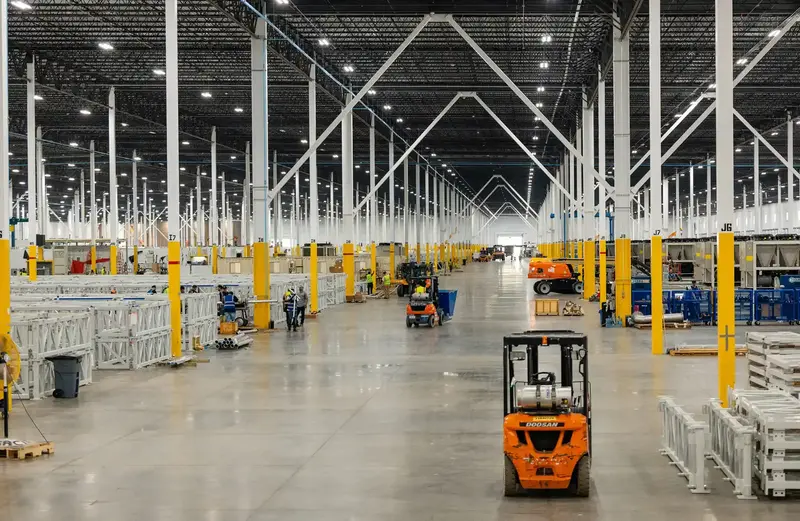
Just south of IREN, Crusoe is building three single-story data centers on Lancium land for a leading hyperscale technology company. Each building covers about 806,000 square feet, with completion set for 2028. In Hall County, south of Turkey, QTS plans up to 11 data center buildings on Lancium land. Grading for the first building pad began in May 2026.
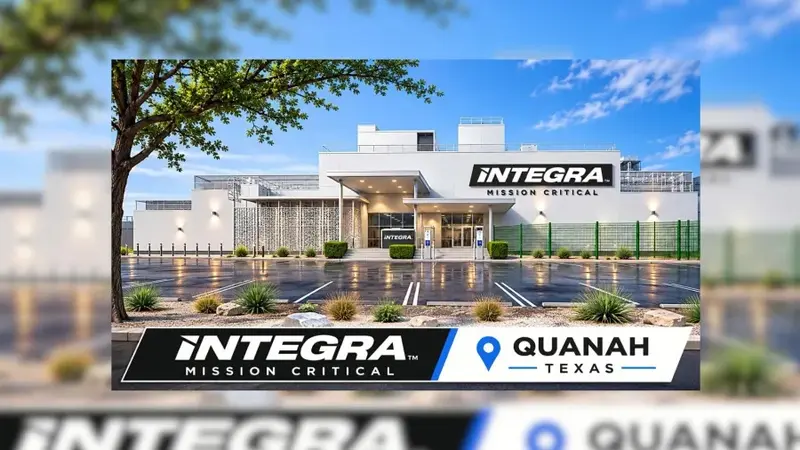
Integra is developing a $6.7 billion campus near Quanah in Hardeman County, with its own dedicated substation. Crews mobilized there in October 2026. Two more projects are in early development. Soluna plans an AI data center beside a utility-scale solar farm in Childress County. Aetheris plans an off-grid, gas-powered campus east of Paducah in Cottle County.
Advantages
-
Transmission backbone. CREZ 345 kV lines cross the region, with major substations at Tesla, Salvare and Cross. Sites near these stations need short connections rather than new long-distance lines.
-
Land. Ranch parcels of several thousand acres sell at low cost. Lancium alone owns more than 6,500 acres in Childress County.
-
Local support. Childress and Hall counties approved their Lancium reinvestment zones by unanimous votes. The deals pair tax abatements with road, water and community commitments.
-
Renewable supply. Panhandle wind farms and solar farms around Tesla feed the same substations. Developers plan on-site solar and batteries alongside grid power.
-
Dry climate. The semi-arid climate suits air and closed-loop cooling. The new campuses avoid evaporative cooling and its heavy water use.
Challenges
-
Grid upgrades. The large campuses depend on new 345 kV stations and lines that ERCOT lists for 2026 through 2029. AEP Texas has also proposed a Childress-area transmission project to serve county load growth.
-
Large-load rules. Senate Bill 6 requires loads of 75 MW or more to post study security and accept curtailment in emergencies. ERCOT now studies large loads in batches, which slows new requests.
-
Workforce and housing. Childress has a few thousand residents, and Turkey and Paducah have far fewer. Lancium is paving county roads to bus construction workers to its Hall County site.
-
Distance. The region sits more than 100 miles from Amarillo and Wichita Falls. It suits AI training better than services that need low latency to cities.
-
Severe weather. Hail, high winds and tornadoes strike the Rolling Plains each spring. Summer heat raises cooling loads.
-
Schedule risk. IREN moved three Horizon buildings into early 2027. County abatements carry firm completion deadlines for each phase.
Trends
-
Miners turn to AI. IREN is replacing bitcoin mining with AI cloud services across its campus. The same grid connection now serves Microsoft and NVIDIA contracts.
-
Powered land. At Lancium's Childress Clean Campus, Lancium owns the land and power infrastructure. Operators such as Crusoe build and run the data centers.
-
Gigawatt pipeline. ERCOT's large-load studies count 6,750 MW of requested load in Childress County through 2032. That total exceeds every project announced in the county.
-
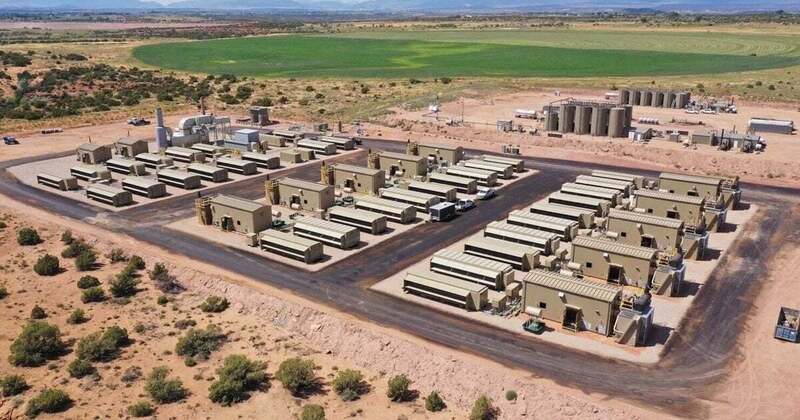
Bring your own power. Project Matter plans to run on its own gas generation and batteries with no grid connection. Soluna plans to turn surplus solar output into computing power.
Power and Policy
The Electric Reliability Council of Texas (ERCOT) runs the grid across the region, and the Public Utility Commission of Texas (PUCT) regulates it. AEP Texas and Electric Transmission Texas (ETT) own the 345 kV stations around Childress, including Tesla. Cross Texas Transmission owns the lines that bring Panhandle power into Tesla and past Turkey. South Plains Electric Cooperative and Lighthouse Electric Cooperative hold distribution service areas. Senate Bill 6, signed in June 2025, set rules for loads of 75 MW or more. The PUCT adopted its large-load interconnection rule in September 2026. Counties grant tax abatements under Chapter 312 of the Tax Code and Chapter 381 of the Local Government Code.