Overview
The Wichita Falls market covers nine North Texas counties along the Red River, with Wichita Falls, Vernon and Graham as its main towns. Oil booms at Electra in 1911 and Burkburnett in 1918 drove the city's early growth. Sheppard Field opened in 1941 and still anchors the local economy as Sheppard Air Force Base. The region lies inside the Electric Reliability Council of Texas (ERCOT) grid in Texas.
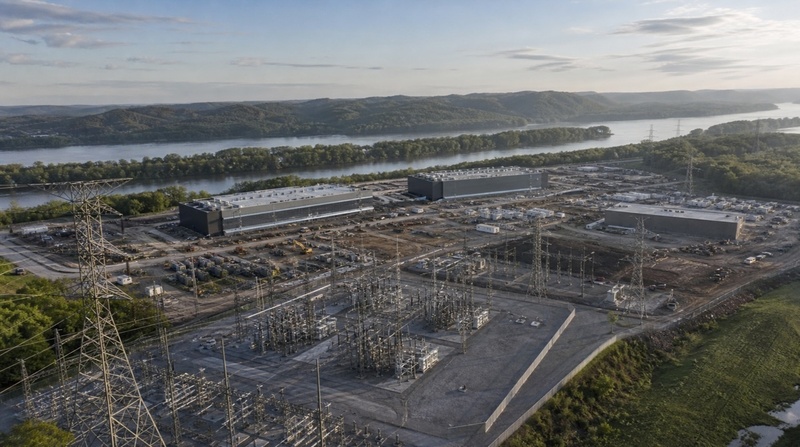
Data centers arrived late. American Electric Power (AEP) retired the Oklaunion coal plant near Vernon in 2020. In 2024 the bitcoin miner Genesis Digital Assets (GDA) opened its Rowdy Data Center on the plant site. Late that year the Wichita Falls City Council rezoned 227 acres on the north side for a hyperscale campus by Calvano Development. In 2025 the Wichita Falls Economic Development Corporation sold 225 acres in its business park for a second campus.
The Market Today
City leaders named Skybox Datacenters as the business park buyer in February 2026. Skybox is developing PowerCampus Texas there with Blue Owl. The master plan has seven buildings, with the first due in late 2028. Skybox expects 200 to 350 permanent jobs at full build. Calvano's north-side campus remains in planning. Lumen runs a network facility downtown, but the city has little colocation.
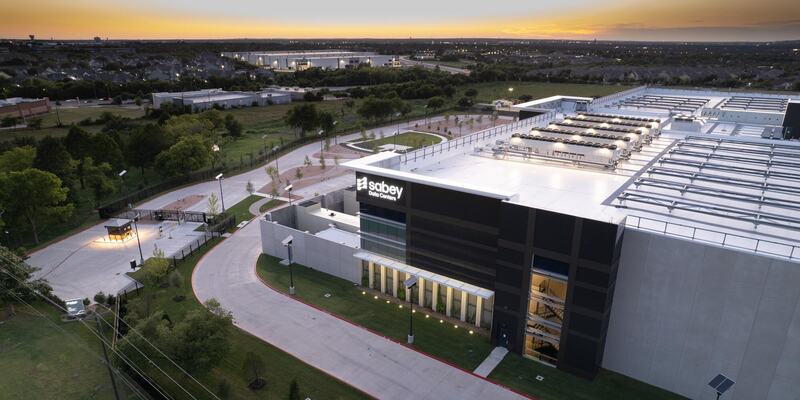
Outside the city, the market centers on reused industrial power sites. In June 2026 AiOnX completed its purchase of a 77% stake in GDA. It plans to convert GDA's facilities to AI workloads. Sabey Data Centers holds land at Oklaunion for a future campus designed around liquid cooling. In July 2026 Stream Data Centers agreed to buy Plug Power's former hydrogen plant site in Graham, with its grid interconnection. Plug Power had cancelled the plant in 2025. Several other large campuses are in early planning across the region.
Advantages
-
Reusable grid connections. Retired plants and cancelled industrial projects left substations and interconnection rights behind. Developers now reuse them at Oklaunion and Graham.
-
City support. City leaders described the Skybox campus as the largest industrial announcement in Wichita Falls history. Skybox agreed to pay for the infrastructure the campus needs, so residents do not carry the cost.
-
Wind power. Large wind farms around Vernon and Graham feed the ERCOT grid.
-
Workforce. Sheppard Air Force Base hosts the Air Force's largest technical training wing, with more than 60,000 graduates a year. Midwestern State University joined the Texas Tech University System in 2021.
-
Proximity to Dallas-Fort Worth. Wichita Falls sits about two hours northwest of Dallas-Fort Worth, the largest market in the state. US 287 links the city to Fort Worth and Amarillo, and I-44 runs north to Oklahoma City.
Challenges
-
Grid connection pause. On August 3, 2026, Governor Greg Abbott paused approvals of new data center grid connections pending an audit. ERCOT now expects its first batch study of large loads to miss its April 2027 deadline.
-
Queue congestion. ERCOT tracks more than 400 GW of large-load requests, and about 90% of them are data centers. That total exceeds five times the grid's record peak demand.
-
Local approvals. In May 2026 the city council rejected a data center rezoning near homes on Airport Drive. In June 2026 Archer County commissioners refused a tax abatement for a proposed campus.
-
Water. The 2011 to 2015 drought drew the city's lakes down to about a fifth of capacity. In 2026 the city approved one small project only with water limits and a ban on evaporative cooling.
-
Severe weather. The region lies in Tornado Alley. An F4 tornado killed 42 people in Wichita Falls on April 10, 1979. Winter Storm Uri forced rolling outages across the ERCOT grid in February 2021.
Power and Policy
ERCOT runs the grid, and the Public Utility Commission of Texas regulates it. Oncor delivers power in Wichita Falls and Graham, and AEP Texas serves the Vernon area. At Oklaunion, a 220 MW back-to-back DC tie links ERCOT with the Southwest Power Pool grid in Oklahoma. Senate Bill 6, signed in June 2025, sets grid rules for loads of 75 MW or more. It requires large loads to disclose on-site backup generation and lets ERCOT curtail them in grid emergencies. In 2026 ERCOT began grouping large-load requests into batch studies. Large customers in both utility areas buy energy from competitive retail providers.