Wisconsin Data Center Market Overview
Wisconsin's data center market has two centers and a long tail. Milwaukee holds most of the state's capacity and its hyperscale builds. Madison is the second colocation market. Outside the two metros, the state has small colocation sites, telephone exchanges, crypto hosting at old paper mills, and a growing list of large proposals.
History
Wisconsin's first data centers belonged to its banks, insurers, health systems and telephone companies. Independent telephone companies founded a shared fiber network in 1997, which later opened colocation sites in Eau Claire and Green Bay. Marshfield Clinic built a data center in Marshfield in 2010 that now operates as a colocation facility. In Green Bay, local hosting providers have sold colocation since the 1990s.
Crypto miners arrived in 2021 and 2022. They moved into former paper mills and hydro plants in northern and central Wisconsin. A bitcoin hosting center opened at the former Flambeau River Papers mill in Park Falls in 2022.
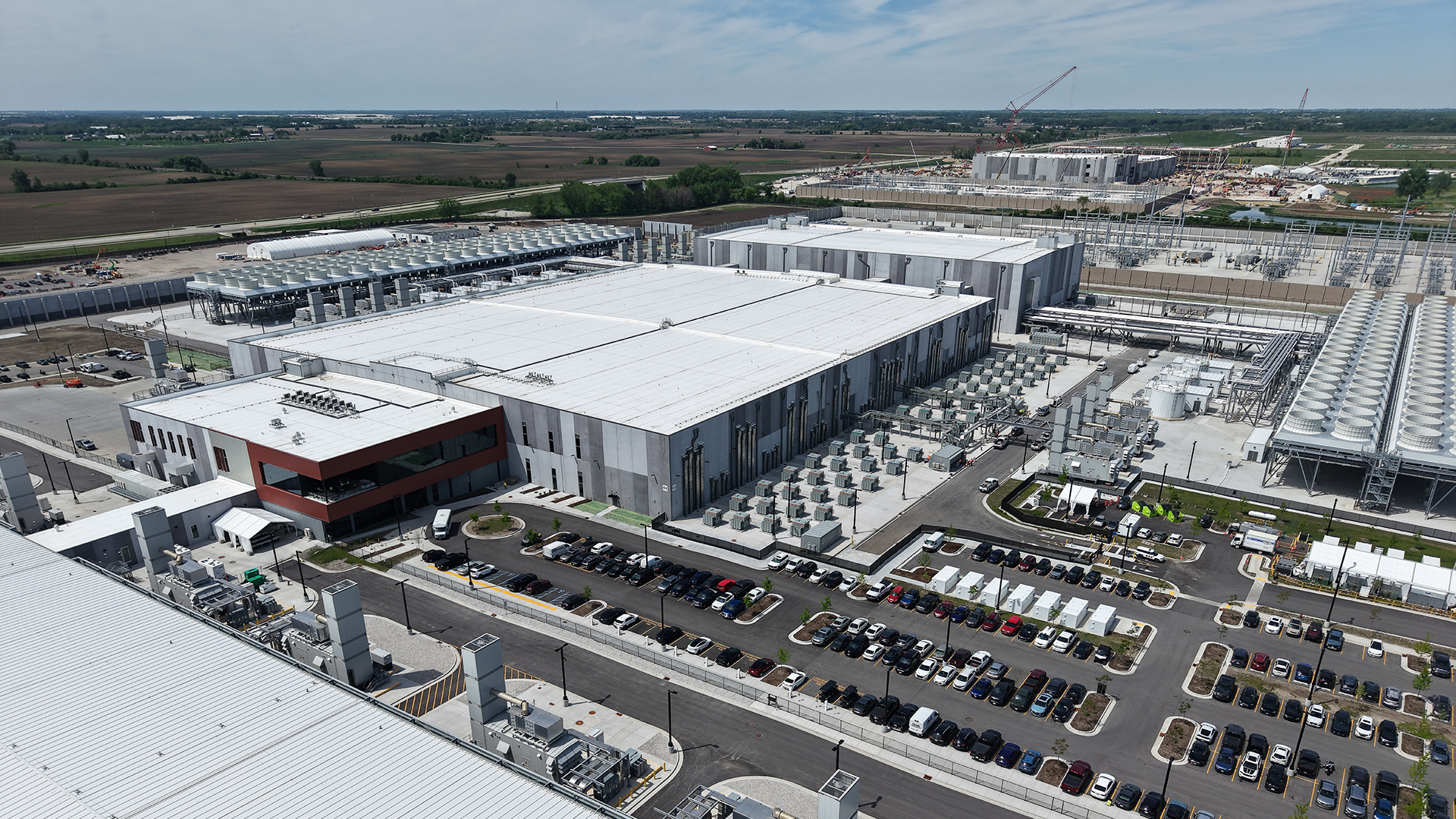
Hyperscale demand followed. Microsoft bought land in Mount Pleasant in 2023 that the state had assembled for Foxconn, and finished its first Fairwater data center there in 2026. Vantage Data Centers began a campus in Port Washington for OpenAI and Oracle in 2025. Meta is building a data center in Beaver Dam, set to open in 2027.
Data Centers in Wisconsin Today
Milwaukee and the southeast lead the state. The corridor from Kenosha to Port Washington holds the largest campuses under construction. The city of Milwaukee keeps the main carrier hotel and internet exchange.
Madison has a cluster of colocation and carrier facilities. A hyperscale campus proposed north of the city moved to Iowa in 2026.
In the Fox Valley, Ark Data Centers runs a colocation campus near Green Bay on a former Kimberly-Clark site and is adding new halls. Smaller providers serve Green Bay and Little Chute. In central Wisconsin, Aventus runs the Marshfield facility, and a small colocation site operates in Port Edwards. Beaver Dam, between Madison and Milwaukee, now hosts a Meta campus.
Large proposals have spread beyond the metros since 2025. Developers have pitched campuses at the former General Motors plant in Janesville and a quarry near Beloit. Others targeted farmland near Menomonie and Green Bay, and a paper mill in Wisconsin Rapids. Most have stalled, been withdrawn or been denied.
Why Build Data Centers in Wisconsin?
-
Tax incentives. Since 2023, qualified data centers pay no sales tax on equipment and building materials.
-
Power for large loads. We Energies has a tariff for loads of 100 MW or more, approved in April 2026. Alliant Energy and Xcel Energy have filed their own large-load tariffs.
-
Cool climate. Long winters support free cooling for much of the year.
-
Industrial sites. Former paper mills, factories and quarries offer large parcels with grid and rail connections.
-
Fiber. Long-haul routes between Chicago and Minneapolis cross the state, and a statewide fiber network links the smaller cities.
What Limits Data Center Growth in Wisconsin?
-
Local opposition. Counties, cities and towns took about 40 moratorium actions on data centers in 2026. Voters in Janesville approved a referendum that requires a public vote on large deals for the former General Motors site.
-
Transmission lead times. New campuses need new high-voltage lines and substations, which take years to permit and build.
-
Ratepayer scrutiny. The PSC's large-load rules make very large customers pay for the generation and grid built for them.
-
Policy uncertainty. Bills for a statewide moratorium and new data center rules died in the legislature in March 2026, and the debate continues.
-
Thin colocation outside the metros. Most outstate facilities are small, so large tenants have few ready-built options.
Wisconsin Data Center Trends
-
Hyperscale spillover from Chicago. Developers look north along Interstate 94 for land and power.
-
Industrial reuse. Paper mills and auto plants are the most pitched sites, for their grid ties and zoning.
-
Local control. Towns are writing data center zoning districts and putting large deals to voters.
-
Telecom consolidation. Verizon bought Frontier in 2026, T-Mobile bought UScellular's wireless business in 2025, and Brightspeed took over Lumen's local phone business in 2022.
Power and Policy in Wisconsin
WEC Energy Group's We Energies and Wisconsin Public Service serve the southeast and northeast. Alliant Energy serves much of southern and central Wisconsin, Xcel Energy the west, and Madison Gas and Electric the Madison area. Municipal utilities and electric cooperatives serve many smaller towns. American Transmission Company builds most of the high-voltage grid, and the Midcontinent Independent System Operator (MISO) runs the wholesale market. The Public Service Commission of Wisconsin (PSC) approves tariffs, plants, transmission lines and large customer contracts.




 facility, [the Milwaukee Jou...](https://cdn.baxtel.com/data-center/potawatomi-seeks-milwaukee-data-center-expansion-up-to-59-000-sq-ft/logo/medium_potawatomi-seeks-milwaukee-data-center-expansion-up-to-59-000-sq-ft-featured(2).jpg)
 will anchor Project Red Clay, a 1GW data center campus in Lowndes County, Alabama. The AI cloud provider [said on November 4](https://lambda.ai/blog...](https://cdn.baxtel.com/data-center/lambda-to-anchor-33-1b-project-red-clay-campus-in-alabama/logo/medium_lambda-to-anchor-33-1b-project-red-clay-campus-in-alabama-featured.jpg)
 will supply dark fiber to Amazon Web Services ([AWS](https://baxtel.com/data-centers/amazon-aws)) under an agreement worth more than $2...](https://cdn.baxtel.com/data-center/verizon-signs-2b-plus-dark-fiber-deal-with-aws/logo/medium_verizon-signs-2b-plus-dark-fiber-deal-with-aws-featured(2).jpg)
 to build a hyperscale data center campus o...](https://cdn.baxtel.com/data-center/mason-county-approves-40-year-tax-deal-for-meta-s-400mw-kentucky-campus/logo/mason-county-approves-40-year-tax-deal-for-meta-s-400mw-kentucky-campus-featured.jpg)