Overview
Bavaria is the largest state in Germany by area, and its data centre market centres on Munich and Nuremberg. Enterprise, research and public-sector data centres make up much of the market, beside a colocation sector led by Munich. Since 2025, AI factories and campus plans have pushed grid demand far past supply.
History
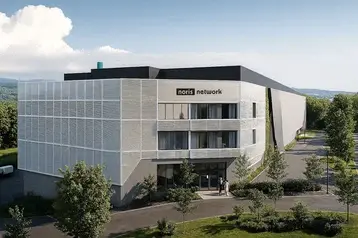
The commercial market grew out of the telecom boom around 2000. KPNQwest converted a former Deutsche Post sorting centre near Munich's main station into a data centre, and IXEurope reopened it in 2006. Equinix bought IXEurope in 2007 and still runs the building as MU1 and MU3. In Nuremberg, noris network moved into the Deutschherrnkarree in 2000, which became the city's carrier hotel. The Leibniz Supercomputing Centre (LRZ) moved its supercomputers from central Munich to Garching in 2006.
Purpose-built campuses followed. In 2012 noris opened its Nürnberg Süd campus, and Hetzner opened the first building of its Nuremberg park. In 2017 e-shelter, owned by NTT since 2015, opened a campus in Unterschleißheim, and noris opened one in Aschheim. EdgeConneX entered Munich in 2019 by buying a Vodafone facility, and Equinix opened MU4 in Aschheim in 2022.
The market then consolidated. In 2021 q.beyond sold its colocation sites to DATEV and NorthC. In 2023 nLighten took over EXA Infrastructure's edge sites in both cities, and Arcus launched Portus Data Centers in Kirchheim. In March 2025 Equinix told customers it would close MU1 and MU3 by mid-2027. That September NorthC bought the former Level 3 Munich gateway from Colt.
The Market Today
Munich holds most of the state's colocation capacity. Equinix, NTT, noris, Portus and NorthC lead the market, mostly from suburban campuses. DE-CIX Munich connects more than 180 networks. Deutsche Telekom opened its Industrial AI Cloud with NVIDIA in a converted bank data centre at Tucherpark in February 2026. LRZ and the Max Planck Computing and Data Facility run research supercomputers in Garching.
Nuremberg is the second hub. Local operator noris runs two data centres in the city, and Hetzner's park on the western edge now holds eight data centre buildings. NorthC, DATEV, Contabo, nLighten and euNetworks also run sites there.
Elsewhere the market is small and regional. LEW TelNet opened a new data centre in Augsburg in 2025, and M-net runs another in the city. In Ingolstadt and Hof noris runs smaller sites, and R-KOM runs three around Regensburg. Utility telcos and hosting firms run small data centres across Franconia, in and around Würzburg, Schweinfurt, Haßfurt, Coburg and Bamberg, and in the Allgäu at Kempten and Lindau. Large AI campus plans have emerged at Schweinfurt and in the Unterallgäu.
Advantages
-
Enterprise demand. Munich is home to the headquarters of BMW, Allianz and Munich Re. Corporate, public-sector and research buyers want capacity hosted in Germany.
-
Research computing. The Free State has pledged up to €500 million for LRZ's expansion and €500 million for the Max Planck campus in Martinsried.
-
Interconnection. DE-CIX Munich is the state's main internet exchange, and MegaIX Munich, N-IX and frankonIX add neutral alternatives.
-
State support. Invest in Bavaria's contact point for data-centre investors has handled about 125 inquiries since October 2025. Each district government now has a grid-connection coordinator.
-
Brownfield land. Former barracks, factories and transmitter sites offer large plots with grid connections, such as the 110 kV double feed at the former Playmobil factory in Dietenhofen.
Challenges
-
Grid access. In April 2026 Bayernwerk, the main distribution operator, reported 41 data centres seeking a combined 6,000 MW, mostly around Munich and Würzburg. The state's electricity summit ranked industry first and data centres second for new connections.
-
Transmission. Bavaria relies on power from northern Germany. The SuedLink and SuedOstLink HVDC lines that will carry it are due by the end of 2028.
-
Power costs. German industrial power prices and grid fees rank among the highest in Europe.
-
Efficiency rules. The federal Energy Efficiency Act (EnEfG) requires data centres opening from July 2026 to reach a PUE of 1.2 and reuse part of their waste heat. From 2027 every covered data centre must run on renewable power.
-
Local approvals. Each project needs a municipal development plan. The Max Planck data centre in Martinsried has been in that process since July 2025. Polarise's Unterallgäu campus still needs its plans and faces an online petition.
Trends
-
AI factories move into existing buildings. Telekom's Tucherpark AI factory went from planning to operation in about six months and was fully booked seven months later. Its operator, Polarise, plans about 150 MW of new AI capacity across Germany by the end of 2028.
-
The state competes for a gigafactory. In June 2025 the Free State, LRZ and developer INVESTA proposed Blue Swan, on a former US Army airfield at Schweinfurt, as an EU AI gigafactory. Telekom's chief executive has said Bavaria is his preferred location if Telekom builds one.
-
Investors keep arriving. Penta Infra bought a Munich data centre in January 2026 to convert to colocation. AEW bought a leased Nuremberg data centre in February. Nexspace plans an edge site in Erding, and HOCHTIEF is building a Yexio data centre in Dorfen.
-
The pipeline far exceeds the grid. Connection requests run to many times today's IT capacity. Several large projects are proposed at former power-plant, military and grid-node sites.
Power and Policy
TenneT runs the transmission grid across most of Bavaria, and Amprion serves parts of Swabia west of the Lech. E.ON's Bayernwerk Netz distributes power across most of the state. SWM Infrastruktur serves Munich and several neighbouring towns, and N-ERGIE Netz the Nuremberg region. The Federal Network Agency (Bundesnetzagentur) regulates the grid. Since April 2026 the transmission operators have ranked large-load connection requests by project maturity (Reifegradverfahren) instead of first come, first served. The EnEfG requires data centres of 300 kW or more to register. The federal data-centre strategy of March 2026 aims to double German capacity by 2030. In October 2026 the Bavarian cabinet discussed an Aktionsplan Rechenzentren and an emergency programme, Bayern schneller ans Netz, to speed up grid connections.





 has started work on a €60 million data center at the Augsburg Innovation Park in [Bavaria](https://baxtel.com/regi...](https://cdn.baxtel.com/data-center/university-of-augsburg-breaks-ground-on-60m-data-center-in-bavaria/logo/medium_university-of-augsburg-breaks-ground-on-60m-data-center-in-bavaria-featured(2).jpg)