Overview
East Texas covers the forests, farms and small cities between Dallas and the Louisiana and Arkansas borders. Tyler, its largest city, sits about 100 miles east of Dallas. Its data center base is small: a telecom switch site, a bitcoin mine and a building conversion in Tyler. Since 2025, AI developers have proposed large campuses on rural and former industrial land, drawn by gas, water and power.
History
East Texas grew on oil, timber and lignite. The East Texas Oil Field, opened in Rusk County in October 1930, ranks among the largest oil fields in the lower 48 states. In 1940 the Southland Paper Mills plant outside Lufkin made the first commercial newsprint from Southern pine. In 1941 the Army began building the Red River Army Depot and the Lone Star Army Ammunition Plant west of Texarkana. Southwestern Electric Power Company (SWEPCO) opened its Pirkey lignite plant near Hallsville in 1985.
The Lufkin-Conroe Telephone Exchange, founded in 1898, passed to TXU in 1997 and to Consolidated Communications in 2004. Valor Telecommunications and Alltel's landline business merged in 2006 to form Windstream, which runs a switch and data center site in downtown Texarkana. The Army closed the ammunition plant in 2009. In 2010 it transferred about 14,300 acres to TexAmericas Center, its largest base closure transfer to that date.
Bitcoin miners arrived in the 2020s, and Genesis Digital Assets runs a mining site in Cass County. In 2024 Barrio Energy bought a small building west of downtown Tyler to convert into a data center. AI campus plans followed in 2026 near Lufkin and Texarkana.
The Market Today
Outside Lufkin, Amp Z, a subsidiary of Amp Energy, plans Project LufKin on about 1,041 acres of the former Southland mill. The plan uses the mill's existing grid connection first, then adds utility service and on-site generation by 2029. The city puts the investment at about $1.05 billion. Residents have rallied against the project over water use and noise.
Near Texarkana, Potentia Development and TexAmericas Center announced Project Big Pine in April 2026. The site covers about 500 acres of former ammunition plant land on the East Campus. It plans on-site generation and batteries first, then long-term grid service from SWEPCO. Potentia is seeking an AI, cloud or hyperscale operator as its anchor tenant.
In July 2026, Tyler's planning commission voted 5-2 against Vulcan Core's permit for a bitcoin mining facility at Barrio Energy's building. Residents cited noise, water use and nearby homes, and the denial is under appeal.
Advantages
-
Three grids. Sites can connect to the Electric Reliability Council of Texas (ERCOT), the Southwest Power Pool (SPP) or the Midcontinent Independent System Operator (MISO). Developers weigh ERCOT's open market against regulated utility rates.
-
Gas supply. The Haynesville shale lies under Harrison, Panola, Shelby and San Augustine counties. The Carthage hub in Panola County links that gas to liquefied natural gas export markets.
-
Water. East Texas gets 35 to 60 inches of rain a year, more than the rest of the state. Sam Rayburn Reservoir is the largest lake wholly within Texas, and Toledo Bend is the South's largest man-made lake.
-
Industrial land. Closed mills and former military land offer large tracts. The Southland mill site came with its own substation. TexAmericas Center offers rail, a foreign trade zone and no municipal property tax.
-
Tax exemption. Texas exempts qualifying data centers from its 6.25% state sales tax for 10 or 15 years. A site needs 100,000 square feet, $200 million of investment and 20 qualifying jobs.
Challenges
-
Thin connectivity. The region has no internet exchange or carrier-neutral colocation hub. Networks interconnect in Dallas and Houston, so remote campuses depend on long-haul fiber.
-
Slow transmission. New high-voltage lines take years. Entergy Texas expects its new 500 kV Southeast Texas Area Reliability Project line in service by the end of 2029.
-
Three rulebooks. Each grid runs its own large-load studies, queues and cost rules. A developer comparing sites across the region faces three different paths to power.
-
Local opposition. Residents in Tyler and Lufkin have fought data centers over noise and water. Texas counties cannot zone land or impose moratoria, so tax abatements are their main lever.
-
Storms. Hurricane Rita cut power to 90% of customers in Lufkin and Nacogdoches in 2005. In February 2021, SPP declared its first level 3 energy emergency, and SWEPCO ran controlled outages.
Trends
-
Industrial reuse. AI developers favor closed industrial sites with land, water and power in place. Project LufKin reuses a paper mill, and Project Big Pine reuses ammunition plant land.
-
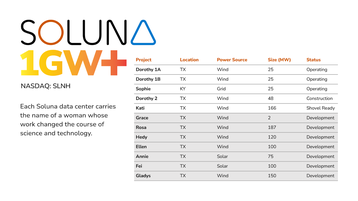
Power first, grid later. Campus plans start with on-site generation or an existing connection, then add grid service over several years. Soluna plans its Project Annie data center beside a solar farm in northeast Texas.
-
Crypto turns to AI. In June 2026, AiOnX bought a majority stake in Genesis Digital Assets for $500 million. It plans to convert the company's mining sites to AI.
-
Lignite winds down. SWEPCO retired Pirkey in 2023, and its Welsh plant stops burning coal in 2028. Vistra's Martin Lake plant in Rusk County still burns lignite.
Power and Policy
Oncor delivers ERCOT power in Tyler, Lufkin, Nacogdoches and Paris, where customers choose a retail provider. SWEPCO, a subsidiary of American Electric Power, serves Texarkana, Longview and Marshall within SPP at regulated rates. Entergy Texas serves the southeastern counties within MISO, and electric cooperatives serve much of the countryside. The Public Utility Commission of Texas regulates all three utilities. Texas Senate Bill 6 (2025) makes new ERCOT loads of 75 MW or more share connection costs and accept curtailment in emergencies. In January 2026 the Federal Energy Regulatory Commission approved an SPP 90-day study process for large loads that bring their own generation.