Overview
The Permian Basin covers twenty counties of West Texas, from Andrews and Big Spring south to Fort Stockton and the Big Bend. Midland and Odessa anchor the market, and the oil and gas industry dominates the local economy. The region has only one small colocation facility. Its scale comes from bitcoin mines and from AI campuses that pair data halls with on-site gas generation.
History
Telephone exchanges in Midland and Odessa housed the region's first network equipment. In 2021, Big Bend Telephone opened a carrier-neutral data center at Midland's airport industrial park. It remains the market's only colocation site.
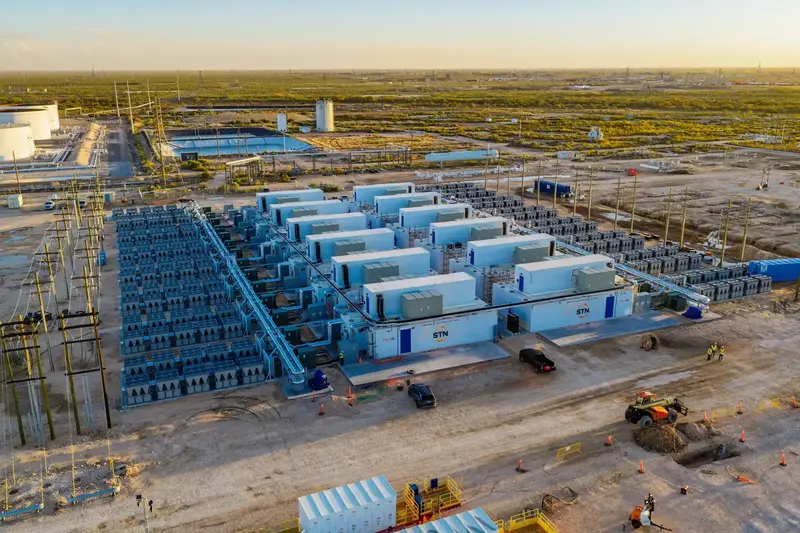
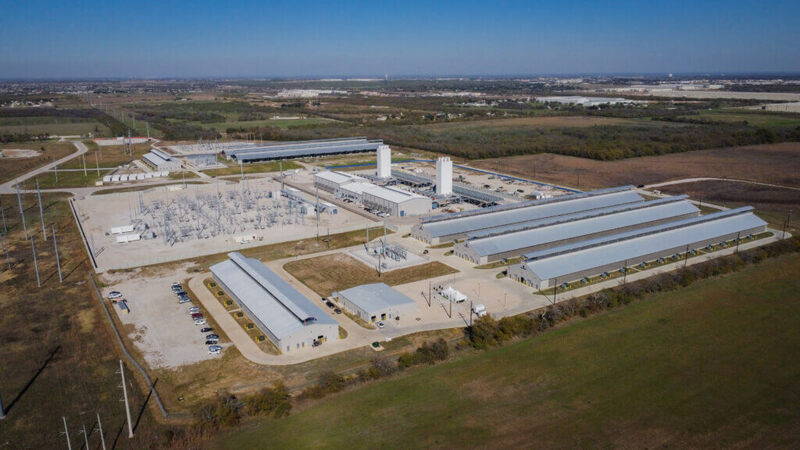
Bitcoin miners brought scale. Compute North opened a site in a Big Spring airfield hangar in 2018, and a wind-powered mining campus near Midland went live in 2019. In 2022, miners energized sites near Pecos, Pyote, Fort Stockton, McCamey, Garden City and Odessa. Core Scientific built at Pecos, Genesis Digital Assets at Pyote, and Cipher Mining beside Luminant's gas plant in Odessa.
Ownership turned over after the 2022 crypto downturn. Celsius's mining sites near Midland passed to Ionic Digital, and the King Mountain joint venture at McCamey passed to Hut 8. MARA bought the Garden City site in 2024. From 2025, operators began converting mining halls for AI tenants.
The Market Today
Bitcoin mining still carries most of the region's operating load. Ionic Digital, MARA, Hut 8, SWI Digital (formerly Genesis Digital Assets) and Canaan's joint ventures run mining sites from Andrews to Big Lake.
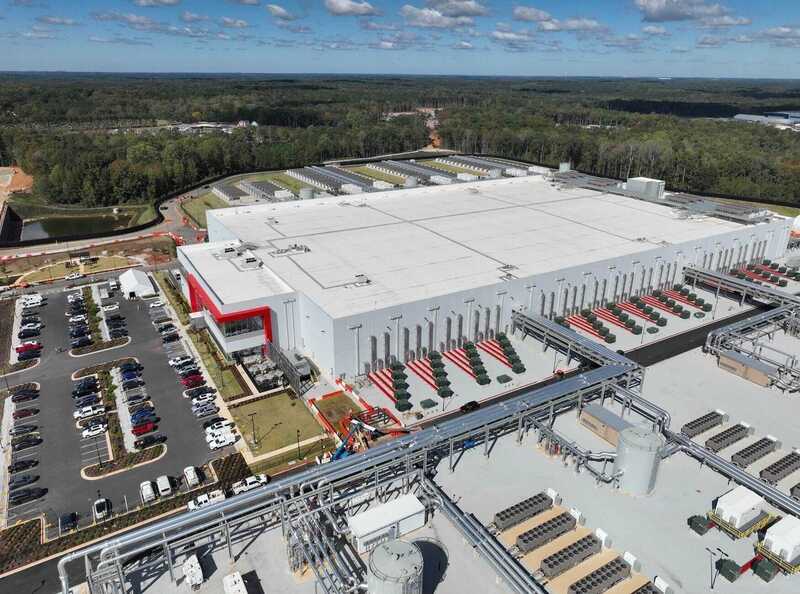
AI conversions lead the new demand. Cipher Digital is converting its Black Pearl site near Wink and building a second site near Andrews, both leased to Amazon Web Services. Core Scientific is preparing its Pecos campus for AMD, with first delivery planned for 2027.
Gigawatt-scale campuses with their own power plants come next. Amazon is developing GW Ranch north of Fort Stockton, where Pacifico Energy holds a permit for up to 7.65 GW of gas generation. Chevron and Joulent are developing a gas plant south of Pecos to supply a Microsoft campus. PowerBridge began building near Pecos in September 2026, and New Era Energy & Digital plans a campus beside Vistra's Odessa power plant.
Network infrastructure is thin outside Midland and Odessa. AT&T's Midland central office hosts the area's tandem switches. FiberLight is building new long-haul fiber between Midland and El Paso.
Advantages
-
Cheap gas. The Waha hub sits inside the basin, and pipeline limits keep its prices low. Waha gas traded below zero on most days in the first half of 2026.
-
Land. Ranches and oilfield surface tracts offer thousands of acres under single owners. Texas Pacific Land and LandBridge now lease land to data center developers.
-
Bring your own power. Texas lets large loads build on-site generation. A campus can run off the grid until transmission arrives.
-
Renewable hosts. Wind and solar farms near McCamey, Big Spring and Penwell host miners behind the meter. The miners absorb power the grid cannot take.
-
Local incentives. Pecos County created reinvestment zones and approved tax abatements for several data centers and power plants in 2025 and 2026.
Challenges
-
Grid congestion. Oilfield electrification already strains the Far West grid. The new 765 kV import lines are not due until 2031.
-
State reviews. In August 2026, the Electric Reliability Council of Texas (ERCOT) paused energizing new data center and crypto loads of 75 MW or more. In September 2026, the governor told the Texas Commission on Environmental Quality (TCEQ) to halt data center permits until a state audit ends.
-
Water. The basin is arid. Large campuses compete with oilfield operations for brackish groundwater.
-
Remoteness. Most sites sit far from major fiber routes and metro areas. Construction crews compete with the oil industry for workers and housing.
-
Gas exposure. Off-grid campuses depend on Waha prices and pipeline flows. New takeaway pipelines due in late 2026 aim to narrow the local discount.
Trends
-
Mining to AI. Miners with energized substations now lease them to hyperscalers and AI companies.
-
Power first. Developers secure turbines, permits and land before they name a tenant. Several gigawatt campuses had no announced tenant in late 2026.
-
Energy companies as suppliers. Chevron, Vistra and Pacifico Energy sell power to data centers. Landowners such as Texas Pacific Land and LandBridge supply land and water.
-
Hyperscalers and AI labs arrive. Amazon and Microsoft both chose the basin in 2026 for gas-powered campuses. Poolside is clearing land for its own campus south of Fort Stockton.
Power and Policy
The basin sits in ERCOT's Far West zone and is regulated by the Public Utility Commission of Texas (PUCT). Oncor serves Midland, Odessa and most of the Midland Basin. Texas-New Mexico Power (TNMP) serves the Pecos, Pyote and Fort Stockton areas, and AEP Texas serves Alpine and the Big Bend. Senate Bill 6 (2025) set rules for loads of 75 MW and up. In September 2026, the PUCT required those loads to post at least $50,000 per MW of security before ERCOT studies them. The PUCT approved the Permian Basin Reliability Plan in 2024 and chose 765 kV for its new import paths in 2025.