Overview
The Amarillo (Panhandle) region covers the northern Texas Panhandle, from Dalhart and Perryton south to Silverton and Tulia. Part of West Texas, it pairs a small network hub in downtown Amarillo with a fast-growing ring of rural power campuses. Wind, natural gas and open land drive the growth. Most new capacity sits beside wind farms or planned gas plants, not in the city.
History
Southwestern Bell opened its downtown Amarillo telephone exchange in 1927, and the city became the region's network crossroads. Level 3 later built network buildings in Amarillo and Stratford along its long-haul fiber routes. The Amarillo Petroleum Building grew into the city's carrier hotel. The FD-IX Amarillo internet exchange opened there in August 2024.
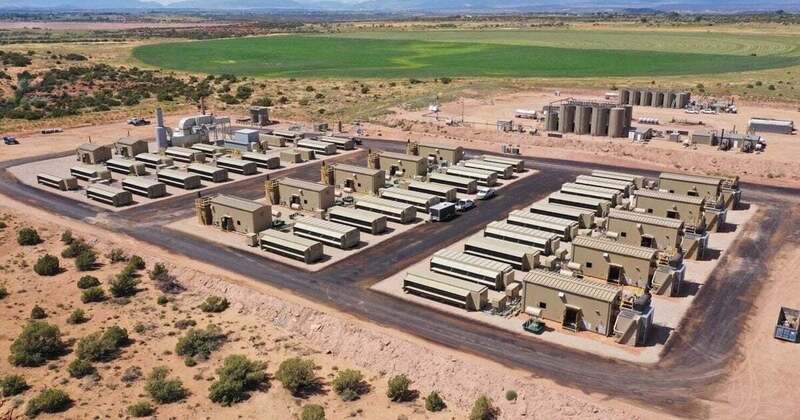
The Competitive Renewable Energy Zone (CREZ) program finished its last 345 kV lines in 2014. Those lines carried Panhandle wind power into the ERCOT grid, and their substations later drew bitcoin miners. The Alborz site near Happy began mining on wind power in February 2022. Soluna opened Project Dorothy beside the Briscoe Wind Farm in 2023 and doubled it in 2025. Hut 8 energized a wind-fed site near Vega in June 2025.
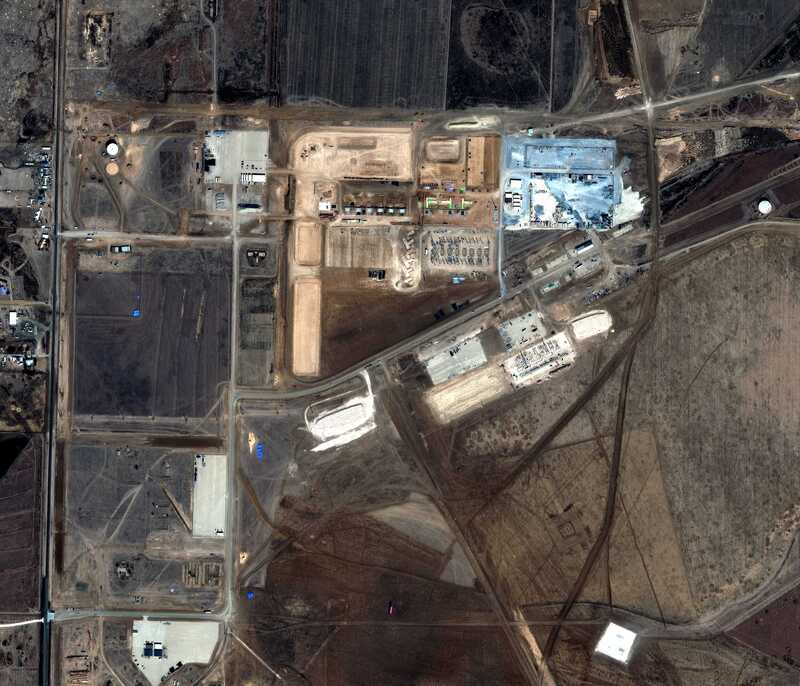
Hyperscale plans arrived in 2025. Fermi America and the Texas Tech University System announced an energy and AI campus near the Pantex Plant in June 2025. Crusoe broke ground near Claude the same month. Google and Intersect Power started the Meitner Energy Center near Pampa in December 2025.
The Market Today
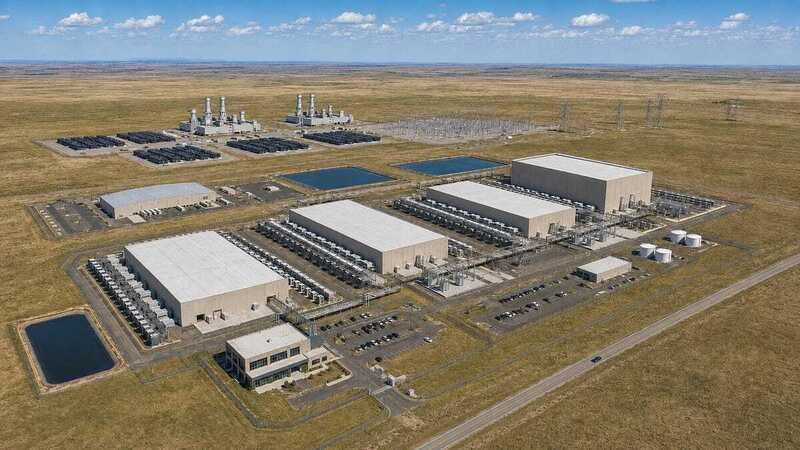
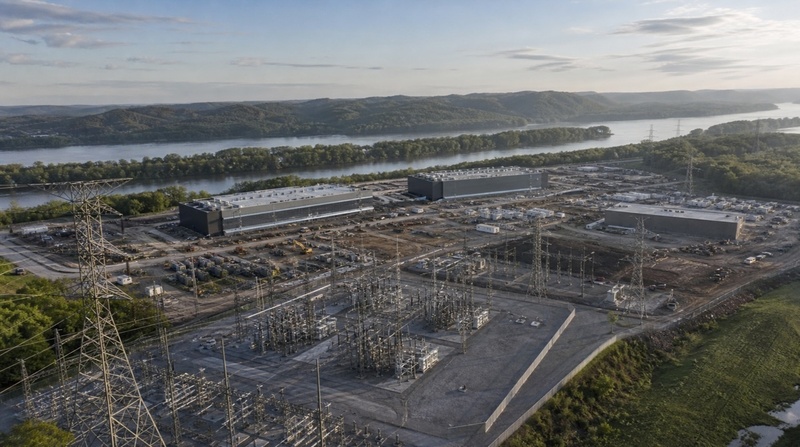
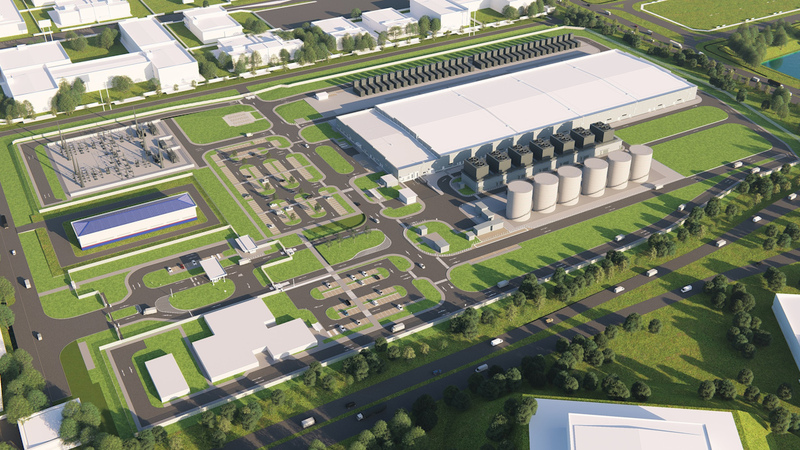
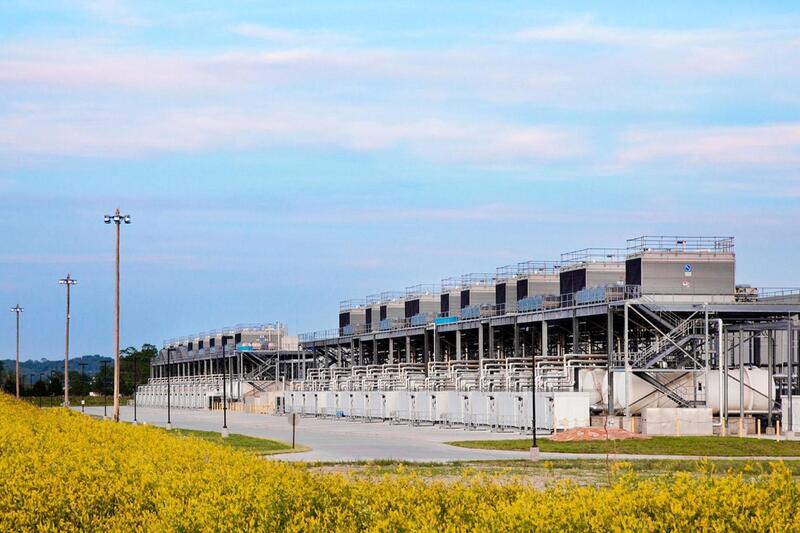
The largest projects pair data centers with their own power. Crusoe is building six large data center buildings near Claude, beside the Goodnight wind farms, with an on-site gas plant planned for the later buildings. Google is building three buildings at Meitner and plans four more at Project Roman, north of Hereford. Fermi America holds an air permit for gas generation near the Pantex Plant and is still signing its first tenant.
Bitcoin miners run most of the energized capacity today. Soluna, Hut 8, MARA, Bitari and the WindHQ and Canaan joint venture operate sites from Silverton to Gruver and Wheeler. Several miners now plan AI buildings on the same land. Soluna and Applied Digital agreed in October 2026 to build an AI data center at Project Dorothy.
Amarillo itself holds a small colocation market. Lumen, AT&T, Westgate Data Center and AW Broadband serve local businesses from downtown and southwest Amarillo. Duos Edge AI places modular edge data centers on school district and county land in Amarillo, Dumas and Hereford.
Advantages
-
Wind power. The Panhandle has some of the strongest onshore wind in the United States. Many wind farms connect through 345 kV substations that can host co-located load.
-
Natural gas. The Panhandle and Hugoton gas fields and several interstate pipelines can supply on-site generation. Developers have filed permits for gigawatts of gas turbines and engines.
-
Land. Ranch and farm parcels of several thousand acres are available. Developers lease or buy whole sections next to high-voltage substations.
-
Climate. The high, dry plains run cooler than most of Texas. Air cooling works for much of the year, and the new campuses avoid water cooling.
-
State incentives. Texas offers a sales and use tax exemption for qualifying large data centers. Counties grant property tax abatements to large projects.
Challenges
-
Two grids. Amarillo and most towns sit in the Southwest Power Pool, while the wind zones feed ERCOT. A site's grid sets its rules, prices and timelines.
-
Large-load queues. ERCOT holds more than 438 GW of large-load requests and now studies them in batches. Xcel Energy has proposed a large-load tariff with long minimum terms in its Panhandle territory.
-
Water. The region draws on the Ogallala Aquifer, which farms and towns already strain. Residents in several counties have questioned new campuses over water use.
-
Local approval. Town halls in Moore, Deaf Smith and Castro counties raised water, noise and land-use concerns in 2026.
-
Weather and fire. High winds, hail and wildfires affect rural sites. A May 2026 wildfire disrupted mining near Happy.
-
Labor. Large builds need thousands of workers in thinly populated counties. Google is building a workforce lodge for up to 3,500 workers in Wheeler County.
Trends
-
Bring your own power. New campuses pair grid service with on-site wind, solar, batteries and gas. Behind-the-meter supply shortens the wait for grid upgrades.
-
Miners turn to AI. Bitcoin sites with energized power are adding AI and high-performance computing buildings. Soluna and Bitari both plan AI buildings beside existing mines.
-
Nuclear ambitions. Fermi America has applied to build four large reactors near Amarillo, with the first now targeted for 2033. The Nuclear Regulatory Commission is reviewing the application.
-
Land before tenants. Newcomers such as Zone Frontier have leased thousands of acres around high-voltage substations before signing tenants.
Power and Policy
The Public Utility Commission of Texas (PUCT) regulates electric service across the Panhandle. The Electric Reliability Council of Texas (ERCOT) runs the grid that serves the wind zones. Southwestern Public Service, an Xcel Energy company, serves Amarillo and most towns within the Southwest Power Pool (SPP). Golden Spread Electric Cooperative and local cooperatives such as Greenbelt and North Plains serve rural areas. Senate Bill 6, signed in June 2025, set new rules for loads of 75 MW or more, including curtailment and backup generation. The Texas Commission on Environmental Quality (TCEQ) permits the on-site gas plants that many campuses now plan.