Overview
Liverpool is a secondary data centre market in North West England, about 50 km west of Manchester, the region's main hub. Its operating capacity sits in small colocation and enterprise facilities across Liverpool, Wirral, Runcorn and Chester. Most of its planned growth comes from larger campuses on former industrial land in Bootle, Warrington, Widnes and the Fylde coast near Blackpool.
History
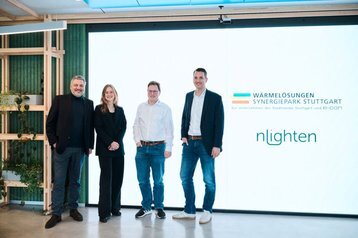
The market began with carrier and enterprise sites around 2000. Hibernia's transatlantic cable landed at Southport in 2001, and EXA Infrastructure now runs that landing station with colocation inside. Getronics' Babbage Centre in Runcorn and the Chester facility on Dunkirk Trading Estate date from the early 2000s, and the Bromborough facility on Wirral opened in 2004. AIMES opened its Kilby House data centre at Liverpool Innovation Park in 2013. In 2023 nLighten bought Proximity Data Centres and took over the Bromborough and Chester sites. The same year Colt took over Lumen's European business, including its Liverpool point of presence.
The Market Today
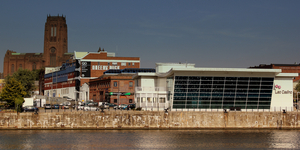
nLighten runs the two largest colocation sites, in Bromborough and Chester, and plans expansions at both. Baltic Broadband runs small LCRDC edge sites at Queen's Dock, King Edward Industrial Estate, Bootle and the Wallasey Water Tower. Its newest site, on a former substation in Sandhills, opened in November 2025 and hosts IX Liverpool. Getronics runs a five-hall facility at the Babbage Centre in Runcorn. AIMES, now trading as ARO, serves health and public-sector customers from Liverpool Innovation Park.
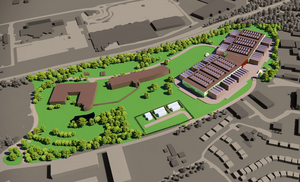
Planned capacity is far larger than the operating base. L51 Developments won full permission in October 2026 to redevelop the former HSBC data centre in Bootle. In Warrington, Platform DC has applied for a temporary modular data centre on the former Unilever soap works at Bank Quay. Lea Valley has applied for a mixed scheme with data centre zones at Moss Bank in Widnes. On the Fylde coast, Elite UK REIT holds outline consent for a campus at Peel Park. Blackpool Council's Silicon Sands site on the Blackpool Airport Enterprise Zone also has outline consent, and Hochtief is its preferred concessionaire.
Advantages
-
Subsea connectivity. A transatlantic cable lands at Southport, giving the region a direct route to North America.
-
Brownfield land with power. Former factories and an older data centre come with existing grid connections, which shortens the path to power.
-
Enterprise zones. Blackpool Airport Enterprise Zone offers business-rate relief and council backing for data centre use.
Challenges
-
Grid access. Large new loads join Great Britain's connection queue, which was re-ordered in 2025 and 2026. The Moss Bank scheme had not yet requested a connection when it applied.
-
A small base. The operating colocation market is small and fragmented. Most wholesale demand in the North West goes to Manchester.
-
Local opposition. Residents petitioned against the Bank Quay scheme, and the Moss Bank and Silicon Sands plans also drew objections.
-
Long timelines. The Fylde coast consents are outline only and still need detailed approval. The Moss Bank phasing runs into the late 2030s.
Trends
-
Industrial sites become data centres. Bank Quay, Moss Bank and Bootle reuse a soap works, a chemical works and an older data centre.
-
Edge sites multiply. Baltic Broadband has opened four LCRDC sites since 2024.
-
Owners test the market. Elite UK REIT plans to launch a sale of its Peel Park site in 2027 rather than build it itself.
Power and Policy
National Grid Electricity Transmission runs the high-voltage network, and the National Energy System Operator (NESO) manages new connections. SP Energy Networks distributes electricity across Merseyside, Wirral and Cheshire. Electricity North West, owned by Iberdrola since 2024, serves Lancashire. The UK government designated data centres as Critical National Infrastructure in September 2024.