Overview
Delaware's data center market sits in New Castle County, around Wilmington and Newark. For two decades it served the banking, credit card and chemical companies headquartered in the state, mostly from enterprise facilities and a few colocation sites. Since 2025 hyperscale developers have pitched much larger campuses, and the state has answered with some of the strictest data center rules in the Mid-Atlantic.
History
Delaware's early facilities belonged to its financial-services employers and to long-haul carriers such as Level 3, now Lumen. Honeywell announced a data center in New Castle's Boulden Interchange Park in 2006. DāSTOR bought that building in April 2024, adding to its downtown Wilmington facility. Data Canopy took over the Newark colocation site of Ntirety in 2023.
In 2025 Starwood Digital Ventures filed plans for Project Washington, a 6 million square foot campus near Delaware City. It was the largest data center ever proposed in the state. The backlash it drew shaped the rules that followed.
The Market Today
DāSTOR is the largest colocation operator, with facilities in central Wilmington and New Castle. Its Wilmington building serves as the city's network access point, with a fiber ring to the carrier hotels of Philadelphia. Data Canopy and Lumen run smaller sites in Newark.
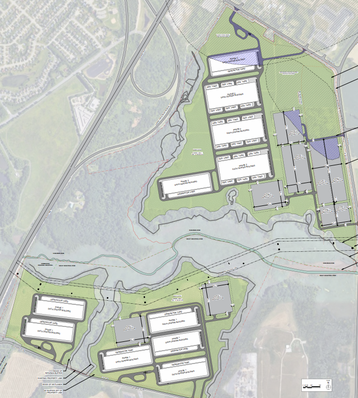
The large-campus pipeline has stalled. Project Washington cannot proceed under its current design. A three-building campus proposed for the White Clay Center industrial park in Newark is paused. Developers have floated land south of the Chesapeake and Delaware Canal, and Delmarva Power's large-load queue lists more unnamed projects.
Advantages
-
Location. The state sits between Philadelphia and Baltimore on the I-95 fiber routes.
-
Taxes. Delaware has no state sales tax, which lowers the cost of servers and equipment.
-
Demand base. Banks, insurers and chemical companies keep large technology operations in the state.
Challenges
-
Coastal zoning. The Coastal Zone Act bars heavy industry along the Delaware River and Bay. In 2026 the state ruled that Project Washington's backup diesel generators made it a banned heavy industrial use.
-
Power costs. New laws make data centers pay their own grid upgrade costs and supply their own power over time.
-
Local rules. New Castle and Kent counties restrict where data centers can be built, and Delaware's first municipal moratorium passed in October 2026.
Trends
-
Regulation first. State and local governments set rules before the large projects arrived, and developers are rethinking their plans.
-
Self-supplied power. Large new loads must bring their own clean generation, which favors sites with room for on-site power.
Power and Policy
Delmarva Power, an Exelon utility, serves most of the state inside the PJM Interconnection grid. Several towns run municipal utilities, and the Delaware Electric Cooperative serves much of Kent and Sussex counties. The Public Service Commission regulates rates and is reviewing a large-load tariff for Delmarva. In August 2026 Governor Matt Meyer signed a package of laws that keeps data center costs off other ratepayers, requires large loads to supply their own clean power after their first ten years, and bars job tax credits for data centers.