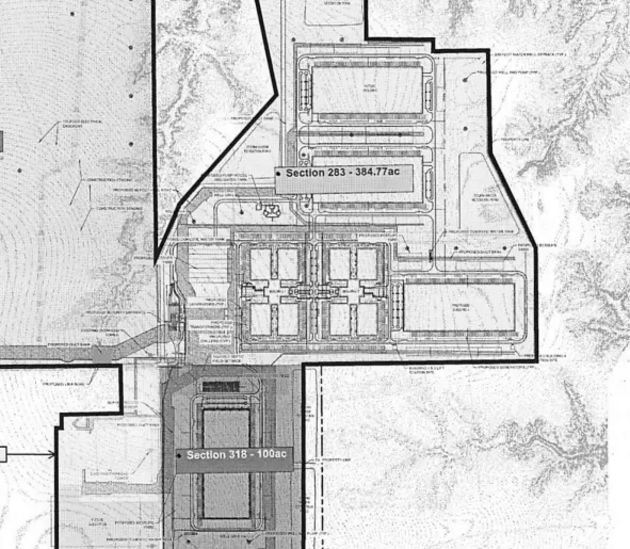

Texas Governor Greg Abbott has ordered an audit of every data center advancing through ERCOT's interconnection process before additional projects can move forward. ERCOT has paused its Batch Zero large-load review, creating a new schedule risk for developers.
The order is serious, but it is not a statewide construction ban. Existing facilities are not automatically affected, and projects outside ERCOT follow a different grid process.
What Texas paused
Abbott's August 3 directive to PUCT and ERCOT requires applicants to disclose public incentives, electricity and water demand, on-site generation, cooling methods, community impacts and controlling ownership. Projects that do not comply are to be denied a grid connection.
The immediate impact is on the approval clock. In an August 3 market notice, ERCOT confirmed it will not issue Batch Zero classifications by August 7. ERCOT plans to request a good-cause exception before PUCT's August 20 open meeting and consult the commission on next steps. No replacement schedule has been published.
The queue under scrutiny
ERCOT reported 474 GW of large-load requests in June, roughly 90 percent from data centers. A later July 29 presentation showed 498 GW across 688 requests.
Only 150 requests totaling 65 GW were preliminarily eligible as Base Load. Another 176 requests representing about 139 GW were awaiting classification or eligible only as Allocated Load. The remaining 362 requests, representing 294 GW, lacked either a qualifying study or a required dynamic model.
The queue is therefore not a construction forecast. It includes serious, well-capitalized developments, but also duplicate phases, oversized requests and early land positions with no customer or financing. In industry shorthand, some are still “two men and a ranch” projects. Many will never materialize at the size or on the schedule originally requested.
That is the problem Abbott's audit is designed to address: determining which applicants have the ownership, studies, water plan and capital to justify a place in line.
What Baxtel tracks in Texas
Baxtel tracks more than 730 data centers across Texas, spanning operational facilities, active construction, announced developments and long-term land positions. Current records include about 11 GW operational, 15 GW under construction and more than 90 GW planned.
A significant share of the future pipeline remains in the Planned or Land Bank stages. Those projects represent real market activity, but they do not have the same delivery certainty as an operating facility or a campus already under construction.
The mix also varies by market. Dallas has the state's deepest established operating base, while West Texas has become a center for large power-led campuses. Austin, Houston and San Antonio each carry a different mix of enterprise, hyperscale and planned development.
The state still lacks a complete picture
PUCT's earlier voluntary survey illustrates the data gap. The agency said 28 companies representing 92 facilities responded, but it did not disclose how many surveys it sent, according to the Texas Tribune. Claims that this represented a 27 percent response rate were calculated from a separate facility count, not published by PUCT.
The new audit is broader and has enforcement power because grid approval depends on compliance.
Why it matters
Texas has plenty of data center proposals. Now developers have to prove they can build them.
The audit will delay some credible developments, but it should also remove speculative load from the queue. The market should watch how quickly compliant projects receive a new schedule and how much of ERCOT's headline demand remains after applicants prove they are prepared to build.