Overview
Most of Thailand's data center capacity sits in and around Bangkok. The market spans the capital's telecom towers, its suburbs and the industrial estates of the Eastern Economic Corridor (EEC) in Chon Buri and Rayong. Telco and edge sites serve the regional cities of Chiang Mai, Khon Kaen, Hat Yai, Phuket and Nakhon Ratchasima. Since 2024 data center investment applications worth hundreds of billions of baht have made Thailand a hyperscale destination in Southeast Asia.
History
The market began with the state telcos and the first internet providers. Internet Thailand (INET), the country's first commercial internet provider, was set up in 1995 by CAT Telecom, TOT and the national technology agency NECTEC. TCC Technology followed in 2001 and True IDC in 2003. In January 2021 TOT and CAT Telecom merged into the state-owned National Telecom (NT), which took over both carriers' data centers in Bangkok and the provinces.
Foreign operators arrived from 2015. NTT opened a data center at Amata Nakorn in Chon Buri in December 2015. SUPERNAP Thailand opened in a Chon Buri industrial estate in late 2017. STT GDC opened its first Bangkok facility in 2021, and Telehouse followed in 2023.
Hyperscale cloud arrived next. Gulf, Singtel and AIS formed the GSA data center joint venture in 2022. Amazon Web Services launched its Asia Pacific (Thailand) region in January 2025. Google and Microsoft announced Thai cloud regions in 2024. In 2025 China Mobile bought SUPERNAP Thailand, and Global Infrastructure Partners (GIP) joined CP Group as an owner of True IDC. True IDC now trades as Arise IDC.
The Market Today
Greater Bangkok holds the operating colocation market. Arise IDC, STT GDC, NTT, AIS, NT, INET and Telehouse run most of the live capacity. It sits in central Bangkok towers, the northern suburbs of Nonthaburi and Pathum Thani, and the Bang Na corridor in Samut Prakan. The BKNIX and TH-IX internet exchanges peer in Bangkok buildings.
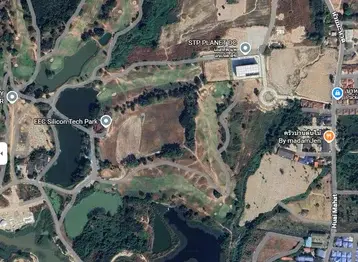
The EEC carries the hyperscale pipeline. AWS runs its region from sites in Chon Buri and Rayong, and Google plans a campus in Chon Buri. NTT, DayOne, Bridge, CloudHQ, GSA and Arise build or plan large campuses on estate land, together with Chinese-backed developers.
The regional cities have small telco and edge sites. NT is renovating its data centers in Chiang Mai, Khon Kaen and Hat Yai. AIS runs data centers in the same three cities. INET runs its largest site at Saraburi and is building a sovereign data center in Khon Kaen. Edge Centres opened an edge facility in Chiang Mai in 2023. Gorilla Technology plans a large AI campus at Nakhon Ratchasima.
Advantages
-
Cloud regions. AWS runs a live region, and Google and Microsoft have committed to theirs. Each one draws network operators and enterprise demand.
-
Tax incentives. The Board of Investment (BOI) gives efficient data centers up to eight years of corporate income tax exemption. In 2025 it received 36 data center applications worth THB 728 billion.
-
Estate land. EEC industrial estates sell serviced plots with power, water and roads already in place.
-
Clean power options. The Utility Green Tariff (UGT) lets large users buy certified renewable power. A direct power purchase scheme, piloted for data centers in 2024, opened to all industry in July 2026.
-
Submarine cables. Cables land at Songkhla and Satun in the south and at Sri Racha on the eastern seaboard, linking Thailand to the rest of Asia.
Challenges
-
Grid capacity. Data center power requests across the country exceed 30,000 MW. The Electricity Generating Authority of Thailand (EGAT) plans eastern grid upgrades from 2027.
-
Project review. In September 2026 the national data center policy board paused 49 projects under construction and froze 117 pending approvals. A new framework approved in November lets projects with permits or BOI promotion by August 14, 2026 proceed, with one year to comply.
-
Carbon intensity. Natural gas generated more than 65% of Thailand's electricity in 2025.
-
Flood risk. The 2011 floods closed industrial estates in Pathum Thani and Ayutthaya, north of Bangkok.
-
New costs. A data center electricity tariff of about THB 5 to 6 per kWh was approved in July 2026. A grid capacity bond for data centers is under discussion.
Trends
-
Foreign capital leads. Global infrastructure funds and operators from China, Singapore, Japan and the United States back most new capacity.
-
Building moves east. New campuses go to EEC estate land rather than city towers. Data centers are forecast to make up nearly 40% of WHA and Amata land sales in 2026.
-
AI demand. Siam.AI, an NVIDIA cloud partner, and NIPA Cloud run GPU clusters in existing facilities. Newer campuses are designed for dense AI loads.
-
Regional edge. INET, NT and AIS are adding small sites in the regional cities to keep data close to local users.
Power and Policy
EGAT runs the transmission grid. The Metropolitan Electricity Authority (MEA) distributes power in Bangkok, Nonthaburi and Samut Prakan, and the Provincial Electricity Authority (PEA) serves the rest of the country. The Energy Regulatory Commission (ERC) sets tariffs and runs the UGT and direct power purchase schemes. The BOI grants investment incentives, and the national data center policy board screens new projects under the November 2026 framework. The draft Power Development Plan (PDP) 2024 forecasts 56 GW of peak demand by 2037.


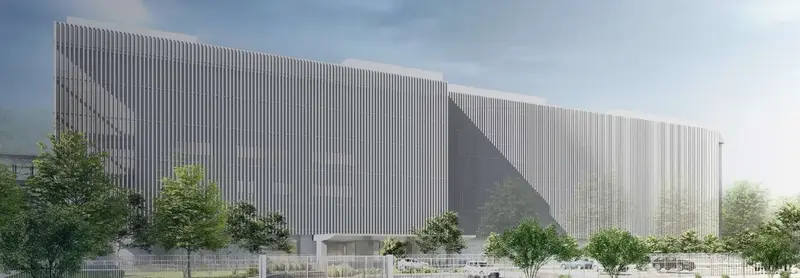
 for data centers on Nov. 10, replacing fragmented approvals with a seven-tier system ke...](https://cdn.baxtel.com/data-center/thailand-cabinet-approves-seven-tier-data-center-rules-amid-30-000mw-requests/logo/medium_thailand-cabinet-approves-seven-tier-data-center-rules-amid-30-000mw-requests-featured.jpg)