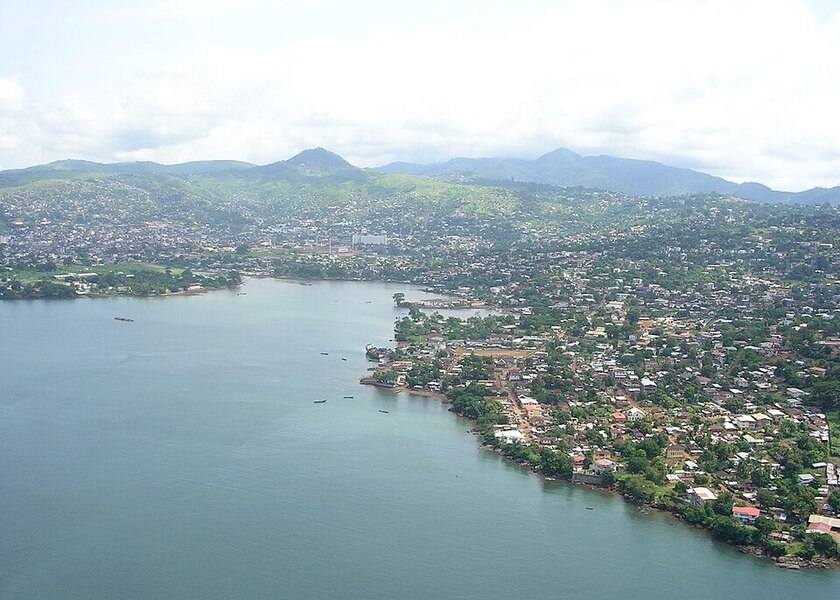
Sierra Leone's digital infrastructure was rebuilt from close to nothing after the civil war, and the sector's shape still reflects that history. Fixed-line connections were largely destroyed, leaving mobile networks as the primary route to voice and data, and the data centre market that has emerged since is operator-led rather than commercial. The facilities that exist were built by telecoms companies to serve their own networks. No carrier-neutral colocation provider operates in the country.
The country's international connectivity arrived in October 2011, when the Africa Coast to Europe cable landed, activated the following year. It remains Sierra Leone's only submarine cable. The landing station and national fibre backbone are operated by Sierra Leone Cable Limited, a wholly state-owned company incorporated in 2012, which also runs the Sierra Leone Internet Exchange Point and has described its own position in the market as a monopoly. Parliament ended Sierratel's monopoly over international gateways in 2015, opening access to the cable for commercial operators. Single-cable dependence is the defining constraint on the market, leaving the country exposed to both subsea faults and disruption of the overland fibre routes carrying traffic inland. The regulator has asked operators to develop backup routes, and in November 2026 the government announced a national consortium comprising Orange Sierra Leone, Africell, QCell and Zoodlabs to build a second cable. Branded the A4 cable and costed at $45 million with World Bank backing through the West Africa Regional Digital Integration Program, it would connect four countries. The urgency is practical: the Commonwealth reports operators buying around 95.5 Gbps of international capacity with demand growing roughly 40% annually through 2030, against an ACE cable nearing the end of its operational life.
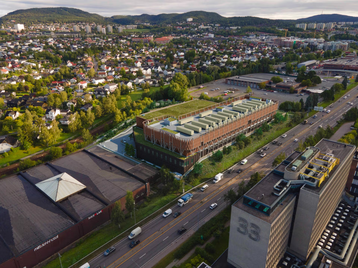
Orange Sierra Leone is the country's only confirmed data centre operator. A subsidiary of Senegal's Sonatel Group, in which Orange S.A. holds roughly 42%, it entered the market by acquiring Airtel Sierra Leone in 2016 and inherited the Freetown facility that Airtel had begun building that year. Freetown opened in 2018 with 940 square metres of building and 154 racks across 350 square metres of white space. The company added a second site at Bo in November 2025, built as a full replica of Freetown and intended as a disaster recovery hub. The siting logic is geographic risk: Freetown remains exposed to landslides, as the 2017 disaster demonstrated, and the country floods frequently. Placing the backup inland at Bo also serves a network purpose, since southern and eastern traffic toward Makeni, Kono and Kenema no longer has to route through the capital and back.
Africell leads the mobile market with roughly 60% share and around 4.2 million subscribers, and is backed in part by the US International Development Finance Corporation. In June 2024 it signed a memorandum of understanding with the Ministry of Communication, Technology and Innovation committing to build and operate a data centre in Tikonko Chiefdom, Bo, explicitly open to third parties. If delivered it would be the country's first multi-tenant facility, though no construction start has been reported since. Other operators include QCell, the state-owned incumbent Sierratel, and digital infrastructure firm Zoodlabs.
Policy sits with the Ministry of Communication, Technology and Innovation under Minister Salima Monorma Bah, with the sector governed by the Telecommunication Act 2006 and administered by the National Communications Authority. The flagship initiative is Tech City, a planned 130-acre special economic zone in Tikonko, Bo District, around 250 kilometres east of Freetown, with a $150 million funding target alongside a separate $50 million digital transformation programme. The zone is intended to host data centres, tech schools, business process outsourcing centres and device assembly lines, and the Africell commitment was the first private pledge against it. Power reliability and electricity cost were acknowledged as constraints in the planning, and formed part of the rationale for a zone with guaranteed infrastructure. Orange's wider estate reflects the same pressure, with around 70% of its 616 telecom sites running on renewable power.
One point of note for anyone tracking the region: Orange's Bo facility and the planned Tech City zone are both in Tikonko Chiefdom, but no source connects them, and they should be treated as separate developments unless that changes.