 said Thursday it plans to invest more than €10 billion ($11.2 billion) to convert the former Kaipola paper mill...](https://cdn.baxtel.com/data-center/sesterce-plans-10b-600mw-ai-campus-at-former-finnish-paper-mill/logo/sesterce-plans-10b-600mw-ai-campus-at-former-finnish-paper-mill-featured.jpg)

French AI infrastructure company Sesterce said Thursday it plans to invest more than €10 billion ($11.2 billion) to convert the former Kaipola paper mill in Jämsä, Central Finland, into a 600 MW AI data center campus. The company's announcement outlines a 200 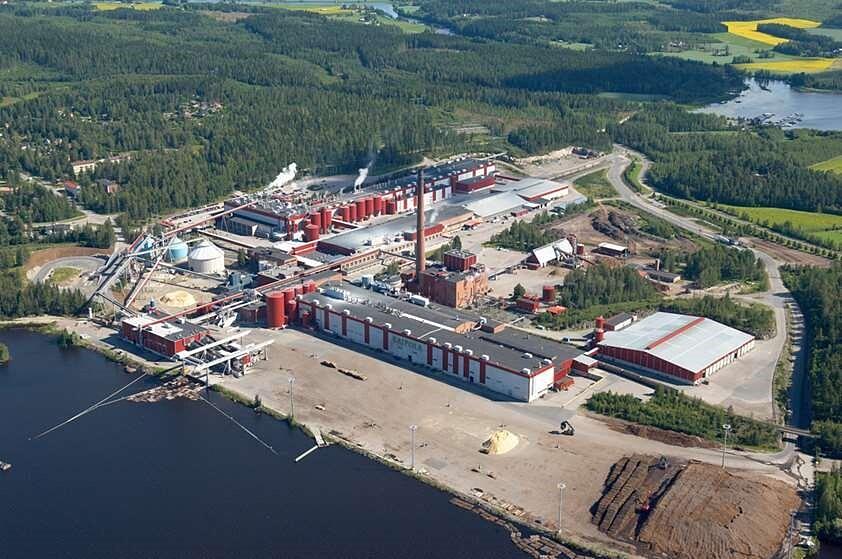 Ground-level view of the Kaipola industrial facilities and logistics infrastructure to be repurposed for the AI campus.MW first phase and confirms an anchor customer is already signed.
From paper mill to AI campus
The Kaipola mill, shut by paper producer UPM in 2021 when it employed more than 400 people, offers what few greenfield sites can: an existing high-voltage grid connection, water systems, industrial buildings and logistics links. Sesterce says reusing them avoids the biodiversity loss of building on untouched land. Reuters reports the first phase will carry 200 MW of capacity, rising to 600 MW in a second phase, with Sesterce targeting more than 1 GW across Finland over the longer term. Construction is expected to employ about 2,000 people, with roughly 300 permanent staff once the campus is fully operational.
The site is owned by real estate company Kaipola Green Port, whose board chair, Martti Inkovaara, told Yle that sale negotiations are in an advanced stage and that he would be surprised if the deal did not go through.
A signed but unnamed customer
Chief executive Youssef El Manssouri told Yle the investment decision is final and a contract has been signed with the future tenant, which he described only as one of the two leading AI laboratories. He declined to name the customer or the project's financial backers. Site clearance and initial interior work are already underway, he said, with the first construction phase set to begin before the end of the year.
"For more than six decades, the Kaipola mill produced paper for the world. Now, a new generation of industry is being planned for the site," said El Manssouri, who argues the conversion preserves the area's industrial identity.
The plan dwarfs the company's current scale. French commercial register data cited by Yle puts Sesterce Group's 2024 turnover at €11.95 million. "There are still many permit processes, and many things need to fall into place," said Jämsä town manager Jori Reijula, who learned of the plans only a few weeks ago and wants to see progress before declaring a data center is coming.
Commitments to the town and the grid
Sesterce attached four commitments to the campus, each to be audited annually by an independent third party with results published. For every megawatt the campus consumes, the company pledges to enable one megawatt of new renewable generation within the Finnish grid within ten years of operation. Cooling will use a closed-loop liquid system supplemented by harvested rainwater and recycled water, with no drinking water used. A €10 million community fund will be established at commissioning, and parts of the site will be open to the public.
Grid operator Elenia confirmed the site connects to its high-voltage network, a foundation for the first phase.
A small balance sheet behind big plans
Founded in 2018 and based in Marseille, Sesterce has scaled quickly this year. In June it formed a joint venture with SoftBank Group to develop a 1 GW AI campus in Bosquel, France. Baxtel tracks one Sesterce facility today, the Valence HPC site under construction in Alixan, first covered in Baxtel's February 2025 report on the company's €450 million Rovaltain investment.
Finland's AI land rush
The Jämsä plan lands in the middle of a Finnish compute boom. Google announced a €13 billion investment across multiple Finnish sites in September, and atNorth last week unveiled plans for a 75 MW first phase in Salo. Baxtel tracks 139 data center facilities in Finland operated by 58 providers, the largest being Google Hamina at 140 MW. Central Finland currently has a single tracked facility, so a 600 MW campus in Jämsä would redefine the regional market overnight.
Why it matters
If delivered, Jämsä would be the largest single AI campus commitment in the Nordics and the clearest proof yet that brownfield industrial conversion is Europe's fastest route to powered AI capacity. A shuttered mill with a live high-voltage connection skips years of interconnection queue.
The caveat is just as stark. A developer booking under €12 million in annual revenue does not finance €10 billion on its own, which makes the unnamed anchor tenant and the undisclosed backers the entire story. Until both are public, Jämsä is a signed-customer plan rather than a financed project, and the town's wait-and-see posture is the right read.