Overview
Pirkanmaa is the region around Tampere, Finland's second-largest urban area and a center for technology and manufacturing. Its operating data centers are small, network-dense sites in central Tampere. Since 2025, developers have proposed large campuses in the surrounding towns of Kangasala, Nokia, Akaa and Valkeakoski. The region is one of the newest growth markets in Finland.
History
Tampere's commercial data centers grew out of its telecom and engineering base. Ficolo opened its Tampere facility, The Deck, beside the railway station in 2011. Digital 9 Infrastructure bought Ficolo in 2022 and later folded it into Verne. In October 2025 GleSYS agreed to take over Verne's Finnish operations, including Tampere. It completed the integration in February 2026.
The TREX Tampere internet exchange links local operators at a few central buildings. One of them is Elisa's Nalkala exchange.
Large-campus interest arrived in 2025 and 2026. Polarnode planned a campus in Nokia, then moved the project to a new plot at Kyynijärvi in 2026. Its Kangasala project at Taraste won a legally valid building permit in August 2026. FCDC received a building permit in Akaa in September 2026. The same month Fortum started an environmental impact assessment for a campus at Pispantalli in Valkeakoski.
The Market Today
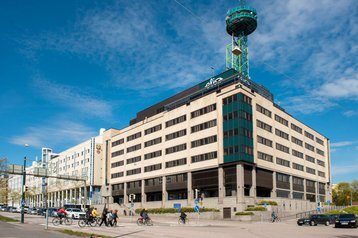
Colocation in Pirkanmaa remains small and centered on Tampere. GleSYS runs The Deck, a modular facility in the city center near the railway station. Elisa's Nalkala exchange hosts the TREX Tampere peering point. A downtown office building on Hallituskatu houses the densest cluster of networks.
The new pipeline sits outside the city, near the 400 kV grid. Polarnode plans its own 400 kV line from Fingrid's Kangasala substation to the Taraste site. UM Kiinteistöt markets DataPark Kangasala to operators and has applied for permits. Fortum plans two 400 kV lines from its Valkeakoski site to Fingrid's Lavianvuori substation. In Valkeakoski, E-Heat also runs a small container data center that feeds district heat.
Advantages
-
Large urban market. Tampere offers a deep technical workforce, two universities and the country's second-biggest business base.
-
400 kV grid. Fingrid substations at Kangasala and Lavianvuori anchor several campus plans.
-
Central location. The region sits on the main rail and road links between Helsinki and northern Finland.
-
Network density. TREX Tampere and the main Finnish carriers meet in central Tampere.
-
Heat demand. Tampere and nearby towns run district heating networks that can use recovered heat.
Challenges
-
Grid queue. Fingrid reports very strong demand for new connections, and most campuses here need new 400 kV lines first.
-
Early-stage pipeline. Most campus projects still await zoning, environmental review or a grid connection.
-
Small colocation base. Tampere has little wholesale capacity, so new demand waits on campus builds.
-
Plot changes. Projects have already moved sites, as Polarnode did in Nokia in 2026.
Trends
-
From city to campus. Developers are moving from central Tampere buildings to large plots near the 400 kV grid.
-
Utility-led development. Fortum now develops data center land itself and seeks a developer to invest.
-
Consolidation. GleSYS's takeover of Verne's Finnish sites put Tampere and Pori under one Nordic operator.
Power and Policy
Fingrid, the national transmission system operator, connects large data centers at 110 kV or 400 kV. Several Pirkanmaa projects plan their own 400 kV lines to Fingrid substations. In 2026 the Permit and Supervision Agency (LVV) ruled that one such Kangasala line needed no environmental impact assessment. Municipalities control zoning and building permits, and Kangasala and Akaa have both granted data center permits. The Energy Authority regulates the network companies that serve smaller loads.