Data Center Campus
Microsoft: Malaga Washington Campus


Campus at a Glance
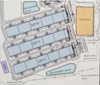
Microsoft has filed plans to build a campus with three data centers in Malaga, Washington. The development will construct three buildings on the site by the end of 2025, with potential for two more buildings by 2027.
The project will be built in two phases on a 102.5-acre plot the company acquired in April 2022.
- Phase I is the Lojo Property, 72.5 acres at 5375 Malaga Alcoa Highway for which Microsoft paid $6.6 million.
- Phase II is the Curtis and Torres properties, 20 and 10 acres, at 5351 Malaga Alcoa Highway and 5309 Malaga Alcoa Highway, respectively for which the company paid $2.6 million.
The authority says the buildings will each require approximately 83 gallons per minute, totaling just shy of 121,000 gallons per day. Waterworks are expected to be complete by the end of 2025.
Buildings
Sites on this Campus
| Site | Operator | Status | Operational | Building Size | Built |
|---|---|---|---|---|---|
| Center PrimeInterested in this information?Contact us | Microsoft Azure |
Operational
|
░░░░ Request Dataset MW | ░░░░░░░ Request Dataset SqFt | 2026 |
| Prime RidgeInterested in this information?Contact us | Microsoft Azure |
Under Construction
|
— | — | 2026 |
| ValleyInterested in this information?Contact us | Microsoft Azure |
Under Construction
|
— | — | 2027 |
Map and Nearby Locations
Microsoft: Malaga Washington Campus Power Growth Over Time
Campus Photos
Developer
Microsoft uses Containers (called ITPACs) to build out its data centers. These Containers are Shipping Containers fitted with all the necessary climate control, networking, server racks and other hardware necessary to be a “mini” data center all in one.
Azure Regions
An Azure region is a set of data centers deployed within a latency-defined perimeter and connected through a dedicated regional low-latency network.
With more global regions than any other cloud provider, Azure gives customers the flexibility to deploy applications where they need to. Azure is generally available in 46 regions around the world, with plans announced for 8 additional regions.
Geographies
An Azure geography is a discrete market, typically containing two or more regions, that preserves data residency and compliance boundaries.
Geographies allow customers with specific data-residency and compliance needs to keep their data and applications close. Geographies are fault-tolerant to withstand complete region failure through their connection to our dedicated high-capacity networking infrastructure.
Availability Zones
Availability Zones are physically separate locations within an Azure region. Each Availability Zone is made up of one or more data centers equipped with independent power, cooling, and networking.
Availability Zones allow customers to run mission-critical applications with high availability and low-latency replication.