Data Center Campus
Microsoft: Hillcrest Campus


Campus at a Glance
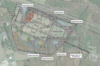
The original test fit design for the Hillcrest project included eight data center buildings totaling 336MW of total capacity – including five 48MW buildings, one 28.8MW, and one 19.2MW building – but would have resulted in 'impacts to nearly every wetland and stream feature' located on the site. The plan was reduced to three planned buildings with reduced total power capacity
Buildings
Sites on this Campus
| Site | Operator | Status | Operational | Building Size | Built |
|---|---|---|---|---|---|
| Campus ThreeInterested in this information?Contact us | Microsoft Azure |
Operational
|
░░░░ Request Dataset MW | ░░░░░░░ Request Dataset SqFt | 2024 |
| Global StationInterested in this information?Contact us | Microsoft Azure |
Under Construction
|
— | — | 2026 |
| Station AlphaInterested in this information?Contact us | Microsoft Azure |
Planned
|
— | — | 2027 |
Map and Nearby Locations
Microsoft: Hillcrest Campus Power Growth Over Time
Campus Photos
Developer
Microsoft uses Containers (called ITPACs) to build out its data centers. These Containers are Shipping Containers fitted with all the necessary climate control, networking, server racks and other hardware necessary to be a “mini” data center all in one.
Azure Regions
An Azure region is a set of data centers deployed within a latency-defined perimeter and connected through a dedicated regional low-latency network.
With more global regions than any other cloud provider, Azure gives customers the flexibility to deploy applications where they need to. Azure is generally available in 46 regions around the world, with plans announced for 8 additional regions.
Geographies
An Azure geography is a discrete market, typically containing two or more regions, that preserves data residency and compliance boundaries.
Geographies allow customers with specific data-residency and compliance needs to keep their data and applications close. Geographies are fault-tolerant to withstand complete region failure through their connection to our dedicated high-capacity networking infrastructure.
Availability Zones
Availability Zones are physically separate locations within an Azure region. Each Availability Zone is made up of one or more data centers equipped with independent power, cooling, and networking.
Availability Zones allow customers to run mission-critical applications with high availability and low-latency replication.