 and [CDC Data Centres](https://baxtel.com/data-centers/canberra-data-centres-cdc) have scrapped Project Southgate, their p...](https://cdn.baxtel.com/data-center/firmus-and-cdc-scrap-1-6gw-project-southgate-with-just-42mw-built/logo/firmus-and-cdc-scrap-1-6gw-project-southgate-with-just-42mw-built-featured.jpg)

Firmus Technologies and CDC Data Centres have scrapped Project Southgate, their plan to build up to 1.6GW of AI factories across Australia, after deploying about 42MW, roughly 2.5 percent of the original target. "Firmus and CDC mutually agreed earlier this year not to proceed with the previously proposed Southgate development partnership," Firmus co-chief executive and co-founder Oliver Cur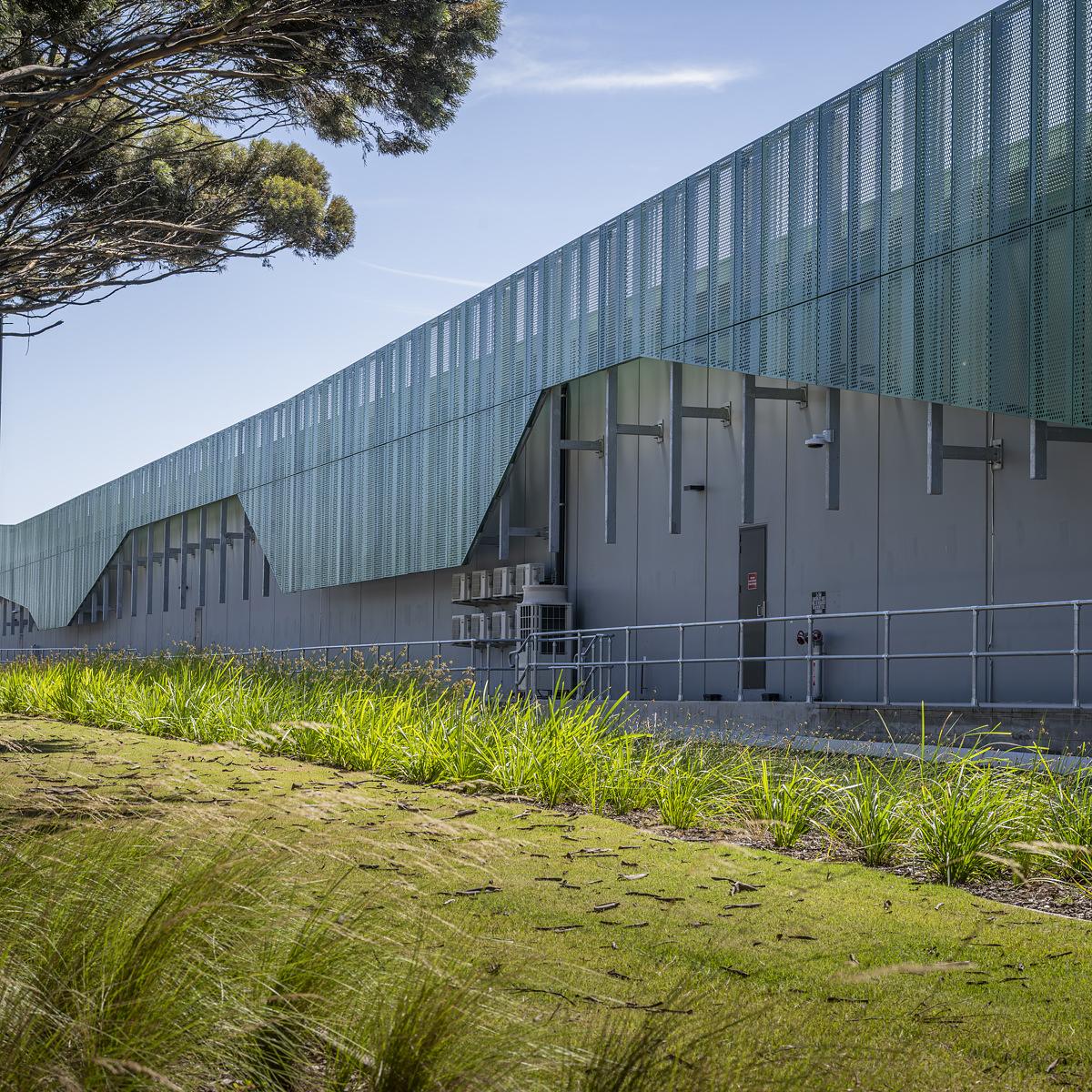 High-resolution facility photograph of CDC Data Centres' Melbourne campus where Southgate capacity was deployed.tis told W.Media, adding that the decision does not affect the company's current development plans or contracted customer capacity.
What Southgate was supposed to be
Announced in October 2025 with Nvidia, the alliance called for a national network of AI factories reaching 1.6GW by 2028, backed by up to AUD 73.3 billion (US$47.5 billion) of investment. CDC would supply the physical infrastructure, carrying Firmus' AI factory platform from Tasmania into Melbourne, Sydney, Canberra and Perth, with Nvidia's DGX Cloud among the first services on the new capacity. The first AUD 4.5 billion phase paired a flagship campus in northern Tasmania with a 150MW Southgate Melbourne build whose 18,500 GB300 GPUs were due online by April 2026, and the partners said the program could spur 5.1GW of new solar, wind, storage and hydro generation across four states and territories.
Delivery stopped far short. About 42MW was ever deployed, all of it inside CDC facilities in Melbourne. Firmus remains a customer at the site but will not expand there to the 150MW first planned.
Why the deal fell apart
The drift had been visible for months. Firmus has signed a run of overseas AI infrastructure agreements, including GPU capacity deals with Meta and an OpenAI commitment covering two Malaysian AI factories that the company says lifted contracted capacity above 900MW, and it has kept buying its own land in Tasmania. CDC has framed the break as an evolution rather than a rupture, telling W.Media the relationship changed as Firmus' business model did and that it will keep serving the contracted capacity Firmus still holds.
Boorer was more direct. Firmus had "made other choices regarding doing their own data centre developments, which is slightly different to what we envisaged," he told Rampart, adding that CDC was also misaligned with Firmus on its Australian plans, including the Tasmanian sites.
The IPO backdrop
The unwind lands as Firmus prepares what Rampart reports could be an ASX listing this month at a AUD 43.7 billion equity value, the second-largest debut in Australian history after Telstra. Blackstone, Nvidia, Meta and Temasek are among its backers. In February the company secured a US$10 billion debt facility led by Blackstone, with support from Coatue, earmarked at the time for the next phase of Project Southgate. Firmus has not said how much of it remains tied to Australian builds.
What Baxtel data shows
Baxtel tracks three Firmus sites in Tasmania, all of them self-built. The Launceston Campus in St Leonards, the original Project Southgate site, records 44MW under construction, another 46MW planned, and a 300MW second stage in land bank, while the Bell Bay and Wesley Vale sites sit further back in planning. Tasmania has five facilities in total, with Firmus the largest provider by site count, and the region's largest operating facility today is DXN's 2MW DXN-TAS01, a measure of how much of Tasmania's story is still in the planning column. CDC's 26 Baxtel-tracked sites span Canberra, Sydney, Melbourne, Perth and Auckland, anchored by the 121MW Brooklyn 1 facility in Melbourne.
The pivot has been building all year. Baxtel covered the 288MW Tasmanian campus plan in June and the Meta deal last week.
Why it matters
Southgate is the starkest illustration yet of the gap between announced and delivered AI capacity: a 1.6GW program that produced 42MW. Gigawatt headlines are cheap. Energized megawatts are not. Investors now pricing Firmus above AUD 40 billion are underwriting a self-build, export-led strategy, not the domestic rollout that made the company's name.
For CDC, the exit frees secured power and development capital for other customers at a moment when Australian capacity is scarce and every large operator in Sydney and Melbourne is chasing the same constrained grid connections. Firmus keeps its Melbourne footprint and its IPO story, now built on 900MW of contracted capacity abroad rather than a 1.6GW map at home. The lesson for the market is blunt: count what is energized, not what is announced, because the gap between the two keeps getting wider.