has dropped its $1.25 billion launch order for Boom Supersonic's Superpower gas turbines, ending a plan to power AI campuses with turbines derived f...](https://cdn.baxtel.com/data-center/crusoe-ends-1-25b-boom-supersonic-turbine-order-for-ai-data-centers/logo/crusoe-ends-1-25b-boom-supersonic-turbine-order-for-ai-data-centers-featured.jpg)

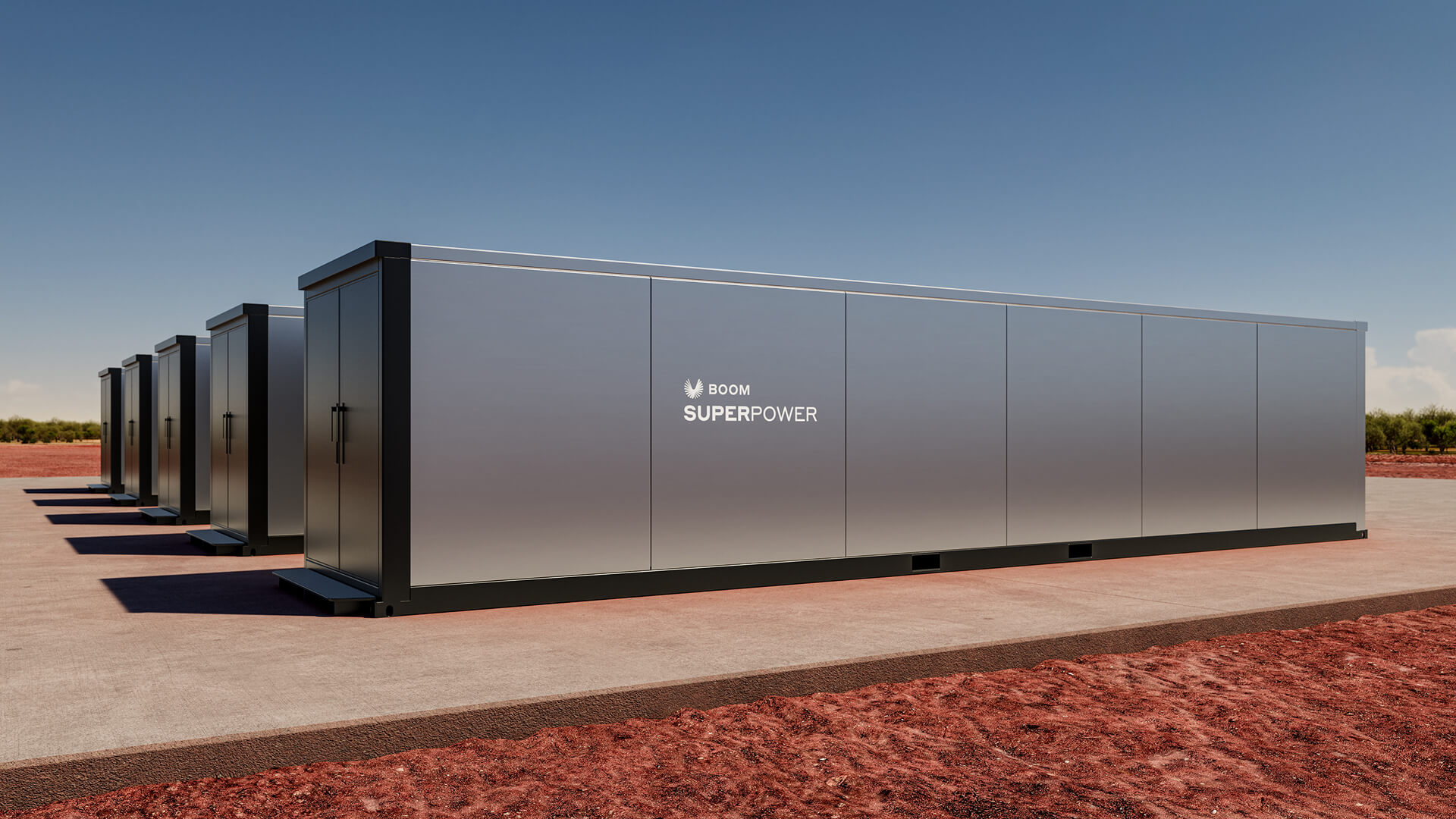
Crusoe has dropped its $1.25 billion launch order for Boom Supersonic's Superpower gas turbines, ending a plan to power AI campuses with turbines derived from the engine behind its Overture supersonic airliner. Boom founder and CEO Blake Scholl said on Friday that the two Denver companies are no longer launching the turbine together, according to a TechCrunch report. The order covered 29 of the 42 MW units, about 1.21 GW in all, with first deliveries due in 2027.
Key points
- Boom plans about 250 MW of Superpower turbine deliveries to other sites in 2027, then 1 GW in 2028.
- Crusoe's 1.2 GW Abilene campus runs on grid power; a 900 MW Microsoft campus will use on-site turbines.
- Baxtel tracks 26 Crusoe sites, with about 538 MW operational across facilities in Texas and Norway.
What fell apart
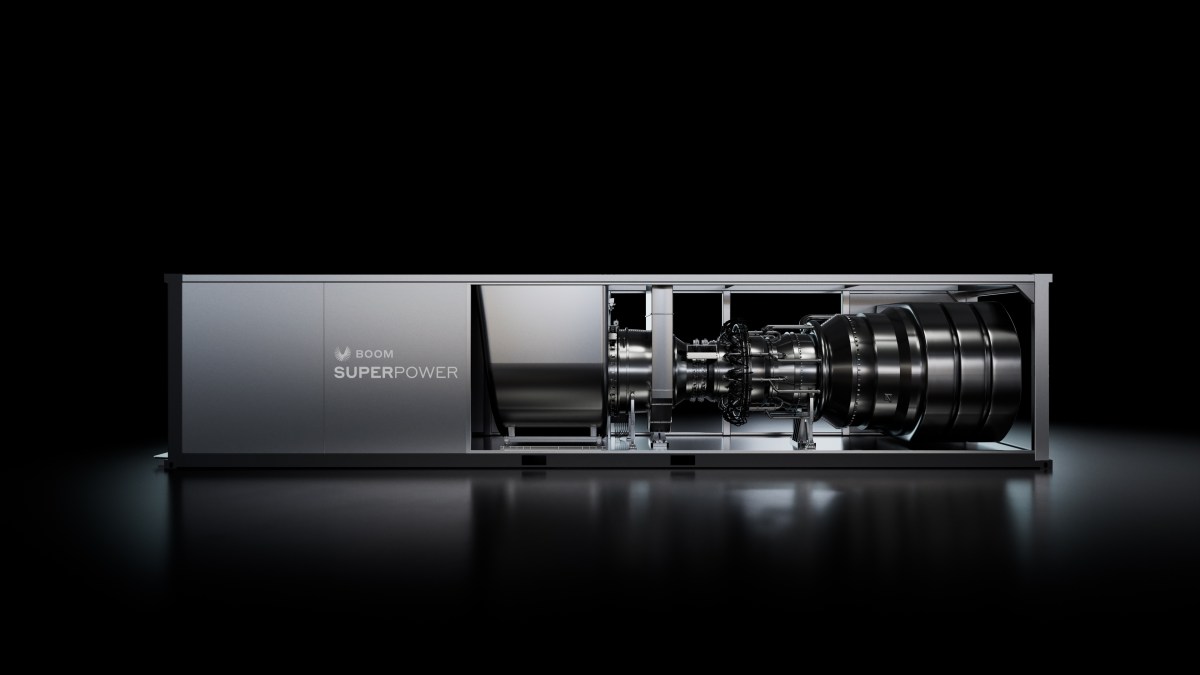
Boom announced the deal on December 9, presenting it as a backlog of more than $1.25 billion and naming Crusoe as launch customer for Superpower. The turbine is a 42 MW natural gas unit that shares roughly 80 percent of its parts with the Symphony engine being developed for the Overture airliner, and Boom closed a $300 million funding round led by Darsana Capital Partners the same day. Boom pitched the machine as waterless, able to hold full output above 110 degrees Fahrenheit, and packaged at shipping-container scale. Scholl broke the news in a post on X on Friday, congratulating founders Cully Cavness and Chase Lochmiller on Crusoe's $3.9 billion Series F before adding that the launch partnership was over.
No turbines had changed hands. Boom says other customers remain in its pipeline.
Scholl framed the exit without hard feelings. "Boom will be delivering about 250MW of Superpowers next year to other sites, and we're targeting 1GW in 2028," he wrote. A line he later deleted said turbines were no longer part of Crusoe's near-term primary power plans at Abilene and elsewhere.
Crusoe is still buying turbines
Crusoe says the decision is about sourcing, not strategy. "We build AI factories from the power up," spokesperson Andrew Schmitt told TechCrunch in an email, adding that the company chooses energy solutions site by site, drawing on turbines, wind, solar, batteries and the grid. "While Boom has been a great partner, the partnership isn't the right fit today," he said. Crusoe still plans to use turbines, just not Boom's.
Other orders back that up. Crusoe signed for 29 GE Vernova LM2500XPRESS aeroderivative packages in July 2025, and its agreement with Bergen Engines covers roughly 750 MW for U.S. sites: a 438 MW contract, a 310 MW letter of intent, and deliveries phased through 2027.
A fast-growing portfolio
Those choices now shape a portfolio built by a company that started in 2018 powering bitcoin rigs on stranded natural gas. Crusoe's first Abilene campus, a 1.2 GW project backed by $11.6 billion in financing raised in 2025, serves Oracle, whose end customer is OpenAI, and runs on grid power with gas turbines held for backup. A second Abilene campus, 900 MW for Microsoft, will run on on-site gas turbines. Baxtel tracks 26 Crusoe sites, including 10 around Abilene, with about 538 MW operational across five facilities in Texas and Norway.
Execution has not always been smooth. Crusoe paused its 1.8 GW Wyoming build in June, then closed the first $3.9 billion tranche of its Series F this month at a $30.9 billion post-money valuation, Unite.AI reported.
A bigger problem for Boom
The cancellation lands harder on Boom. The $300 million round it closed in December was raised largely to commercialize Superpower, and Scholl has said revenue from the turbine business was meant to help fund certification and delivery of the Overture airliner. Boom now has to replace its launch customer before a single unit ships, while sticking to a production plan that calls for more than 4 GW of turbines a year by 2030. Its Overture order book stands at 130 aircraft.
Why it matters
The split is less a verdict on gas-fired, behind-the-meter power than on supplier risk. Crusoe is still buying turbines; it is just buying proven ones from GE Vernova and Bergen Engines instead of betting a campus schedule on an untested engine from an airliner maker.
Boom's pitch worked because AI builders will try almost anything for faster power. Crusoe's exit shows where that stops.