Jon Eaves 0:00
Australia is very rich in sunshine, and we to capitalize further, an inverter, say, a 36 kilowatt inverter. You would normally put 36 kilowatts of solar to it. We put 46 kilowatts of solar to it. It's still as an inverter will only ever reach 36 but by supercharging it. You get to a you get a faster ramp rate in early in the morning, and you get a longer day by so we extend the kind of the power, the solar power, life off the facility. You
Nolan Turner 0:51
Hey everyone. I'm Nolan, executive producer of baxtels. Meet me room. Just wanted to make a quick announcement about the episode that you are about to watch. You're about to watch episode four, which was the first episode that we recorded back in July of 2022 so information is a little bit outdated, but I trimmed the irrelevant stuff out and kept some of the insightful content. So thank you all for being here. Thank you for listening to the podcast. We appreciate you more than you know. So without further ado, please sit back, relax and enjoy. Episode Four of baxtels. Meet me room podcast.
Eric Bell 1:27
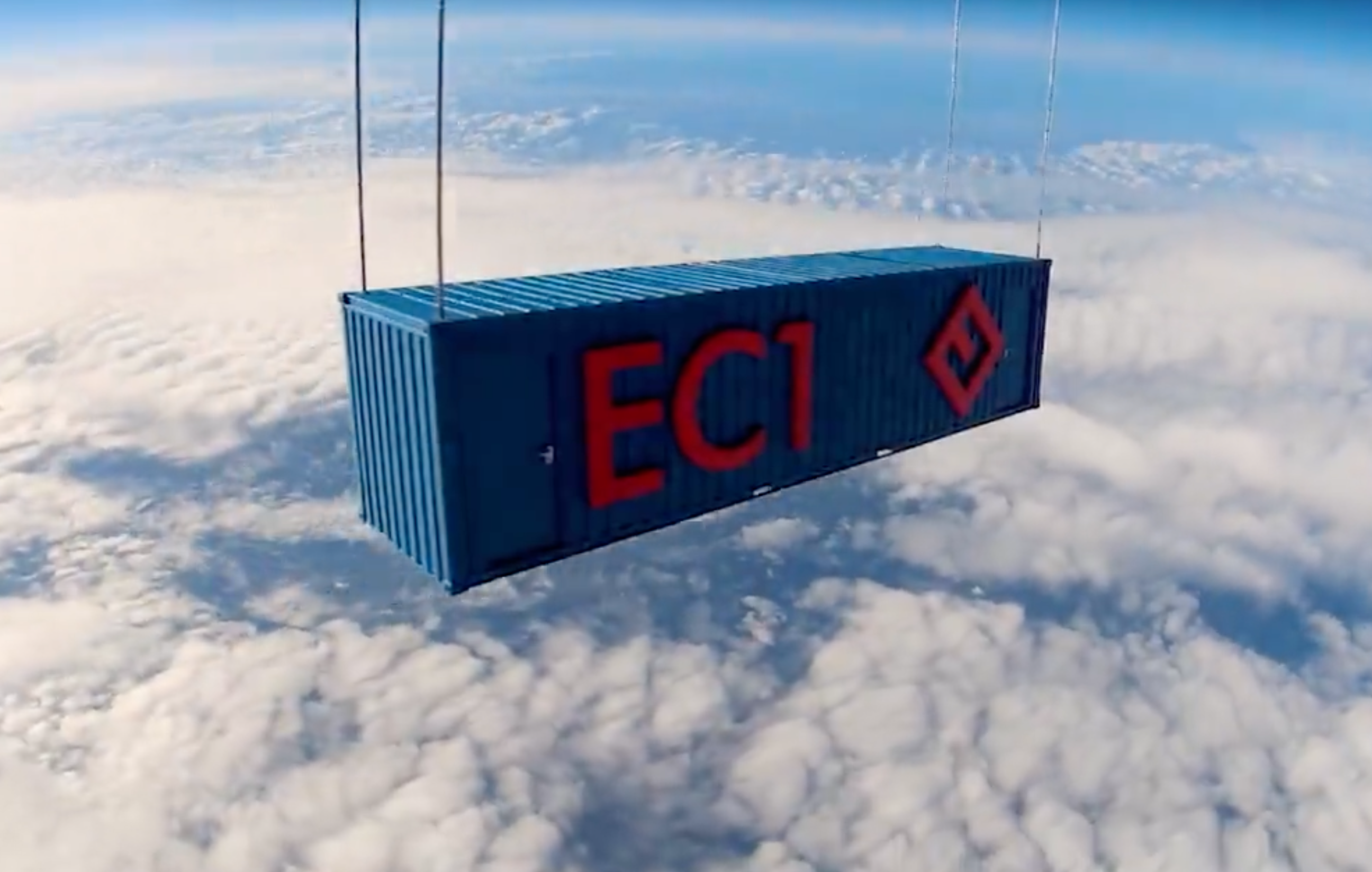
Welcome to the Baxtel podcast, where we uncover the cloud from the data center. I'm your host, Eric Bell, and today we are joined by John Eaves. John is the CEO of edge datacenters. It's reported that edge datacenters will plans to grow from up to 20 sites by the end of 2023, and 40 sites by the end of 2024, that's a lot of growth. John, I really appreciate you coming on today, as this is our very first episode. Welcome. Thank you, Eric, it's great to be here. I noticed on your wEric Bellsite, at least right now, you have a video of a container label, EC one, which ended up being Grafton in Australia, being carried up to an altitude. It says on the video up to 36,000 meters. Whether that's real or computer animation,
Jon Eaves 2:15
it's absolutely real. That that's true. We so to do what we did, you actually go through NASA. So NASA, because you're entering space, you go through commercial airspace, then you go through military airspace, then you enter space. So it goes to the very top of the stratosphere, just below the metasphere, and it's basically 36 kilometers high. You're only allowed to remain there for about so it's about an hour and a half total flight time. And then obviously it gets to the top. After it's finishes, then they they actually have to burst the balloon. So they give you an area where it will land. So once it's risen to its full height, and obviously you've got the photos, the the helium balloon is then burst. It comes back down very quickly. Comes back down at terminal velocity. It quickly goes through space, through military airspace, and then when it gets back to commercial airspace, it has a small pack chute which opens and it lands. Unfortunately, during the time it fell. The reason you only see it going up and not coming back down, because it's very un pretty when they start falling at terminal velocity and the camera starts bouncing off the body. And it was just, it was like, I'll never show that bit on the video. So, yeah, it's, it didn't survive. But it was a great journey up.
Eric Bell 3:38
So you made another one for another easy. So maybe that's easy to that you put into Grafton in a way. Well,
Jon Eaves 3:44
yes, the AC EC one the in the video, it isn't actually full size. You can't, obviously send a full size container into space, so it's a scale version. So it is, you know, there's a, there's some art in that, but it's not actually a full size container. So easy one in Grafton is obviously full size.
Eric Bell 4:02
Gotcha, okay? And then what was the goal? It's a metaphor to some extent. What was the goal of the video?
Jon Eaves 4:10
So when, you know, when people are asking me, Where the edges? And it was like, you know, the furthest point. And I was like, you know, like, the edge of the atmosphere. So originally, it was just kind of, you know, how do you, how do you launch and use the metaphor of the edge? So because we were using containers, I thought, you know, no one's ever sent a container into space. So I found a company in the UK. They launched it, and we got, sort of, I think we got, like, four hours notice we're given by NASA that they tell us that's our flight window, and you have to wait weeks. So literally, there's a team on standby for weeks waiting, and then they get coordinates to launch, and then NASA will give them approximately within a half a mile radius of where it's going to land. It's phenomenal technology. So they know exactly where it's going to be. They notify everybody in the air that there's something coming up, that they'll see a balloon stay out the way, and then when it comes back down, they know he's. Exactly where it's going to land. So it's, it is phenomenal. It was a phenomenal project. The work behind the scenes to make that happen was, you know, a tireless effort by everybody. That's
Eric Bell 5:12
interesting. You know that that's something I didn't know about that it sounds like, I don't know where the launch happened. I'm assuming in Australia,
Jon Eaves 5:20
no, no, that's in the UK. The team is in the UK. So it's, it was launched from Sheffield, I think, and it landed somewhere near Liverpool. So obviously, because it goes up and in the same place, because earth has rotated, it's not coming down in the same so you have a team at takeoff and a team at landing. So obviously, yeah, prepare for it.
Eric Bell 5:40
But it's interesting that NASA would govern, or at least try to control, you know, is space flight that's outside of the US. It's interesting
Jon Eaves 5:51
they control. I mean, NASA being the governing body and not It's not that they control space outside of the US. They have the best technology. They're the most advanced, you know, working with a single because what you don't want to do is have to do 20 licenses. You want to be able to work with one body that enables you to go through commercial, through military, into space. And they obviously are so good with their computer systems that generate the tracking for it, that it's just an easier, an easier opportunity to work with one. Obviously, we don't have any contact then with directly, the company that actually called into space. They do all of that work for you.
Eric Bell 6:32
Okay, well, that's interesting, and I guess that that kind of launches you or is also another metaphor for the rapid growth that you've seen in my mind's eye. You guys came out of nowhere last year. You know it sounded like you launched last year, I think in April or so, 2021 and now you have many datacenters in Australia. You've announced in other other areas, when and how did edge centers get its first start?
Jon Eaves 7:06
So I, obviously, I built data centers almost all my life. I started off as a marine engineer, and I had exited a couple of businesses, and then I was fortunate enough to go and work in Dubai for one of shape Mohammed's businesses, Dee Wah, and build a project there. And then that was a three year project, of which, when it finished, I came back to Australia, and sort of the normal colocation had, you know, it was diminishing. People weren't buying racks anymore. It was, sort of the hyperscalers have taken over Australia, growing very rapidly, and majority of people were cloud first. So I'd heard of a premise that people were talking about edge technology. And I'll be honest, at first, I wasn't I wasn't a believer, and I was then fortunate enough to sit on a call with Mr. Mark gamzie, and when he explained, you know, the opportunity the world will have with edge and the new capabilities that it was just a phenomenon. Let's say I kind of got it straight away. I was just sort of there, and then from that, I was able to plan, you know, how are you going to do this? How are you going to do this with economies of scale? How could you do this and roll out quickly. One second, blow my notes or just wipe. No, sorry, I'll just, I'll come back. I'll finish off that sentence in a sec. Okay, how are you going to roll out quickly? And obviously, to do that, we looked at modular datacenters. And then what happened was, obviously, in Australia, when you go to a new site, there's never been electricity. It's a bare block to get electricity on the site takes about six months. It's a standard process. So instantly, as soon as we started looking at doing power, our my, you know, thoughts on a high speed rollout were crushed because it was six months per site. So what started off as a proof of concept by making it solar powered, obviously became our main source of supply. So Grafton was built as a POC. It has operated now for more than 12 months, continuously on solar and batteries, and operates very well. And then from that we we did a small raise, got some money, we built four more locations, and then we acquired three. So at the end of 2021, we had eight active locations,
Eric Bell 9:33
eight locations, yeah, and that, I was going to ask you about your solar powered facilities later, but you know, that question kind of segues into that. So why did you choose solar power to power your facilities? I think you kind of answered that in terms of the fact that you had to wait six months to get power, and this is a way maybe to build faster. Is that capture that? Right?
Jon Eaves 9:54
Yeah, that's right. So obviously solar is also very efficient. So. One of the parts of datacenters is, you know, you have your PUE measure. Solar only creates the energy it requires. So if you've got 72 kilowatts, and we have we have 36 336 kilowatt banks, if you have 72 kilowatts of solar online, and the batteries are full, but you're only using three or four kilowatts at the beginning, because there's not much load. You only actually generate three or four kilowatts of load. We aren't allowed to send the additional power back to the grid, because as battery operated facility, if the mains goes down, or if there's an issue and a pole goes down, we have the ability to recharge the grid. So we would actually make it a danger, so we don't sell or use any of our power locally. We use it 100% on site.
Eric Bell 10:50
Great. And then, are all your facilities solar powered? Or are there some that might not
Jon Eaves 10:57
be in Australia? So the three we acquired in Queensland aren't solar yet. They're to be solar modified. The five we do operate that are easy built, they are our first site in Malaysia. EC 31 is not solar. It's actually in a tower building. But obviously, because we generate so much solar in Australia, we can use our own green credits to offset the usage in KL so we are 100% green compliant by using our own credits to offset the other facilities.
Eric Bell 11:30
Gotcha. And then, how does the solar? How have you found solar compared to grid costs? And every grid, every metro, is a little bit different in terms of, you know what it would cost for electricity in that Metro. But how have you found it? You know, different or
Jon Eaves 11:46
the power costs in Australia are just spiraling out of control at the moment. You know, we were started off at sort of 10 cents a kilowatt hour, 11 cents a kilowatt hour, and in the last three months, in one particular location, we've seen it go 10 to 11, then it went to 21 cents per kilowatt hour, then 31 cents per kilowatt hour, and the last reading was 40 cents a kilowatt hour. So that, you know, if you start talking about putting your load on, that you've had, you know, a multiple of four time increase in your power cost, which obviously you don't pass on to your customer straight away. These are costs that you know you've contracted for a year. So it's been a great ability not to be troubled by increasing power costs in some of these locations.
Eric Bell 12:33
Gotcha. And then what, just as an aside, what's driving the cost in the Australian market, from an electricity perspective, is that, because is
Jon Eaves 12:43
it waiting for our provider to tell us? It's interesting. At the moment, it's like, you know, we we aren't in summer, we're in winter. So it's not like, everybody's got AC on. There's a lot of demand. We're in regional areas, but obviously there's a there's just rapid increasing of prices of electricity, which I've never seen before in the country like it's been for the last 20 years building datacenters, it's been very stable, and the costs have just significantly gone up.
Eric Bell 13:08
Yeah, but there's got to be, I mean, the underlying energy. What does a grid look like in Australia? Is it mostly natural gas or coal or or
Jon Eaves 13:17
mostly coal? Because obviously the we, we are a massive coal producer. Each state has its own grid system. So if Queensland separate, you know, then you've got New South Wales. Victoria, the driver of the coal hasn't increased, or the cost pricing of coal hasn't increased significantly enough to offset the cost of the electricity we're seeing the spikes are being looked at for, you know, from a regional area point of view, and it only, it's only, it's only happened in two states. It's not all states that have had the issue. So we're working now to, obviously, for us, it's, it's a limited impact, because all we pay is the connection fee a month, because we generally have a zero kilowatt hour usage. I think one of our sites used sort of 70 kilowatt hours the whole of last month. But it's something that I think has helped save us valuable money from, you know, not having to pay these new prices. And in the rest of the world scenes, we find Asia, you're looking at between five cents and 12 cents per kilowatt hour. So it's a lot cheaper power in Asia. And
Eric Bell 14:23
we're talking about these, these numbers that cents per kilowatt hour is that in US dollars or Australian dollars, or
Jon Eaves 14:31
they're in Australian so the Australian ones, the in Asia, the five cents is us and the 12 cents is us. So yeah, two different and
Eric Bell 14:39
Australian is about what, 1.5 to one, or 1.4
Unknown Speaker 14:42
to one, 1.5 Yeah.
Eric Bell 14:46
Well, good, yeah. So, Australia, sunny, you know, will you take this design to cloudier markets and cloudier, I mean, more from a weather perspective, rather than, you know, an internet cloud perspective.
Unknown Speaker 14:58
Yeah. So. So
Jon Eaves 15:01
Australia is very rich in sunshine, and we to capitalize further, an inverter, say, a 36 kilowatt inverter. You would normally put 36 kilowatts of solar to it. We put 46 kilowatts of solar to it. It still, as an inverter, will only ever reach 36 but by supercharging it, you get to a you get a faster ramp rate in early in the morning, and you get a longer day by so we extend that the kind of the power, the solar power, life of the facility in as I mentioned, EC 31 in KL is not solar, but we use credits for that. EC 51 in Ho Chi Minh City in Vietnam, that solar EC 61 in Thailand is also solar. So we will continue to roll out in areas where there is still sunlight. You may obviously we understand that in the monsoon seasons in Asia, we will lose that capability, but it's we as a company would like to remain solar first. And we are looking at other technologies. I mean, we've looked at huge grid stable battery banks. We've looked at the vanadium red X flow batteries, which are great, and they can, you know, you can go up to sort of two megawatts of a single battery. We've looked at wind. Wind is very difficult, just because of the size of the physical unit, the noise and then the distribution point, you have to put the wind turbines away from the physical unit, because they aren't allowed in regional areas. They have to be effectively in privately owned, zoned areas in New South Wales and in Victoria. And then obviously, we're looking at what other potential opportunities there are for upcoming technologies that we will kind of try and keep a finger on the pulse with and work with them to put them in our facilities.
Eric Bell 16:48
Gotcha. And then, from a nomenclature perspective, it seems like you know you're you're, you're. The way you name your data is you see one, you see two. Seems like when you go to new country, you put the digit changes that first digit changes 3151 61 is that? Do I have that correct? Every city, every country you go to, maybe Japan might be 71 or whatever, something like
Jon Eaves 17:14
that is. Yeah. So we started out with, you know, all of our previous facilities were built with, you know, Sydney or s, y, d, 1b, and e1, you know, you kind of use the the local airport name when you go into regional areas that we are in predominantly and we're not in capital cities that they don't necessarily have a three digit airport code, they have a strange Ataf code. So we decided that rather than just use location number one, location number two, because you might end up with because obviously the idea of the edges, it's not a singular data center, it's multiple. So for example, in KL, we have one now in Kuala Lumpur, but we'll end up probably with two, three or four in Kuala Lumpur, but they're there around the periphery of KL. So again, your edge workloads can move, and you're still keeping the cloud, or the edge cloud closer to the client, or the edge network closer to the client. So we just decided that we'd have so EC 31 is KL. EC 32 is Penang. EC 33 is Johor. EC 35 there's no fours used in Malaysia. So we go 3335 fours unlucky. So again, you've got to look at their respect to the country as well. So like in an elevator, you have level three and or three A and 3b and then it goes five. So I'm in Tower 3b which effectively would be four, but it's not. So we have three A and 3b so again, you've got to be culturally sensitive. So EC, 41 is, I think from memory, the Philippines, which it doesn't have an issue with 450 so the five zero is the country. So 50 is Vietnam. 51 is Ho Chi Minh. 52 is Hanoi. And then that goes all the way up to EC 100 which is the United States,
Eric Bell 19:09
gotcha. And then you guys are using containerized datacenters, as they understand in most cases, right? 5050, 5050, okay, we're
Jon Eaves 19:19
actually yeah, at the moment, currently it's exactly half and half. So I call the design a pod. So whether you are in a container or you're in a building, the the footprint size is identical. It's 12 meters by 12 meters by 12 three sorry, 12 meters by three meters by three meters. So 12 meters long, three meters wide, three meters high. We have in that 16 racks of which there are generally quarters. So we have 64 quarter racks and one kilowatt each. And that's our standard footprint. And again, you know, if you fill one, then you don't build another pod in the same building. You find another location and you expand out. So yeah, at the moment, we are half and half. Yeah.
Eric Bell 20:00
Gotcha. And then is it half and half? Based on the if you're in a tower, obviously, you would put the pod on a floor. If you're in a more rural area, then, then you could just put it in a parking lot, or, you know, kind of on a site or a lot, right?
Jon Eaves 20:14
That's right. So, so Malaysia, all three first locations are internal pods, whereas Thailand, all first three locations are external pods, Ho Chi, Minh and Hanoi external pods. Philippines internal pod, Jakarta or Indonesia internal pod. So it's, it's really, you know, you're looking for communications, you're trying to find land, you obviously got a large security area that you want to cover off as well. So in some of the regional areas where you don't want it to be in a building, because it's it's too open that you prefer to have it in a more of a, you know, secure area with your own fence and security guard on site. 24/7
Eric Bell 21:01
gotcha, and then looking at, kind of the sites, when I look at Queensland, particularly North Queensland, looks like you almost have a monopoly on facilities. What drew you, kind of the north part of Queensland there,
Jon Eaves 21:16
Queensland was acquisition, so we partnered with a company called on cue communications in Queensland that already had the facility. So in, you know, trying to expand quickly might not necessarily mean building. And if you look at some of the regional towns we're in in Australia, they're towns with between 50 to, you know, 70,000 people. They've never actually had a data center. So in a town that already has an established facility, it's not necessary, always the best to go in and try and build one next to them or near them, if there's absolutely no requirement for that to happen. So we did an agreement with on cue to take over their communications facilities in Queensland and then operate them as edge centers.
Eric Bell 21:59
Gotcha. And then when I had a look at your LinkedIn this morning, it looked like you have three different companies, Edge companies listed on your LinkedIn, edgecenters, which is what we've been talking about. Now, Edge Asia, which is also what we started talking about, but also edge America. Can you walk us through, kind of the you know, perhaps the expansion plan roughly at a high level,
Jon Eaves 22:26
yeah, so there's obviously edge Australia was or edge centers. PT, y Ltd was obviously our founding company. As we expanded, we started a Singaporean business, which is edge centers. PTC, although it's not listed on LinkedIn, as it would be like an edge center refex. We have edge centers in brackets Malaysia, Edge centers in brackets Thailand, and centers in brackets Vietnam. So every country we have entered, we actually have a specific vehicle Asia. Though all of the subsidiaries operate under Singapore and then, so the Singaporean company is the holding platform. And then, as we are planning to extend, expand into the US in 2023 we founded edgecenters LLC at the same point, and we're just working through the process of that now and organizing visas to start scouting for locations in the US to expand next year. So as you mentioned before, I did eight last year, we have another, the ninth under construction in Australia, with a 10th location under scout. We have three locations under construction in Asia, seven more locked in so we know where our next locations are, and they obviously our first three locations are Vietnam, Thailand and Malaysia. EC 31 will be ready in, I'd like to say, two weeks. So around August the 19th, EC 31 will go live, and then we'll complete the roll out of the 10 facilities in Asia by March next year. And then, I would say, you know, from March next year, we would then be looking at doing the same system across the United States. So I, I personally moved to Malaysia. So I live in Malaysia now and KL so I can run operations for Asia, and then inevitably, next year, pending visas, and, you know, our bills going successful, then I would relocate to the US and do the same here. Wow. Well, idea being that I'm in Los Angeles, I think I just gave that away
Eric Bell 24:23
in Los Angeles. Yes, okay, well, that's excellent news, that you're expanding throughout Asia and then into the potentially into the US next year. Interesting that you're moving. It's always difficult, on a personal level, to move into different countries, but that that shows dedication, I suppose, to the business.
Jon Eaves 24:44
Yeah, look, I mean, I've obviously been to Asia before. I never lived there, and living in different countries, we learned, you know, I took my family with me in Dubai. So we did three years in Dubai. The whole family went there and then bringing them back into the country. Really was, you know, it was, we had to resettle. It took us a while to kind of get back into things. My kids are older now, so because I travel so much, so although I'm based in KL I might be a week in the Philippines, I might be a week in Vietnam, I'm a week in Thailand, I'm a week in Indonesia, then I'm a week in Japan. That it's sort of, it's so much travel. My family's remaining in Australia. So, yeah, it's travel thing. I've I've mastered a very good at flying now. Oh, because, well, I mean, I can actually fly. So during the pandemic in Australia, to continue the build and so that we could build on time, I actually became a pilot. So I could fly to our locations when the air, when the skies were dead, so I became a pilot last year so I could continue to grow the business. Brilliant. Now, just for the record, I haven't flown in about six months. Now, commercials open again. I prefer commercial because at least, you know, I'm not trusting myself. But yeah, I learned to fly last year so I could move around quickly. Did
Eric Bell 25:58
you start getting your pilot license before the pandemic. I mean, was this already kind of in play, or did you pandemic hit?
Jon Eaves 26:05
I'd never flown a plane before. I needed to go to Grafton to start Grafton. So I'd never actually flown at that point. And then the borders closed into Victoria, Victoria, and we closed for a very long time. So I, I was able to then, you know, enter as a pilot and do what I needed to do.
Eric Bell 26:21
How? How long did that take to get your license? Where you started? You're like, I want to be a pilot to transport myself to the point where you're actually transporting yourself to
Jon Eaves 26:32
so I've never, I've never flown alone. I always have a professional pilot with me because my insurance requires and again, I love my family. I don't want to, I don't want anything to happen. Small aircraft do have issues. So I, because of the pandemic, I was very fortunate to get, we have an airline called jet star in Australia. I got a jet star pilot called Daniel. He was just amazing, you know, truly professional. And we would actually just fly everywhere together. He, he, he's officially edge centers first employee. So edge centers, first ever employee was a professional pilot. And then it sort of, yeah, we done, you know, we do 60 hours of flying before I got my license. So on one day we do, you know, we were doing 1208, to 12 hours per day of flying on on the same day legs, which did become very taxing. So we would go into, say, Albury in the morning. We'd stay overnight, then we'd go into now or the next day, and then go back. So we started altering it, and then by the time we'd got them up and running, you know, the pandemic had ended. Flying yourself isn't cheap. Flying commercials a lot cheaper. So we're back to that now. Gotcha
Eric Bell 27:45
okay? And then when you're choosing these new metros, what is the how do you determine which metro to go into? Partly, it might be your your partner. But also, are there other metrics that you're looking at when you're you're deciding on a new Metro.
Jon Eaves 28:01
Yeah. So if you look at Malaysia as an example, I mean in Australia. So for me, it's where aren't the hyperscalers? So Sydney, Sydney and Melbourne, you'd never go near them, because they are hyperscale towns. Edge does complement hyperscale because you still get the tier two and tier three providers. That what that don't want to be with the hyperscaler, you know, one of the hyperscaler cloud operators, but want to be near them to be able to supply services. But in Malaysia, all the datacenters are in an area called Cyber Jaya, which is about 45 minutes south of KL. So KL itself is an edge. There are there's one facility which is full. So it's a great opportunity to be able to build in a new location, supporting a new region that is currently underserved by facilities. And it's the same in Penang. Obviously, Johor is different. Now, when we started, which is April, you know, Johor was had no major movement, lots of talk of building, but Johor now is taking sort of the overflow from Singapore. So there's some massive datacenters being built in Johor. But again, Johor is a massive area, you know, there's, there's a lot of population still to serve,
Eric Bell 29:09
right? Yeah, I think it has a lot of potential, particularly that the area that's closest to Singapore, yeah, yeah. That makes sense. Agreed. Okay, so this is something I'd like to do as a regular as we go along on the podcast. But you know, I didn't prep you effectively on this, but I would like each guest to provide, like some top picks, say, two to three top picks of what you find interesting, useful, that maybe other the audience might not know about. So for example, it could be an app, a book, a wEric Bellsite, an article that you recently read, a travel tip, you know, or just some sort of life tip, something that is helpful for you, you know?
Jon Eaves 29:54
Yeah. So I think reading wise, there's an article that's released annually, which is called the state of. Edge. If you Google that, you'll find it. It is obviously purely about what we're doing. And it talks about not just infrastructure. In fact, it very rarely talks about infrastructure, but it talks about a lot of the different technologies, whether it's from tower to edge computing to operational software. And it gives, it's a very good update to where the edge is in the real world, where people are talking about, you know, AI, autonomous vehicles, applications, a lot of them still aren't mature enough to be at the edge. So I found that very helpful annually to kind of see how the market's growing. And obviously, there's SDL partners in the UK, they do one on where, where they see edge facilities, where they see edge computing going in the next or in the next few years, and you look at their growth that they're expecting these facilities to have, whereas edge data centers now a company may use one or two, whereas Those same companies interviewed are predicting that they'll be between five and six in the next two years, and then between seven and 10 in the two years after. And you know, there's that we expect an exponential growth of the Edge platform, which is why we're investing early into the technology and and our own personal platform that we use to operate this. The second biggest tip I've had is I'm when I fly home this weekend, back to Australia to see the family. It will be my 50th international flight this year. And I've seen, you know, I've been in Singapore in December when it was empty, when we were first looking at Asia. You know, there was not a person I've watched the world slowly open back up. You know, one of the most exciting things to happen is that the food court in Vietnam airport opened so we could always get food on the way out. But one of the best things I have is there's, especially for Asia, there's a card called the APEC card, and that allows you entry in a very special lane. It's sort of like the diplomat Lane in Asia. So when you land in a country like Singapore, like Malaysia, where there might be two or 300 people in the queue in front of you, it's the fastest way in and out of any country. So any country in Asia that supports APEC, you can get, you can land, you can be through customs in or immigration, sorry, in, you know, circa 15 minutes, grab your bag and go. So that's been my, my best find so far for travel and and obviously, now it's almost like I'm at a point where I have a grab bag. My suitcase is never really unpacked. It's I actually do the washing in the country I'm in before I leave. So I've done my washing today. It's packed, and then it just lands, and it's just left and it's ready to go. Nice. So, yeah, I've kind of, I've mastered traveling in airports.
Eric Bell 32:50
Nice. Well, good. Any other tips or apps or books that you'd you'd recommend?
Jon Eaves 32:58
I think the tip, I would say is, I think, you know, your audience, albeit the edge is undefined, and people have a variety of different opinions on what the edge looks like. I think the edge is, you know, still undefined. And I think what will be really interesting to see is as we grow out through Asia and as the other competition and different providers, you know, we're not the only one in the world, as we see the next 12 months, of these platforms in different countries expand, I think it'll be great where we can end up with a fully interconnected edge network that supports regions that are currently underserved. You know, the internet in a lot of these locations I go to is terrible. So I think helping build the internet for the future is definitely something I'm, I'm passionate about, and love doing great. And it's, there's, it's almost a book we will write, not a book we will read,
Eric Bell 33:49
right? Yeah, we're, we're writing, writing history as we go. So how can we find and I really appreciate you coming on again. This is our first episode, so we had a few hiccups, but I think everything is all good. You know, at least particularly for the first one, how kind of wrapping up, how can we find more about you, or how do we follow you? Or edge edgecenters,
Jon Eaves 34:15
yeah, so edgecenters.com and that's obviously the C, E, N, T, R, E, S, the Australian version. I'm obviously on LinkedIn. I'm a prolific poster. I actually found it my best platform. I mean, that's how I think we met. So, so yeah, I'm, I'm very regularly active on there. And I think it's really, you know, to the audience. Stay tuned. I've besides the locations I know I'm building, what this industry will look like in 12 to 24 months. I have an idea, but I can't wait for that to be realized.
Eric Bell 34:51
Excellent. All right. Well, thank you for joining today.
Jon Eaves 34:55
Thanks so much. Thank you for having me.