.jpg)

Artificial intelligence is driving a rapid expansion of data center infrastructure worldwide. As AI systems become more advanced and widely adopted, the demand for computing power and the electricity needed to support it is rising sharply.
Unlike traditional cloud workloads, AI relies on high-density computing clusters that consume significantly more energy to train and run large models. This has led to increasing concerns that power grids may struggle to keep pace with the speed of AI-driven infrastructure growth.
As a consequence, a critical question has emerged about if global energy systems scale fast enough to support this rising demand, or if electricity constraints will slow the AI revolution? Although some regions are already experiencing grid limitations, ongoing investments in energy generation, efficiency improvements and emerging technologies could help to ease this pressure.
Against this backdrop, this article examines whether AI is likely to trigger a global power crisis for data centers or whether the challenge can be addressed through innovation, infrastructure expansion, and smarter energy management.
Why AI Requires So Much Power
Artificial intelligence demands far more computing power than traditional software because it relies on large-scale mathematical processing across massive datasets. Instead of simple transactions or data storage, AI systems perform continuous calculations to learn patterns, generate outputs, and make predictions.
A major reason for this high energy use is the shift from CPUs to GPUs and specialized AI accelerators. These chips process many operations in parallel, enabling modern AI systems to function, but also increasing electricity consumption significantly.
Training AI models is especially power intensive. It involves running billions of computations over large datasets for weeks or months, requiring large clusters of high,performance hardware. This consumes energy not only for computation but also for supporting systems like storage and networking.
Energy demand continues even after training. AI inference,running models to respond to user requests,happens at a massive scale in real time. As AI tools become more widely used, this ongoing workload becomes a major source of electricity consumption in data centers.
Another factor is model size. As AI systems grow larger and more complex, they require more memory, processing power, and time to run, all of which increase energy usage.
These demands also affect infrastructure design. Higherdensity computing requires more advanced cooling systems and electrical capacity, further increasing overall power requirements.
Together, these factors explain why AI is significantly more energy intensive than previous generations of computing, and why it is placing growing pressure on data center power systems.
The Explosive Growth of AI Data Centers
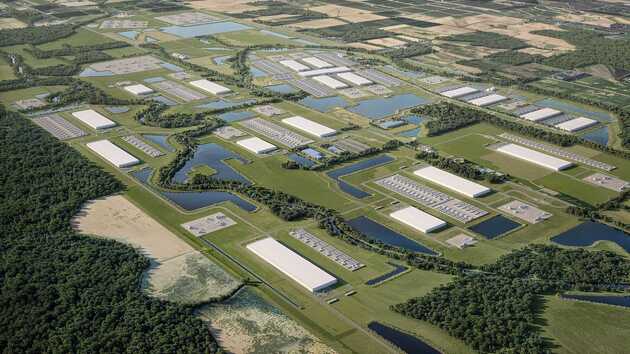
AI development has triggered a global surge in data center construction, driven by the need for massive computing power to train and run increasingly advanced models. What was once a steady expansion of cloud infrastructure has become a rapid build,out of high,density facilities designed specifically for AI workloads.
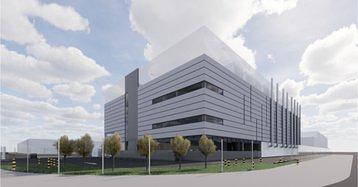
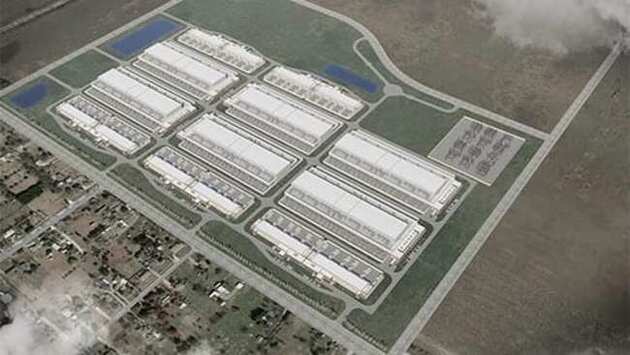
At the center of this growth are hyperscale data centers. These large facilities are built to support tens of thousands of servers and dense clusters of GPUs, often requiring far more electricity and cooling capacity than traditional data centers. As AI adoption expands across industries, demand for these facilities has accelerated significantly.
The rise of generative AI has been a major catalyst. Applications such as AI assistants, content generation tools, coding systems, and enterprise automation platforms require continuous and scalable computing resources. This has pushed cloud providers and technology companies to invest heavily in new infrastructure to avoid capacity shortages.
Major operators are expanding globally, acquiring land, securing long,term power agreements, and building new campuses in multiple regions at once. In many cases, the speed of investment is being limited not by demand or funding, but by access to reliable electricity and suitable infrastructure.
Governments are also supporting this expansion, recognizing AI infrastructure as a strategic economic asset. Many countries are encouraging data center development through policy support, infrastructure planning, and incentives aimed at attracting digital investment.
However, this rapid growth is creating pressure on local infrastructure. In several regions, utilities are struggling to keep pace with demand, leading to longer connection timelines and increased competition for available power capacity. As a result, electricity availability is becoming a key factor in where new data centers are built.
Looking ahead, demand is expected to continue rising as AI becomes more deeply integrated into business operations, public services, and consumer applications. Emerging technologies such as autonomous systems, advanced analytics, and large scale simulation will further increase the need for high performance computing infrastructure.
In this environment, data centers are no longer just supporting infrastructure for the digital economy,they are becoming its core foundation. Their expansion reflects not only technological progress, but also the growing importance of computing power in shaping global economic and industrial systems.
Why Utilities Are Struggling to Keep Up
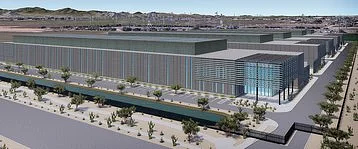
While developers can plan and build facilities in a few years, utilities often need much longer to expand generation, transmission, and grid capacity.
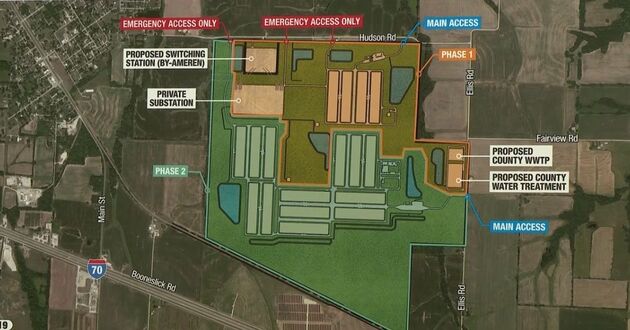
A major reason many of these utilities are struggling to keep up in recent times is because many of them are aging and were not designed for today’s high density computing loads. Large AI facilities can require hundreds of megawatts of power in a single location and often force costly upgrades to substations, transformers, and transmission lines before new projects can connect.
Transmission bottlenecks are another issue entirely. Even when enough electricity exists, delivering it to data center locations requires new lines and approvals that can take years, not forgetting that supply chain constraints also slow progress, with long lead times for critical equipment like transformers and switchgear limiting how quickly utilities can expand capacity.
However, the demand keeps rising across multiple sectors, including transport electrification and industrial growth, not just data centers. This increases competition for limited grid expansion resources.
The result is a timing mismatch: data centers can be built faster than the power systems needed to support them. This makes electricity availability a key constraint in site selection and a growing challenge for the AI industry.
Regions Already Experiencing Power Constraints
Power availability is already becoming a limiting factor in several major data center markets, where demand is growing faster than grid capacity can expand.
In Northern Virginia, the world’s largest data center hub, rapid growth has strained local power infrastructure, leading to longer timelines for new grid connections and major upgrades to support future demand. Dublin is also experiencing the same as the demand has prompted tighter scrutiny of new developments, with concerns about grid stability influencing planning decisions.
London is facing similar pressure, as competing demand from electrification and digital infrastructure increases competition for available grid capacity while countries like Singapore have periodically restricted new data center growth due to land and energy limitations.
Across these regions, electricity availability is increasingly the main constraint on expansion, overtaking traditional factors like land or funding and AI is intensifying this issue by increasing power density requirements, making it harder for existing grids to support new large-scale facilities.
As a result, developers are increasingly prioritizing locations with reliable and scalable energy access, reshaping global data center investment patterns.
Could AI Trigger a Global Power Crisis?
The idea that artificial intelligence could trigger a global power crisis for data centers has become a central concern in discussions about digital infrastructure and this is not far-fetched. However, the reality is more complex than a simple shortage or collapse scenario. The answer depends on how rapidly demand grows, how quickly energy systems adapt, and how effectively efficiency improvements offset rising consumption.
Those who warn of a potential crisis point to the unprecedented scale of AI driven electricity demand. Modern AI systems rely on large clusters of GPUs and specialized hardware that consume significantly more power than traditional computing workloads. As organizations deploy increasingly large models and expand AI services, total energy requirements are rising quickly, placing pressure on local and regional power grids.
A key concern is the speed mismatch between infrastructure development cycles. Data centers can often be planned and constructed in a matter of years, while power generation plants, transmission networks, and grid upgrades typically take much longer. This gap can create temporary shortages where data center capacity is ready but sufficient electricity is not yet available.
In addition, AI demand is highly concentrated in major technology hubs. When multiple large facilities are built in the same region, they can place significant strain on local grids, leading to delays, higher electricity costs, or restrictions on new connections. In such cases, the limiting factor is not capital or technology, but access to power.
Efficiency improvements also play an important role in moderating demand. Advances in chip design, cooling systems, and AI model optimization mean that more computation can be achieved with less energy per task. While total usage continues to grow, these improvements help slow the rate of increase in electricity consumption.
Another important factor is geographic variation. Energy constraints are unlikely to be uniform worldwide. Some regions may experience tight supply conditions, while others with abundant energy resources and stronger infrastructure may continue to scale AI development without major limitations. This creates a more uneven, regional pattern rather than a single global shortage.
In reality, the most likely outcome is not a global power crisis, but a series of localized challenges that vary by market and infrastructure readiness. Ultimately, the key issue is not whether AI increases pressure on energy systems,it clearly does,but whether power infrastructure can evolve quickly enough to support that growth. The answer will depend on sustained investment in energy generation, grid modernization, and efficiency improvements across the entire technology ecosystem.
Could AI Trigger a Global Power Crisis?
The idea that artificial intelligence could trigger a global power crisis for data centers has become a central concern in discussions about digital infrastructure. However, the reality is more complex than a simple shortage or collapse scenario. The answer depends on how rapidly demand grows, how quickly energy systems adapt, and how effectively efficiency improvements offset rising consumption.
Those who warn of a potential crisis point to the unprecedented scale of AI driven electricity demand. Modern AI systems rely on large clusters of GPUs and specialized hardware that consume significantly more power than traditional computing workloads. As organizations deploy increasingly large models and expand AI services, total energy requirements are rising quickly, placing pressure on local and regional power grids.
In addition, AI demand is highly concentrated in major technology hubs. When multiple large facilities are built in the same region, they can place significant strain on local grids, leading to delays, higher electricity costs, or restrictions on new connections. In such cases, the limiting factor is not capital or technology, but access to power.
However, the case for a global crisis is not definitive. Energy systems have historically adapted to major increases in demand through investment, innovation, and market response. As AI expands, utilities and governments are already responding by building new generation capacity, upgrading transmission networks, and accelerating energy infrastructure development.
Efficiency improvements also play an important role in moderating demand. Advances in chip design, cooling systems, and AI model optimization mean that more computation can be achieved with less energy per task. While total usage continues to grow, these improvements help slow the rate of increase in electricity consumption.
Another important factor is geographic variation. Energy constraints are unlikely to be the same worldwide. Some regions may experience tight supply conditions, while others with abundant energy resources and stronger infrastructure may continue to scale AI development without experiencing major problems and this creates a more uneven, regional pattern rather than a single global shortage.
Ultimately, the key issue is not whether AI increases pressure on energy systems,it clearly does,but whether power infrastructure can evolve quickly enough to support that growth. The answer will depend on sustained investment in energy generation, grid modernization, and efficiency improvements across the entire technology ecosystem.
The Search for New Energy Sources
As AI data centers scale, securing reliable and continuous power has become a central challenge for operators. The demand is no longer just for electricity, but for large amounts of stable, predictable energy that can support high,density computing around the clock. This has pushed the industry to explore a wider mix of energy sources beyond traditional grid supply.
Renewable energy is playing an increasingly important role. Solar and wind power are widely used through long term power purchase agreements, allowing data center operators to support new generation capacity while improving their sustainability profile. However, because renewables are intermittent, they must often be paired with storage systems or backup generation to ensure consistent uptime for critical workloads.
Natural gas remains a practical option in many regions due to its reliability and scalability. Gas-fired plants can provide steady baseload power and are often deployed more quickly than large-scale alternatives. In areas where grid capacity is constrained, some operators are even considering dedicated generation solutions to secure immediate access to electricity.
Beyond traditional sources, there is growing interest in alternative and emerging energy technologies. These include geothermal power, advanced battery storage systems, hydrogen-based energy concepts, and microgrid architectures that can improve energy resilience and reduce dependence on centralized grids.
No single energy source will be sufficient to support the future scale of AI infrastructure. Instead, the industry is moving toward a diversified energy model that combines renewables, natural gas, nuclear power, and advanced storage solutions. The exact mix will vary by region depending on resource availability, regulatory frameworks, and infrastructure maturity.
This diversification reflects a broader shift: energy strategy is now a core part of data center planning. Access to reliable power is becoming just as important as land, connectivity, or hardware in determining where and how AI infrastructure is built.
The Environmental Debate
The rapid expansion of AI-driven data centers has intensified concerns about their environmental impact, particularly as electricity demand continues to rise. While data centers have long been part of sustainability discussions, the scale of AI workloads has made their energy, water, and land use more visible and more closely scrutinized.
A key issue is carbon emissions, which depend heavily on how electricity is generated in a given region. In areas where fossil fuels remain a major part of the energy mix, growing data center demand can increase emissions. In contrast, regions powered more heavily by renewables can support similar workloads with a lower carbon footprint, highlighting significant geographic variation in environmental impact.
Water usage is just as important as many data centers rely on water-based cooling systems to manage heat generated by high density AI hardware. As AI systems become more powerful and require more cooling, water consumption can increase, raising sustainability questions in regions where water resources are already limited.
Land use and local environmental effects also come into play as the size of these utilities can transform significant areas of land, potentially affecting ecosystems and local resource distribution. While these projects often bring economic benefits, they also raise questions about long-term environmental trade-offs.
In response, the industry has made notable progress in improving sustainability. Many major operators have committed to renewable energy procurement, carbon reduction targets, and long-term goals such as carbon neutrality or 24/7 clean energy usage. These commitments are driving investment in wind, solar, and other low,carbon energy sources.
Technological improvements are also contributing to sustainability efforts. More efficient hardware, advanced cooling systems, and AI driven optimization of energy use are helping reduce the environmental impact per unit of computation, even as total demand grows.
The environmental debate ultimately reflects a broader tension between technological progress and resource constraints. AI systems may be digital, but they rely on physical infrastructure that consumes energy, water, and land. Balancing innovation with sustainability will be a defining challenge for the industry moving forward.
What Governments Are Doing?
Governments are increasingly treating data centers and AI infrastructure as strategic assets due to their growing impact on energy systems and economic competitiveness.
As electricity demand rises, public policy is becoming closely tied to how quickly power infrastructure can be expanded and how efficiently it can support digital growth. Many countries are funding upgrades to power grids, transmission systems, and generation capacity to reduce bottlenecks that limit data center expansion. At the same time, permitting processes for energy and infrastructure projects are under review in several regions.
Governments are exploring ways to reduce delays in approving transmission lines, power plants, and data center developments, while still maintaining environmental and safety standards and data centers are also being integrated into national AI and digital economy strategies. Governments recognize that sufficient computing infrastructure is necessary for innovation, productivity, and global competitiveness. As a result, policies are being designed to align energy planning with projected AI demand and to support strategic infrastructure development.
Incentives are another tool being used to attract investment. Tax benefits, land access, and infrastructure support are helping regions position themselves as hubs for data center growth, particularly where energy availability is a competitive advantage.
Despite the efforts, regulatory oversight is also increasing. As data centers consume larger shares of electricity, governments are introducing stricter efficiency standards, emissions reporting requirements, and sustainability guidelines. In some cases, access to grid capacity is becoming conditional on environmental performance.
Overall, government action will play a central role in determining how effectively energy systems can support AI growth. The policies and investments made today will shape the capacity of future data center networks and influence the pace of AI expansion worldwide.
What the Next Decade Could Look Like
The future of AI,driven data center growth will largely depend on how well energy infrastructure keeps pace with rising demand. Several different paths are possible, ranging from smooth expansion to more uneven or constrained outcomes.
In a balanced scenario, utilities, governments, and the private sector successfully expand power generation, modernize grids, and streamline infrastructure development. Data centers continue to grow rapidly, supported by renewable energy, storage systems, and improved planning.
A more uneven outcome would see regional differences become more pronounced. Some areas struggle with grid congestion and delays, while others with stronger energy resources attract more investment, reshaping where AI infrastructure is built.
In a more constrained scenario, limited electricity availability slows AI expansion in certain regions, forcing greater focus on efficiency, model optimization, and workload management to control energy use.
The most optimistic scenario assumes major efficiency gains across hardware, cooling, and software. These improvements reduce energy consumption per unit of computation and help ease pressure on power systems, even as AI adoption continues to grow.
In reality, the future will likely combine elements of all these scenarios. Some regions will scale smoothly, others will face bottlenecks, and efficiency improvements will play a key role in moderating demand growth.
What is clear is that energy will be a defining factor in the AI era. The ability to generate, distribute, and efficiently use electricity will increasingly determine how fast AI can scale and where its infrastructure develops over time.
Conclusion
Artificial intelligence is reshaping global infrastructure in ways that extend far beyond software and computing. Its rapid growth is driving a surge in demand for data center capacity, which in turn is placing increasing pressure on electrical grids and energy systems worldwide.
While concerns about a global power crisis are understandable, the reality is more nuanced. AI workloads are highly energy intensive, and in some regions, power constraints are already influencing data center development. However, governments, utilities, and private companies are actively investing in new generation capacity, grid upgrades, and more efficient technologies to meet rising demand.
At the same time, improvements in hardware efficiency, cooling systems, and AI model optimization are helping reduce the energy required per unit of computation. These gains will not eliminate growing demand, but they can slow its rate and improve overall system efficiency.
The result is unlikely to be a single global crisis, but rather a patchwork of regional challenges and adaptations. Some markets will face tighter constraints and slower growth, while others with stronger infrastructure and energy resources will expand more easily.
Ultimately, energy has become a defining factor in the future of AI. Electricity is no longer just a supporting utility,it is a strategic resource that will shape where data centers are built and how quickly AI can scale.
The future of AI will depend not only on computing innovation, but also on how effectively the world expands and manages its energy infrastructure.