.png)

In recent years, West Africa has been seen to emerge as a promising frontier for digital infrastructural investments. This has spotlighted West Africa to global technology firms, investors, and policymakers alike. At the center of this transformation is Nigeria, where a surge in data center development is reshaping not only the country’s technological capabilities but also the broader economic landscape of the region. For the longest time, West Africa has been overly dependent on oversees servers, high-latency connections, and costly international bandwidth. However, West African nations are now laying the groundwork for a more resilient and self-sufficient digital ecosystem.
No single force is responsible for this shift as several factors from the rapid urbanization, young and tech-savvy population, and the explosive growth of mobile internet usage have created unprecedented demand for digital services. From fintech platforms and e-commerce marketplaces to streaming services and cloud-based enterprise tools, the volume of data generated within the region has grown exponentially.
Historically, much of this data would have had to be routed through Europe or other global hubs for processing and storage. This was an arrangement that increased costs, slowed performance, and raised concerns around data sovereignty. However, that model has been getting steady replacements. New investments in local data centers are enabling businesses and governments to host data closer to end users, significantly improving speed, reliability, and security.
In cities like Lagos, which has become the heart of West Africa’s digital economy, clusters of modern data facilities are beginning to mirror the infrastructure seen in more mature markets. These developments are not only supporting existing demand but also unlocking new opportunities for innovation, allowing startups and enterprises to build and scale services that were previously constrained by infrastructure limitations.
As West Africa continues to invest in this critical infrastructure, it is gradually shifting from a position of digital dependency to one of increasing autonomy, setting the stage for sustained growth in the global digital economy.
A Region Catching Up Fast
For several decades, Africa only accounted for only a small share of global data center capacity which reflected much larger gaps in the digital infrastructure across the continent. Data from this region could not be stored within and ended up scattered in distant hubs in Europe or in North America, which only created several inefficiencies in speed, cost, and control. However, that reality is rapidly evolving in recent times. Across West Africa, there is a clear shift toward building local capacity to support a fast-growing digital economy.
The world is becoming more and more digital. Internet penetration has deepened and access to smartphones has expanded, with millions of new users coming online each year. This surge in connectivity is fueling demand for a wide range of digital services, from mobile banking and e-commerce to streaming platforms and even cloud-based enterprise solutions. Governments around the world are digitizing public services, businesses are adopting data-driven operations, and consumers are also generating vast amounts of content daily. The result is an unprecedented explosion in data creation.
As this surge increases, it becomes more important that this data be stored close to home and not thousands of miles away. Latency, cost, regulatory requirements, and the need for real-time processing are all pushing organizations to keep data closer to where it is generated. Local data centers address these challenges by improving performance, enhancing security, and ensuring compliance with emerging data protection laws.
Of all regions, West Africa’s trajectory became particularly more noticeable because of the speed of its change. It wasn’t a slow nor linear progression but rather a rapid acceleration driven by its necessity and the opportunity. Major cities like Lagos are evolving into key digital hubs which are attracting both regional and international investments. From a region which simply consumed digital products built elsewhere, West Africa is now hosting, managing and ultimately shaping the infrastructure that powers it.
In that sense, West Africa is undergoing a fundamental transition, from a peripheral player in the global data ecosystem to an increasingly active and strategic participant.
Nigeria: The Undisputed Hub
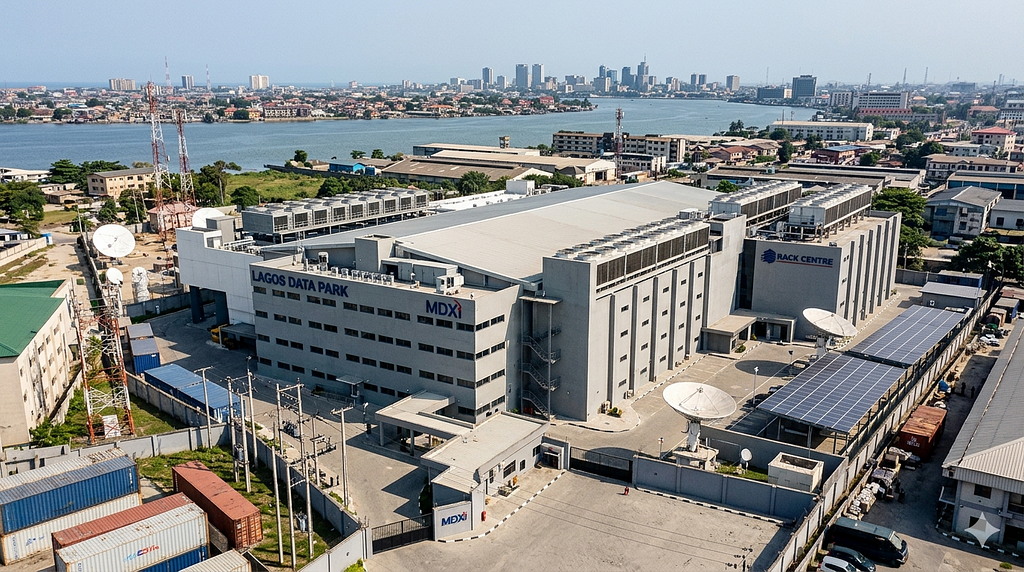
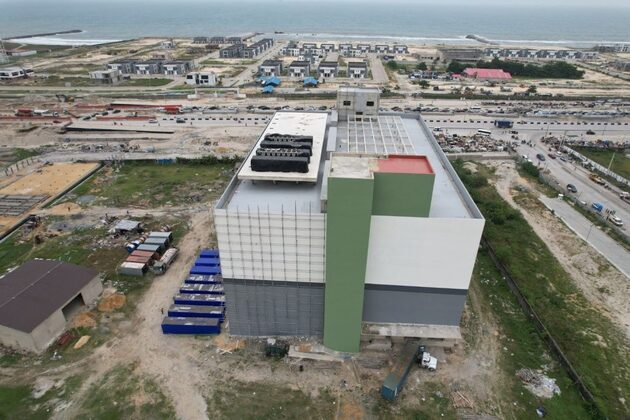
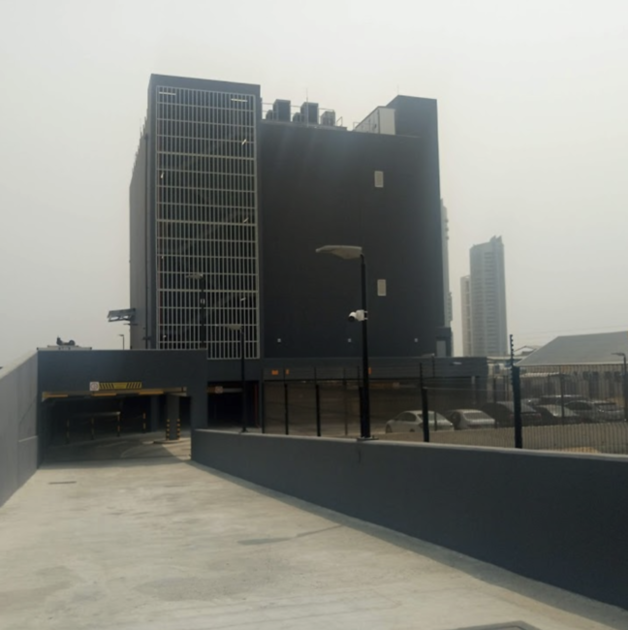
Within West Africa, Nigeria has clearly emerged as the dominant force in data center development, positioning itself at the forefront of the region’s digital transformation. At the heart of all this momentum is the city of Lagos, Nigeria’s commercial capital and a city that has rapidly evolved as a technology hub. The city has a unique blend of a large and growing population, an intense economic activity, and an expanding connectivity infrastructure that has made it the natural focal point for data center investment.
Lagos hosts the majority of the country’s operational data centers, ranging from carrier-neutral facilities to enterprise-grade and hyperscale-ready sites. One of its greatest strategic advantages lies in its role as a landing point for multiple major submarine internet cables, which connect West Africa directly to Europe and other global networks. This access significantly reduces latency and bandwidth costs, making local data hosting far more efficient and attractive.
As a result, Lagos has become the preferred destination for colocation providers, cloud service platforms, and large enterprises seeking reliable, scalable infrastructure within the region. The city’s growing ecosystem of fintech companies, startups, financial institutions, and multinational corporations further reinforces demand for high-performance data services.
All points noted, these factors have elevated Nigeria’s status from a national leader to the digital gateway of the entire West Africa; a central node through which data, services, and innovation flow across the region, much like established data hub cities in other parts of the world.
What’s Driving the Boom?
Several powerful, interlocking forces are accelerating the rapid expansion of data centers across West Africa, transforming the region into a serious contender in the global digital infrastructure landscape.
1. Explosive Internet Growth
West Africa is home to one of the fastest-growing internet user populations in the world, with millions of new users coming online each year. This surge is highly driven by mobile connectivity, which has become the primary gateway to the internet for most people in the region. In countries like Nigeria, affordable smartphones and expanding telecom networks have unlocked access to a wide array of digital services.
As a result, demand is rising sharply across streaming platforms, social media, online gaming, and fintech applications. Every click, transaction, and stream generates data, creating immense pressure for faster, more reliable, and locally hosted infrastructure to support this digital activity.
2. Cloud Adoption and AI Workloads
Organizations across industries are rapidly shifting away from traditional on-premise IT systems toward cloud-based infrastructure. This transition is being driven by the need for scalability, flexibility, and cost efficiency. Global technology giants such as Microsoft and Google are expanding their cloud footprint in Africa, signaling long-term confidence in the region.
At the same time, the rise of artificial intelligence is significantly increasing demand for high-performance computing. AI applications from fraud detection in fintech to recommendation engines in media require vast amounts of data processing power, further fueling the need for advanced data center facilities.
3. Submarine Cable Expansion
A critical enabler of this growth has been the expansion of submarine cable systems along West Africa’s coastline. These undersea cables serve as the backbone of international internet connectivity, linking the region directly to Europe and beyond. As the bandwidth capacity is increased and the speed is faster, it is now more practical and more economically viable for companies to host data within the region rather than relying on distant servers. This has effectively removed one of the biggest historical barriers to local data center development.
4. Data Sovereignty Requirements
Governments across Africa are becoming more proactive in regulating how data is stored, processed, and transferred. In many cases, new policies require sensitive or critical data such as financial records or citizen information to be stored within national borders. The data sovereignty requirements are reshaping investment decisions and both local enterprises and multinational corporations are being compelled to build or lease data centers locally to remain compliant. As a result, this is driving a sustained demand for domestic data centers and reinforcing West Africa’s push towards digital independence.
Together, these factors are not just supporting growth, but also compounding it. As demand rises, infrastructure expands, the expansion leads to improvements and new digital services emerge, creating a powerful cycle that continues to accelerate West Africa’s data center boom.
Economic Impact Beyond Technology
The rise of data centers in West Africa is not merely a technological shift, but a profound economic transformation. Across Nigeria and the wider region, data centers are emerging as critical infrastructure assets that underpin growth, investment, and innovation. These facilities require substantial capital to build and operate, often running into hundreds of millions of dollars, and in doing so, they create a ripple effect across multiple sectors of the economy.
At a foundational level, data center projects generate direct and indirect employment. From construction and engineering to operations, security, and maintenance, they create both high-skilled and support roles. Beyond jobs, they also attract foreign direct investment, as global technology firms and infrastructure providers seek to establish a presence in a fast-growing digital market. This inflow of capital helps strengthen local economies and encourages the development of complementary industries.
More importantly, data centers act as enablers for a wide range of digital businesses and services. Entire sectors depend on reliable, low-latency infrastructure to function and scale effectively:
- Fintech startups rely on secure, high-performance systems to process transactions in real time
- E-commerce platforms depend on uptime and speed to deliver seamless customer experiences
- Digital media and content creators need scalable storage and fast delivery networks
- Government digital services require resilient infrastructure to support everything from identity systems to public records.
In cities like Lagos, where innovation ecosystems are rapidly expanding, the presence of robust data center infrastructure directly influences how quickly startups can launch, grow, and compete globally.
Ultimately, data centers form the backbone of the modern digital economy. They are the invisible engines powering everything from mobile banking to video streaming and cloud computing. Without them, digital services would be slower, more expensive, and less reliable, making large-scale innovation extremely difficult. As West Africa continues to invest in this foundational layer, it is not just building infrastructure; it is laying the groundwork for long-term economic resilience and competitiveness in an increasingly digital world.
Challenges on the Ground
Despite the strong momentum behind data center growth in West Africa, the path forward is far from frictionless. Across Nigeria and neighboring markets, structural challenges continue to shape how quickly and efficiently the sector can scale.
Power Supply
Reliable electricity remains the single most critical constraint. Data centers depend on continuous, high-quality power to maintain uptime and protect sensitive equipment. However, grid instability forces many operators to rely heavily on diesel generators and complex backup systems. This not only drives up operational costs but also raises sustainability concerns, as fuel-dependent energy models conflict with global pushes toward greener infrastructure.
Cooling and Climate
West Africa’s tropical climate presents another layer of complexity. High ambient temperatures and humidity levels make cooling systems more energy-intensive and expensive to operate. Maintaining optimal conditions for servers requires advanced cooling technologies, which can significantly increase both capital expenditure and ongoing energy consumption. As facilities scale, improving cooling efficiency becomes a key competitive and environmental priority.
Connectivity Gaps
While cities like Lagos benefit from strong international connectivity and submarine cable access, the same cannot be said for many inland regions. Fiber optic infrastructure across the interior remains uneven, limiting the ability to distribute data center capacity more broadly. This imbalance concentrates development in coastal hubs and slows the emergence of a truly region-wide digital ecosystem.
Talent Shortage
The rapid expansion of the sector has also exposed a shortage of skilled professionals. Designing, operating, and maintaining modern data centers requires specialized expertise in areas such as network engineering, cybersecurity, and facility management. The current talent pipeline is still developing, creating a gap that companies must address through training, partnerships, or international recruitment.
These challenges do not diminish the opportunity, but they do define the work ahead. Overcoming them will require coordinated investment in energy infrastructure, education, and connectivity, alongside continued innovation in how data centers are designed and operated in emerging markets.
A Broader Regional Opportunity
While Nigeria currently leads the charge, the momentum behind data center growth is beginning to spread across the wider West African region. Countries such as Ghana and Côte d’Ivoire are steadily positioning themselves as emerging destinations for digital infrastructure investment. Though still at earlier stages of development, these markets are attracting increasing interest from regional operators and international players looking to establish a broader footprint.
This shift signals an important transition from a single-country concentration of infrastructure to a more distributed and interconnected regional network. As cross-border trade expands and digital services scale beyond national boundaries, the need for localized data processing and storage will grow in multiple markets simultaneously. Businesses operating across West Africa will increasingly demand low-latency access and regulatory compliance in each country they serve, further accelerating investment beyond Nigeria’s borders.
In this context, regional collaboration and infrastructure integration will become just as important as national development. Improved interconnection between countries through fiber networks, internet exchange points, and shared standards will help unlock the full potential of West Africa’s digital economy.
Looking Ahead
The direction of travel is unmistakable: West Africa is on the cusp of a data center revolution. As foundational challenges are gradually addressed and investment continues to flow, the region is positioning itself as a meaningful participant in the global digital infrastructure landscape.
At the center of this transformation remains Nigeria, with Lagos serving as its primary engine. Yet the significance of this growth extends far beyond any single city or country. The expansion of data centers is laying the groundwork for a more connected, innovative, and competitive regional economy.
Over the next decade, data centers will evolve from being largely invisible infrastructure to becoming strategic assets that shape economic direction. They will not only store and process information but also power emerging technologies, enable entirely new industries, and support the digital ambitions of millions of people and businesses.
In doing so, they will fundamentally redefine how West Africa participates in the global digital ecosystem, shifting the region from the margins to an increasingly influential position at its core.